Senator Lafayette Young
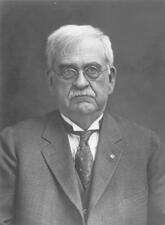
Here you will find contact information for Senator Lafayette Young, including email address, phone number, and mailing address.
| Name | Lafayette Young |
| Position | Senator |
| State | Iowa |
| Party | Republican |
| Status | Former Representative |
| Term Start | November 12, 1910 |
| Term End | April 11, 1911 |
| Terms Served | 1 |
| Born | May 10, 1848 |
| Gender | Male |
| Bioguide ID | Y000046 |
About Senator Lafayette Young
Lafayette “Lafe” Young (May 10, 1848 – November 15, 1926) was an Iowa newspaper reporter and editor, long-serving state legislator, and Republican United States Senator from Iowa who served briefly in the U.S. Senate from 1910 to 1911. His congressional service occurred during a significant period in American history, and as a member of the Senate he participated in the democratic process and represented the interests of his Iowa constituents.
Young was born in Monroe County, Iowa, on May 10, 1848. He was educated in the public schools and received much of his early training in printing offices in Albia and Des Moines, Iowa, where he learned the newspaper trade. Immersed from a young age in the world of printing and journalism, he developed the skills that would later define his professional life as a reporter, editor, and publisher.
Young’s first major business venture was the establishment of a newspaper in Atlantic, Iowa, which he named the Telegraph. His success in journalism helped propel him into public life. In 1873 he was elected as a Republican to the Iowa State Senate, representing the counties of Adair, Cass, Adams, and Union. He served in the Iowa Senate from 1874 to 1882, was re-elected in 1877, and, after a four-year absence, returned to the chamber with another election in 1885, serving again from 1886 to 1888. During these years he became a prominent Republican voice in state politics and gained a reputation as an effective legislator.
In 1890 Young moved to Des Moines, where he purchased a daily newspaper known as the Daily Iowa Capital, which after 1901 was published as the Des Moines Capital. Under his leadership the paper became an influential Republican-leaning publication in the state. In 1893 he sought higher office as a candidate for the Republican nomination for Governor of Iowa, but was unsuccessful, losing the nomination to Frank D. Jackson. Expanding his journalistic work beyond state politics, Young served as a war correspondent during the Spanish–American War, further enhancing his public profile and experience in national and international affairs.
Young’s long involvement in Republican politics and his prominence as a newspaperman led to his appointment to the United States Senate. When Iowa Senator Jonathan P. Dolliver died suddenly in October 1910, Iowa Governor Beryl F. Carroll appointed Young as Dolliver’s immediate replacement. A member of the Republican Party, Young thus entered the United States Congress as a Senator from Iowa, serving from November 1910 to April 1911. His service in Congress, although brief, came at a time of significant political and social change in the United States, and he contributed to the legislative process during his one term in office. Soon after his appointment, his seat came before the 1911 Iowa General Assembly for election. Although Republicans held a large majority, they were deeply divided among numerous candidates. Young emerged as the principal Republican opponent of Fort Dodge attorney William S. Kenyon. The General Assembly repeatedly failed to produce a candidate with the required 76 votes, forcing daily balloting throughout the session. On the 23rd ballot Young lost most of his support to other candidates, and after 67 ballots Kenyon was ultimately elected on the final day of the session, ending Young’s brief tenure in the Senate.
After leaving the Senate in April 1911, Young returned to Des Moines and resumed active management of his newspaper. He continued his work as a war correspondent, traveling to southeastern Europe in 1913 to cover the Second Balkan War. In 1915 he again went to Europe to report on the early stages of World War I, before the United States entered the conflict. During that trip he was detained in Innsbruck by authorities of Austria-Hungary, but was later released and returned to his work.
With the United States’ entry into World War I in 1917, Young took on an important role on the home front when he was appointed chairman of the Iowa State Council for Defense. In that capacity he advocated strong measures against those he considered disloyal, arguing that any person who had prospered under American laws but was disloyal in wartime should be deprived of all property, interned in a stockade until the war’s end, and then have his fate “considered carefully.” He also campaigned against the teaching of any foreign language in public schools or colleges and supported the imposition of English literacy tests as a requirement for voting. His wartime activities extended to humanitarian efforts as well; in recognition of his work in raising funds in Iowa for the relief of Belgian children, he was made a Knight of the Order of Leopold II of Belgium.
Young continued to edit and publish his newspaper in Des Moines into his later years. He remained a significant figure in Iowa’s political and journalistic circles until his death in Des Moines on November 15, 1926. His wife, Josephine, died five weeks later of heart disease. Both are interred in Woodland Cemetery in Des Moines, Iowa, closing the lives of a couple closely associated with the civic and political life of their state.