Representative Lamar Jeffers
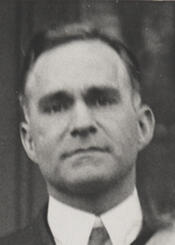
Here you will find contact information for Representative Lamar Jeffers, including email address, phone number, and mailing address.
| Name | Lamar Jeffers |
| Position | Representative |
| State | Alabama |
| District | 4 |
| Party | Democratic |
| Status | Former Representative |
| Term Start | April 11, 1921 |
| Term End | January 3, 1935 |
| Terms Served | 7 |
| Born | April 16, 1888 |
| Gender | Male |
| Bioguide ID | J000068 |
About Representative Lamar Jeffers
Lamar Jeffers (April 16, 1888 – June 1, 1983) was an American World War I veteran and Democratic politician who served seven terms as a U.S. Representative from Alabama from 1921 to 1935. His congressional service spanned a significant period in American history, encompassing the aftermath of World War I, the Roaring Twenties, and the early years of the Great Depression.
Jeffers was born in Anniston, Alabama, on April 16, 1888. He was educated in the public schools of Anniston and continued his studies at Alabama Presbyterian College, also located in Anniston. His early life in Calhoun County and his local education helped root him in the community that he would later represent in public office.
Before entering national politics, Jeffers pursued a career in public service and the military. He served with the Alabama National Guard from 1904 to 1914, gaining early military experience that would later shape his role in World War I. In civil life, he was elected clerk of the circuit court of Calhoun County, Alabama, assuming that office in January 1917. His tenure as clerk was brief, as the United States’ entry into World War I soon led him to resign the position in order to enter active military service.
In May 1917, Jeffers resigned as circuit court clerk and entered the U.S. Army. He served with the Eighty-second Division in France during World War I, where he distinguished himself in combat. For his actions in the war, he was awarded the Distinguished Service Cross by the United States Government, one of the nation’s highest decorations for valor. During his military service he rose to the rank of major of infantry, reflecting both his leadership and his significant contributions to the war effort.
Jeffers’s military record and local prominence helped propel him into national office. A member of the Democratic Party, he was elected to the U.S. House of Representatives to fill the vacancy in the Sixty-seventh Congress caused by the death of Representative Fred L. Blackmon. He took his seat on June 7, 1921, representing Alabama in the House of Representatives. He was subsequently reelected to the Sixty-eighth Congress and to the five succeeding Congresses, serving continuously from June 7, 1921, to January 3, 1935. During these seven terms in office, Jeffers participated in the legislative process and represented the interests of his Alabama constituents through a period marked by economic expansion, the onset of the Great Depression, and significant shifts in federal policy.
While in Congress, Jeffers held an important leadership role as chairman of the Committee on Civil Service during the Seventy-second and Seventy-third Congresses. In this capacity, he was involved in oversight and legislation affecting the federal civil service system, contributing to the broader effort to professionalize and regulate government employment. His work on this committee placed him at the center of debates over public administration and the structure of the federal workforce during a time of expanding federal responsibilities.
Jeffers’s congressional career came to an end when he was an unsuccessful candidate for renomination in 1934. Leaving the House of Representatives on January 3, 1935, he concluded fourteen years of continuous service in the national legislature. After his departure from Congress, he moved to Florida, where he resided in Daytona Beach. He lived there for many years, remaining out of public office in his later life.
Lamar Jeffers died in Daytona Beach, Florida, on June 1, 1983. In recognition of his military service and his role as a public official, he was interred at Arlington National Cemetery. His long life spanned from the late nineteenth century into the final decades of the twentieth, and his career reflected both distinguished wartime service and sustained participation in the democratic process as a member of the United States House of Representatives.