Representative Larry Kissell
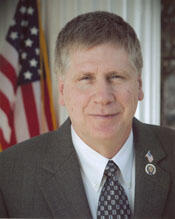
Here you will find contact information for Representative Larry Kissell, including email address, phone number, and mailing address.
| Name | Larry Kissell |
| Position | Representative |
| State | North Carolina |
| District | 8 |
| Party | Democratic |
| Status | Former Representative |
| Term Start | January 6, 2009 |
| Term End | January 3, 2013 |
| Terms Served | 2 |
| Born | January 31, 1951 |
| Gender | Male |
| Bioguide ID | K000369 |
About Representative Larry Kissell
Lawrence Webb Kissell (born January 31, 1951) is an American politician and educator who served as the U.S. representative for North Carolina’s 8th congressional district from January 3, 2009, to January 3, 2013. A member of the Democratic Party, he represented a district that stretched from Charlotte to Fayetteville and contributed to the legislative process during two terms in office. In 2012, he lost re-election to Republican Richard Hudson.
Kissell is a lifelong resident of Biscoe, North Carolina, a small town located roughly halfway between Charlotte and Fayetteville. He attended local schools in Montgomery County before enrolling at Wake Forest University. He graduated from Wake Forest in 1973 with a degree in economics, an academic background that would later inform both his work in industry and his legislative interests, particularly in areas related to trade, labor, and economic development.
Following his graduation, Kissell began his professional career with a brief stint as a manager at Union Carbide. He then entered the textile industry, taking a position at a hosiery factory where he worked for 27 years. Over nearly three decades at the plant, he rose to the position of production manager. During this period, Kissell became increasingly concerned about the impact of the North American Free Trade Agreement (NAFTA) and broader trade liberalization on the domestic textile industry and on the livelihoods of workers in his region. In 2001, motivated by these concerns and a desire to serve his community in a different capacity, he resigned from the hosiery plant and became a social studies teacher at his alma mater, East Montgomery High School. His apprehensions about the future of local manufacturing were borne out when the hosiery plant where he had worked closed in 2003.
Kissell’s transition from industry to teaching helped propel him into electoral politics. In October 2006, he entered the race for the Democratic nomination in North Carolina’s 8th congressional district. He won a four-way primary with 53 percent of the vote, securing the opportunity to challenge four-term Republican incumbent Robin Hayes in the general election. The November 2006 contest proved to be one of the closest House races in the country. Recounts were required due to the narrow margin, and the outcome remained in doubt for several weeks. Kissell ultimately lost by 329 votes, having carried six of the district’s nine counties but falling short because of a 6,100-vote deficit in Cabarrus County, Hayes’s home base. He conceded the race on November 29, 2006, and immediately announced his intention to run again in 2008. His near upset, fueled by strong grassroots support and an energetic internet campaign, drew national attention. During and after the 2006 campaign, questions arose regarding his treatment of campaign workers and the payment of employment and Social Security taxes. Critics charged that some workers remained in arrears by as much as $15,000 and that required taxes had not been paid; Kissell responded that his 2006 campaign had used contract workers and that he was paying all required taxes for full-time employees in his subsequent campaign, though some of these assertions remained in dispute and were used as a line of attack by his opponents.
With his strong 2006 showing, Kissell received support from the Democratic Congressional Campaign Committee for his 2008 rematch against Hayes. In the November 2008 election, he defeated Hayes by a larger-than-expected margin, winning approximately 55 percent of the vote to Hayes’s 45 percent. This victory returned the 8th district seat to the Democrats; it had previously been held by Democrat Bill Hefner for 24 years before Hayes captured it in 1998. Kissell took office on January 3, 2009. His first act in Congress was to co-sponsor a bill to reverse a planned congressional pay raise, signaling a populist and fiscally cautious posture. Early in his tenure, he also secured a provision in the 2009 economic stimulus legislation requiring the Transportation Security Administration to purchase uniforms manufactured in the United States, addressing concerns that most TSA clothing was then assembled in Mexico and Honduras from U.S.-made fabric.
During his congressional service, Kissell served on the House Committee on Agriculture and the House Committee on Armed Services. Within the Agriculture Committee, he was a member of the Subcommittee on Rural Development, Research, Biotechnology, and Foreign Agriculture, reflecting the rural and agricultural character of much of his district and his interest in economic development in small communities. On the Armed Services Committee, he served on the Subcommittee on Tactical Air and Land Forces and the Subcommittee on Readiness, positions that gave him a role in oversight of military procurement, training, and preparedness—issues of particular importance to North Carolina, which is home to significant military installations and defense-related employment.
Kissell was re-elected in 2010 in a challenging political environment. He faced Republican Harold Johnson, a longtime sportscaster at WSOC‑TV in Charlotte, in the general election. The race was complicated by discontent among some progressives and organized labor over Kissell’s positions on health care reform. The Service Employees International Union, which had supported him in 2008, drafted independent candidate Wendell Fant to run in response to Kissell’s stance on health care. Despite polling that showed a tight contest, Kissell won re-election with about 53 percent of the vote to Johnson’s 44 percent. His voting record on health care remained a focal point of debate. In March 2010, he voted against the Patient Protection and Affordable Care Act, stating, “I kept my word,” a reference to his campaign commitments. In January 2011, however, he voted against Republican efforts to repeal the law. This combination of votes angered some constituents and local Democratic leaders, including African-American community figures who felt that expectations for his support of comprehensive health reform had not been met. Kissell later explained that, after allowing members to cast their votes, he wanted Congress to “focus on the economy and get people back to work, because that’s what the American people want us to do.”
Kissell’s prospects for continued service in Congress were significantly affected by redistricting following the 2010 census. In 2011, the boundaries of North Carolina’s 8th congressional district were redrawn in a way that made the district considerably more Republican. The district lost most of its share of Charlotte and all of its share of Fayetteville, areas that had provided important bases of Democratic support, and it gained much of the heavily Republican western section of Union County that had been removed after the 2000 census, along with several other strongly Republican counties east of Charlotte. In the 2012 election, Kissell faced Republican nominee Richard Hudson. He encountered backlash from progressives within his own party over his support for some House Republican policies, and he lost some African-American support that had been important in his earlier victories. On November 6, 2012, in a markedly more conservative district, he was defeated by Hudson, bringing his congressional career to a close on January 3, 2013.
Following his departure from Congress, Kissell returned to private life in North Carolina. A lifelong Democrat and long active in the North Carolina Democratic Party, his career has reflected the economic and political transformations of his region—from the decline of the textile industry and the impact of trade policy on small-town manufacturing, to the shifting partisan balance in the state’s congressional delegation. Throughout his varied roles as factory manager, high school teacher, and member of the U.S. House of Representatives, he remained closely identified with his hometown of Biscoe and the working-class communities of the 8th congressional district that he represented in Washington.