Representative Larry LaRocco
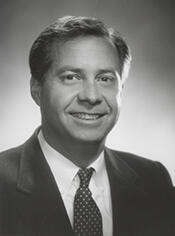
Here you will find contact information for Representative Larry LaRocco, including email address, phone number, and mailing address.
| Name | Larry LaRocco |
| Position | Representative |
| State | Idaho |
| District | 1 |
| Party | Democratic |
| Status | Former Representative |
| Term Start | January 3, 1991 |
| Term End | January 3, 1995 |
| Terms Served | 2 |
| Born | August 25, 1946 |
| Gender | Male |
| Bioguide ID | L000098 |
About Representative Larry LaRocco
Lawrence Paul LaRocco (born August 25, 1946) is an American politician and former United States Representative from Idaho who served two terms in Congress from 1991 to 1995. A member of the Democratic Party, he represented Idaho’s 1st congressional district in the U.S. House of Representatives and contributed to the legislative process during a period of significant political change in the early 1990s. Over the course of his career, he also sought statewide office in Idaho, including campaigns for lieutenant governor in 2006 and for the U.S. Senate in 2008.
LaRocco was born in Van Nuys, a neighborhood in the San Fernando Valley area of Los Angeles, California. He attended the University of Portland, where he earned a Bachelor of Arts degree in 1967. He continued his education at Boston University, receiving a Master of Science degree in 1969. LaRocco also pursued further graduate study at the Johns Hopkins School of Advanced International Studies, gaining additional grounding in international affairs that would later inform his work in both military intelligence and public service.
Following his academic studies, LaRocco joined the United States Army and was commissioned on August 15, 1969. He served in military intelligence and was eventually promoted to the rank of captain. Toward the end of his Army career, he was assigned to the Intelligence Data Handling Systems (IDHS) at 7th Army Headquarters in Heidelberg, Germany. His service coincided with a turbulent period in Europe; on May 24, 1972, the Baader-Meinhof Gang, a precursor of the Red Army Faction, detonated a car bomb outside Campbell Barracks in Heidelberg, killing three of LaRocco’s fellow soldiers. LaRocco was honorably discharged from the Army on June 10, 1972.
LaRocco moved into politics and public service in the 1970s. In 1975, he became the northern Idaho field coordinator for U.S. Senator Frank Church of Idaho, a position he held until Church’s defeat in 1980. During this period, he also served as coordinator for the Oregon primary in Church’s 1976 presidential campaign. LaRocco first sought elective office in 1982, when he was the Democratic nominee for Idaho’s 1st congressional district. He lost to incumbent Republican Representative Larry Craig but received 46.5 percent of the vote in his first run for public office. That campaign drew attention for his effort to work one week in each of the district’s 19 counties, taking jobs such as working on a garbage truck, picking apples, waiting tables, working in a nursing home and on a logging road crew, feeding Coho smolt, and processing cheese, among other positions, to better understand the lives of his prospective constituents. After the 1982 race, LaRocco entered the private sector, becoming vice president of a brokerage firm in 1983. He returned to the ballot in 1986, running for the Idaho State Senate in Ada County, but was defeated by Republican incumbent Jim Risch.
LaRocco’s successful bid for Congress came in 1990, when Larry Craig vacated Idaho’s 1st congressional district seat to run for the U.S. Senate. In that open-seat contest, LaRocco won election to the U.S. House of Representatives, beginning his service on January 3, 1991. He was easily re-elected in 1992, winning every county in the district and securing approximately 58 percent of the vote to 37 percent for his main opponent, a notable margin in a district that had historically been strongly Republican. During his two terms in Congress, from 1991 to 1995, LaRocco participated actively in the legislative process and represented the interests of his Idaho constituents during a significant period in American political and economic history. He was the only member of Congress from Idaho to vote for the Omnibus Budget Reconciliation Act of 1993, a major deficit-reduction and budget package. That vote proved unpopular in his district and was heavily used against him by Republican opponents in subsequent campaigns. In the 1994 election, amid a nationwide Republican wave that shifted control of the House of Representatives for the first time in 40 years, LaRocco was decisively defeated in his bid for a third term by Republican Helen Chenoweth. Following his departure from Congress in January 1995, no Democrat would represent Idaho in Congress again until Walt Minnick won the 1st congressional district seat in 2008.
LaRocco remained active in Idaho politics after leaving the House. On March 18, 2006, he filed to run for lieutenant governor of Idaho. He won the Democratic nomination in the May 23, 2006 primary but was defeated in the November 7, 2006 general election by Republican Jim Risch. In April 2007, LaRocco announced his candidacy for the United States Senate, marking the third time he and Risch would face each other in an election. Both men won their respective party primaries on May 27, 2008. LaRocco’s Senate campaign emphasized a strong grassroots effort, highlighted by his “Working for the Senate” program, in which he took on thirty-five different jobs across Idaho to engage with voters and demonstrate his understanding of the state’s diverse economy and workforce.
During the 2008 Senate race, LaRocco participated in an extensive series of debates around Idaho. He and independent candidate Rex Rammell met for a one-hour debate in Coeur d’Alene on August 18, 2008, and again in Sandpoint on September 10. A third debate took place on September 25 at the College of Idaho in Caldwell, where they were joined by Libertarian candidate Kent Marmon and independent candidate Pro-Life (the legal name of former Marvin Richardson). LaRocco and Rammell debated a fourth time on October 1 at the University of Idaho in Moscow. On October 8, KLEW-TV in Lewiston hosted a debate featuring LaRocco, Rammell, and Jim Risch, marking the first time in the 2008 campaign that the Republican nominee joined his opponents on stage. LaRocco and Rammell met again in Idaho Falls on October 13, and for a seventh debate on October 16 at the College of Southern Idaho in Twin Falls. On October 21, KTVB-TV in Boise sponsored a 90-minute debate at Northwest Nazarene College in Nampa, co-hosted by the Idaho Press-Tribune and the Idaho Business Review, featuring Risch, LaRocco, Rammell, and Pro-Life; it was only the second debate of the cycle in which Risch participated. A statewide debate organized by Idaho Public Television, the League of Women Voters, and the Idaho Press Club was held on October 23 in Boise, with four of the five candidates in attendance; Risch did not participate. In the November 2008 general election, LaRocco was defeated by Risch.
In his personal life, LaRocco is married to his wife, Chris. The couple has two children and two grandchildren. Throughout his career in military service, public office, and electoral politics, LaRocco’s work has reflected a consistent emphasis on direct engagement with constituents and on understanding the economic and social conditions of the communities he sought to represent.