Senator Larry Lee Pressler
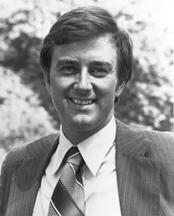
Here you will find contact information for Senator Larry Lee Pressler, including email address, phone number, and mailing address.
| Name | Larry Lee Pressler |
| Position | Senator |
| State | South Dakota |
| Party | Republican |
| Status | Former Representative |
| Term Start | January 14, 1975 |
| Term End | January 3, 1997 |
| Terms Served | 5 |
| Born | March 29, 1942 |
| Gender | Male |
| Bioguide ID | P000513 |
About Senator Larry Lee Pressler
Larry Lee Pressler (born March 29, 1942) is an American lawyer, military veteran, and politician from South Dakota who served in the United States House of Representatives from 1975 to 1979 and in the United States Senate from 1979 to 1997, as a Republican. He was the first Vietnam War veteran elected to the U.S. Senate and later became known for his role in major telecommunications reform and for his refusal to accept a bribe during the Abscam investigation. In later years he ran unsuccessfully for his former Senate seat as an independent and increasingly supported Democratic presidential candidates.
Pressler was born in Humboldt, South Dakota, to Loretta Claussen and Antone Lewis Pressler and was raised on his family’s farm. Active in youth agricultural organizations, he was selected in 1961 as one of four 4‑H members to attend the World Agricultural Fair in Cairo, Egypt. At the 1962 National 4‑H Club Congress in Chicago, Illinois, he was one of two recipients of the national citizenship award and was later selected to meet President John F. Kennedy on March 4, 1963. He attended the University of South Dakota, where he was elected president of the Student Association in 1963, defeating Steve Byrnes by a vote of 1,014 to 909, and served until 1964. Pressler graduated from the University of South Dakota in 1964 and was subsequently awarded a Rhodes Scholarship to study at St. Edmund Hall, Oxford University, where he earned a Bachelor of Arts degree. He then returned to the United States and completed a Master of Public Administration degree at Harvard University in 1966.
Following his graduate studies, Pressler joined the United States Army and served in the Vietnam War from 1966 until 1968, rising to the rank of first lieutenant. After returning from Vietnam, he served for several years in the United States Department of State as a Foreign Service Officer. He later resumed his studies at Harvard, attending the John F. Kennedy School of Government and Harvard Law School, from which he graduated in 1971. During his time at Harvard Law School he served as business manager of the Harvard Law Record in 1970. In the 1968 House elections he considered seeking the Democratic nomination for South Dakota’s 1st Congressional District but ultimately chose not to run, marking an early moment in his evolving political alignment.
Pressler entered elective office in 1974 when he filed, on the last possible day, to run for the Republican nomination for South Dakota’s 1st Congressional District. Although the South Dakota Republican Party informed him he would receive no campaign funds, he won the nomination and, despite the national backlash against Republicans in the wake of the Watergate scandal, was one of only six Republicans to capture a Democratic-held House seat in the 1974 elections. Taking office in January 1975, he was accepted as a member of the Congressional Rural Caucus and supported opening House Republican Conference committee meetings to the public. He served during 1975 as assistant minority leader under House Minority Leader John J. Rhodes. That year he was hospitalized at Bethesda Naval Hospital on April 2 for treatment of diverticulitis and underwent surgery in December. In the House he cosponsored legislation to create a select committee to reinvestigate the assassinations of John F. Kennedy, Robert Kennedy, and Martin Luther King Jr., as well as the attempted assassination of George Wallace. On July 30, 1975, when the House voted 214 to 213 to raise members’ salaries from $42,500 to $44,600, Pressler was among nine members who announced they would not keep the pay increase. He served on the Committee on Education and Labor and the Committee on Science and Technology. During the 1976 Republican presidential primaries he publicly criticized the rivalry between President Gerald Ford and former California Governor Ronald Reagan, arguing that their competition and increasingly conservative positions would harm moderate Republicans. In March 1976 he was accused by columnists Jack Anderson and Les Whitten of copying articles from The Washington Post and other newspapers; Pressler denied intentional plagiarism but acknowledged that a January 1976 article had “accidentally” included excerpts from The Washington Post. He was reelected in 1976 with nearly 80 percent of the vote and soon expressed interest in running for the U.S. Senate in 1978.
In 1978 Pressler successfully ran for the United States Senate, succeeding retiring Democratic Senator James Abourezk and becoming the first Vietnam War veteran to serve in that body. He began his Senate service in January 1979 and would serve three terms, from 1979 to 1997. Early in his Senate career he briefly sought the Republican nomination for president in 1980, campaigning primarily on issues affecting Vietnam veterans. That same year he gained national attention during the Abscam investigation when he refused an attempted bribe from undercover FBI agents posing as Arab businessmen and reported the approach to authorities. The Washington Post highlighted his conduct, noting that videotapes showed him firmly rejecting the offer, and Judge George C. Pratt, in an overall review of the Abscam cases, praised Pressler for acting as citizens had a right to expect of their elected representatives, refusing impropriety despite his need for campaign funds.
During his Senate tenure, Pressler served on the Commerce, Science, and Transportation Committee, the Foreign Relations Committee, and its European and Asian subcommittees, among other assignments. He became chairman of the Senate Committee on Commerce, Science, and Transportation from 1995 to 1997. In that role he authored and secured passage of the Telecommunications Act of 1996, a sweeping reform of telecommunications law intended to foster competition and innovation in broadcasting, cable, and telephone services. He also sponsored the Pressler Amendment, which barred most economic and military assistance to Pakistan unless the president annually certified that Pakistan did not possess a nuclear explosive device and that U.S. assistance would significantly reduce the risk of its acquiring such a device. Throughout his legislative career he maintained a strong interest in agricultural policy; in 1975 he had cosponsored a bill to prohibit the importation of beef and dairy products to bolster domestic farmers and urged President Ford to impose tariffs on imported cheese. In a letter to presidential adviser Vern Loen, he argued that Harry S. Truman’s 1948 victory had hinged on farm-state support and recommended that Ford win farmers’ votes by imposing dairy tariffs, subsidizing dairy exports, revoking most-favored-nation status for countries restricting U.S. meat and dairy imports, and giving agricultural products equal priority with industrial goods in negotiations under the General Agreement on Tariffs and Trade. Among his Senate staff were future U.S. Attorney Kevin V. Schieffer and future South Dakota state senator Neal Tapio. Pressler sought a fourth Senate term in 1996 but was defeated by Democratic Representative Tim Johnson by approximately three percentage points, ending his congressional service in January 1997.
After leaving the Senate, Pressler passed the New York bar examination and returned to the practice of law. He became a senior partner at the Washington-based law firm O’Connor and Hannan, where he worked for six years, and later founded his own firm and consulting enterprise, The Pressler Group. The Pressler Group is organized as a Service-Disabled Veteran-Owned Small Business and undertakes projects in service of veterans. Pressler is a member of the New York Bar, the Washington, D.C., Bar, and the Bar of the Supreme Court of the United States. He also pursued academic and international work, lecturing at more than twenty universities in China, India, and the United States and receiving two lifetime Fulbright teaching awards. In the fall of 2012 he served as a distinguished visiting professor at Sciences Po in Paris and Reims, France, where he primarily taught international relations to graduate students. He remained intermittently interested in elective office, briefly considering a run for mayor of Washington, D.C., in 1998 and exploring a congressional comeback in 2002 for South Dakota’s at-large House seat, a campaign he largely abandoned when Governor Bill Janklow entered the race.
Pressler continued to hold various public and advisory roles in the 2000s and 2010s. During the 2000 presidential election he served on Texas Governor George W. Bush’s Information Technology Steering Committee and later on the Bush presidential transition team in 2001. He was appointed an official observer of Ukraine’s national election in December 2004. On November 10, 2009, President Barack Obama named him to the U.S. Commission for the Preservation of America’s Heritage Abroad, and he also served on the Military Compensation and Retirement Modernization Commission. Over time, his political endorsements shifted: he supported Barack Obama for president in 2008 and 2012, citing fiscally conservative reasons and veterans’ issues, and campaigned in a bipartisan capacity for Obama in 2012, addressing veterans’ groups in Virginia. In 2013 he joined an amicus curiae brief to the Supreme Court in support of same-sex marriage in Hollingsworth v. Perry. He later endorsed Hillary Clinton in the 2016 presidential election and Joe Biden in the 2020 election. In 2020 he joined more than 130 former Republican national security officials in signing a statement asserting that President Donald Trump was unfit for another term and declaring their intention to vote for Biden.
In the 2014 election cycle, Pressler attempted a return to the Senate as an independent candidate. The Native American Times reported in November 2013 that, at age 71, he was weighing an independent bid for the seat being vacated by retiring Democratic Senator Tim Johnson. After touring all 66 counties of South Dakota, he announced his candidacy, stating, “I intend to win,” though he had earlier characterized his chances as “possible but unlikely.” He explained his departure from the Republican Party by saying that he felt the party had moved rather than he, describing himself as “a man without a party” and insisting his intent was not to harm any candidate. In the four-way race he faced Republican former Governor Mike Rounds, Democratic aide Rick Weiland, and independent conservative state legislator Gordon Howie. Pressler pledged to serve only one term if elected, promised never to raise a dollar in campaign funds while in office, and declined to commit in advance to caucusing with either party. He advocated raising taxes on the wealthy, potentially increasing the Social Security retirement age gradually, and making deficit reduction his top priority. He supported much stronger background checks for gun sales, particularly for mentally challenged individuals, opposed “military adventurism,” favored restrictions on corporate campaign donations, and called for a museum honoring Native Americans killed during westward expansion. He reiterated his support for same-sex marriage and his participation in the Hollingsworth v. Perry amicus brief. The Sioux Falls Argus Leader, the Rapid City Journal, and The Daily Republic in Mitchell endorsed his candidacy, and national outlets such as The Wall Street Journal and The New York Times noted that his unexpectedly strong campaign had tightened what had been viewed as a safely Republican race. Pressler ultimately lost the 2014 election to Mike Rounds.
In subsequent years, Pressler remained active in public discourse, particularly on issues of national security, veterans’ affairs, and democratic governance. He continued to deliver public lectures in the United States and abroad, including a 2018 address at Cardinal Stefan Wyszyński University in Warsaw, Poland, during the 2018 International Security Forum. Throughout his post-congressional life he has combined legal practice, academic work, and public service, while maintaining a prominent voice in debates over political reform, foreign policy, and the future direction of American party politics.