Representative Latimer Whipple Ballou
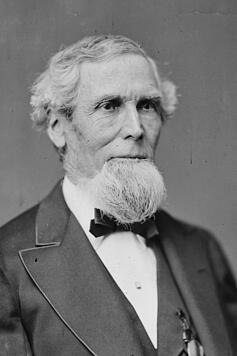
Here you will find contact information for Representative Latimer Whipple Ballou, including email address, phone number, and mailing address.
| Name | Latimer Whipple Ballou |
| Position | Representative |
| State | Rhode Island |
| District | 2 |
| Party | Republican |
| Status | Former Representative |
| Term Start | December 6, 1875 |
| Term End | March 3, 1881 |
| Terms Served | 3 |
| Born | March 1, 1812 |
| Gender | Male |
| Bioguide ID | B000106 |
About Representative Latimer Whipple Ballou
Latimer Whipple Ballou (March 1, 1812 – May 9, 1900) was a Republican member of the United States House of Representatives from Rhode Island who served three consecutive terms in Congress from 1875 to 1881. His congressional career took place during a significant period in American history, in the decades following the Civil War, when he participated in the legislative process and represented the interests of his Rhode Island constituents in the national government.
Ballou was born in Cumberland, Rhode Island, on March 1, 1812. He was educated in the public schools and local academies of his native town, receiving the basic and classical instruction typical of New England education in the early nineteenth century. This early schooling prepared him for a career that would combine technical skill, business acumen, and political engagement.
In 1828, Ballou moved to Cambridge, Massachusetts, where he learned the art of printing at the University Press. Immersed in the world of publishing and typography, he advanced in his trade and, in 1835, was instrumental in establishing the Cambridge Press. He continued in the printing business there until 1842, gaining experience in management and enterprise that would later inform his work in finance and public affairs. That year he relocated to Woonsocket, Rhode Island, a growing industrial community, where he would reside for much of the remainder of his life.
By mid-century, Ballou had shifted his focus from printing to finance. In 1850 he engaged in banking in Woonsocket, entering a field that was closely tied to the region’s expanding manufacturing and commercial interests. His position in banking placed him among the civic and economic leaders of his community and provided a platform from which he became increasingly active in political matters. When the Republican Party emerged in the 1850s, Ballou was active in its organization in 1856, aligning himself with the new party’s principles in the years leading up to the Civil War.
Ballou’s prominence within the Republican Party grew steadily. In 1872 he served as a delegate to the Republican National Convention held in Philadelphia, participating in the nomination process at the national level and helping to shape party policy during the Reconstruction era. His role at the convention reflected both his standing within Rhode Island Republican circles and his broader engagement with national political issues.
Building on this experience, Ballou was elected as a Republican to the Forty-fourth, Forty-fifth, and Forty-sixth Congresses, serving in the U.S. House of Representatives from March 4, 1875, to March 3, 1881. As a member of the House of Representatives, he contributed to the legislative process during three terms in office, participating in debates and votes on the issues confronting the postwar nation. During these years he represented Rhode Island’s interests in Congress, taking part in the democratic process at a time when the country was addressing Reconstruction, economic development, and the integration of a rapidly industrializing society. After three terms, he declined to be a candidate for renomination in 1880, choosing to conclude his congressional service.
Following his retirement from Congress, Ballou returned to Woonsocket and engaged in his former business pursuits, resuming his involvement in local economic affairs and maintaining his position as a respected figure in the community. He continued to live in Woonsocket until his death there on May 9, 1900. Latimer Whipple Ballou was interred in Oak Hill Cemetery, leaving a legacy as a printer, banker, party organizer, and three-term Republican Representative from Rhode Island during a transformative era in American political and economic life.