Representative Laurence Curtis
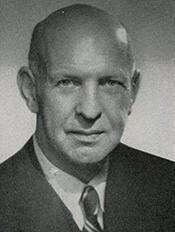
Here you will find contact information for Representative Laurence Curtis, including email address, phone number, and mailing address.
| Name | Laurence Curtis |
| Position | Representative |
| State | Massachusetts |
| District | 10 |
| Party | Republican |
| Status | Former Representative |
| Term Start | January 3, 1953 |
| Term End | January 3, 1963 |
| Terms Served | 5 |
| Born | September 3, 1893 |
| Gender | Male |
| Bioguide ID | C001011 |
About Representative Laurence Curtis
Laurence Curtis (September 3, 1893 – July 11, 1989) was an American attorney and Republican Party politician from Massachusetts who served as a Representative in the United States Congress from 1953 to 1963. Born in Boston, Massachusetts, on September 3, 1893, he came of age in a city that would remain the center of his professional and political life. He graduated from Groton School in 1912 and from Harvard University in 1916, establishing the academic foundation for a long career in law and public service.
Upon graduation from Harvard College in 1916, Curtis entered the United States Navy and was commissioned as an officer during World War I. While in aviation training at Newport News, Virginia, he was severely injured in a flying boat crash, an accident that resulted in the loss of a leg. Despite this life-altering injury, he continued his military service at Pensacola, Florida, and was awarded the Citation Star for his service. His experience as a disabled veteran later informed his advocacy on behalf of former servicemembers; he became State Commander and National Senior Vice Commander of the Disabled American Veterans. After the war, Curtis returned to Harvard Law School, from which he graduated in 1921.
In 1921, Curtis was admitted to the Massachusetts bar and commenced the practice of law in Boston. Early in his legal career, he served as secretary to United States Supreme Court Justice Oliver Wendell Holmes Jr., an appointment that placed him at the center of American jurisprudence and later led to his inclusion among the law clerks of the Supreme Court of the United States (Seat 2). He also served as an assistant United States attorney in Boston, gaining experience in federal law enforcement and litigation. These roles helped establish his reputation as a capable attorney and laid the groundwork for his entry into elective politics.
Curtis’s political career began at the municipal level. In 1929, he was elected to the Boston City Council, succeeding Henry Parkman Jr. in the then-strongly Republican fifth ward, which included the affluent Back Bay and Beacon Hill neighborhoods. He advanced to state office as a member of the Massachusetts House of Representatives from 1933 to 1937 and then as a member of the Massachusetts Senate from 1937 to 1941. In 1946, he was elected Treasurer and Receiver-General of Massachusetts, defeating former Treasurer Fred J. Burrell in the Republican primary and incumbent Treasurer John E. Hurley in the general election. Curtis lost his bid for re-election in 1948, when Hurley defeated him by more than 230,000 votes in a Democratic wave that swept all six statewide offices. In 1950, Curtis was the Republican nominee for Lieutenant Governor of Massachusetts; although he led the Republican ticket and won the nomination with 46 percent of the vote in a five-man primary field that included Robert W. Welch Jr. and State Senator Harris S. Richardson, he was defeated in the general election by incumbent Lieutenant Governor Charles F. Sullivan as Republicans failed to overturn the Democratic gains of 1948.
By 1952, Curtis sought to move further up the political ladder. He initially announced his candidacy for Governor of Massachusetts, calling for a “wholesale clean-up of conditions at the State House that have destroyed the hope of a square deal for Massachusetts citizens.” When party leaders drafted U.S. Representative Christian Herter for the gubernatorial race, Curtis first vowed to remain in the contest but ultimately withdrew, endorsed Herter, and instead ran for Herter’s open seat in the United States House of Representatives with the backing of the Republican establishment. He was elected to Congress in 1952 and took office on January 3, 1953, beginning the first of five consecutive terms as a Representative from Massachusetts. A member of the Republican Party, he served in the House of Representatives from January 3, 1953, to January 3, 1963, contributing to the legislative process during a significant period in American history and representing the interests of his constituents over the course of a decade. During his congressional service, he participated actively in the democratic process and cast notable votes on civil rights legislation, supporting the Civil Rights Act of 1957 and the Civil Rights Act of 1960. On the proposed 24th Amendment to the United States Constitution, which sought to prohibit poll taxes in federal elections, he voted “present,” reflecting a more cautious stance on that particular measure.
In 1962, Curtis declined to seek a sixth term in the House and instead pursued higher office, entering the race for the United States Senate seat left vacant when John F. Kennedy was elected President of the United States. In the Republican primary for that Senate seat, he was defeated by George C. Lodge, ending his immediate prospects for advancement to the upper chamber of Congress. After leaving the House of Representatives on January 3, 1963, Curtis resumed the practice of law in Massachusetts. He remained politically active and attempted to return to Congress, running unsuccessfully for a House seat in 1968, 1970, and 1972.
In his later years, Curtis lived in Newton, Massachusetts, maintaining his ties to the Boston area where he had been born and had built his career. He continued to be remembered as a decorated veteran, a dedicated public servant, and a long-serving Republican officeholder at the municipal, state, and federal levels. Laurence Curtis died in Boston on July 11, 1989, at the age of 95. He was buried at Mount Auburn Cemetery in Cambridge, Massachusetts, closing a life that spanned nearly a century and encompassed military service, legal practice, and a broad range of elected offices in Massachusetts and the United States Congress.