Representative Laurin Dewey Woodworth
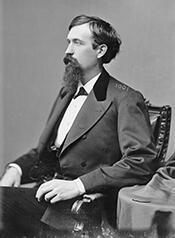
Here you will find contact information for Representative Laurin Dewey Woodworth, including email address, phone number, and mailing address.
| Name | Laurin Dewey Woodworth |
| Position | Representative |
| State | Ohio |
| District | 17 |
| Party | Republican |
| Status | Former Representative |
| Term Start | December 1, 1873 |
| Term End | March 3, 1877 |
| Terms Served | 2 |
| Born | September 10, 1837 |
| Gender | Male |
| Bioguide ID | W000735 |
About Representative Laurin Dewey Woodworth
Laurin Dewey Woodworth (September 10, 1837 – March 13, 1897) was an American lawyer and Republican politician who served two terms as a U.S. Representative from Ohio from 1873 to 1877. A member of the Woodworth political family, he represented his constituents in the House of Representatives during a significant period in American history, contributing to the legislative process in the post–Civil War and Reconstruction era.
Woodworth was born on September 10, 1837, in Windham, Portage County, Ohio. He was educated in the common schools of his native community and pursued further studies at Windham Academy. Seeking a broader education, he attended Hiram College in Hiram, Ohio, and later studied at Ohio State University in Columbus, Ohio. His early academic training prepared him for a professional career in the law and for subsequent public service.
After completing his general education, Woodworth studied law at Union Law College in Cleveland, Ohio. He was admitted to the bar in 1859 and commenced the practice of law in Ravenna, Portage County, Ohio. In addition to his legal work, he became involved in local educational affairs, serving as a member of the Portage County Board of School Examiners, where he helped oversee and improve standards for public instruction in the county.
During the American Civil War, Woodworth entered military service in the Union Army. He served as a major in the 104th Ohio Volunteer Infantry from July 1862 to December 1862, participating in the Union war effort during a critical phase of the conflict. After his period of military service, he returned to civilian life and, in 1864, moved to Youngstown, Mahoning County, Ohio, where he resumed the practice of law. His relocation to Youngstown marked the beginning of his long association with that growing industrial community.
Woodworth’s political career advanced at the state level before he entered national office. He was elected to the Ohio State Senate in 1867 and was reelected in 1869. During his tenure in the state legislature, he rose to the position of president pro tempore of the Senate, reflecting the confidence of his colleagues in his leadership and parliamentary abilities. His work in the Ohio General Assembly helped establish his reputation as a capable Republican legislator and prepared him for service in Congress.
In national politics, Laurin Dewey Woodworth was elected as a Republican to the Forty-third and Forty-fourth Congresses, serving in the U.S. House of Representatives from March 4, 1873, to March 3, 1877. As a Representative from Ohio, he participated in the democratic process and represented the interests of his constituents during a transformative era in American political and social life. His two terms in office coincided with the later years of Reconstruction and the nation’s ongoing efforts to address the consequences of the Civil War. In 1876 he was an unsuccessful candidate for renomination to the Forty-fifth Congress, losing the Republican nomination to William McKinley, who would later become President of the United States.
After leaving Congress in 1877, Woodworth returned to Youngstown and continued the practice of law. He remained a respected member of the local bar and an influential figure in the community, maintaining his professional activities there for the remainder of his life. Laurin Dewey Woodworth died in Youngstown, Ohio, on March 13, 1897. He was interred in Windham Cemetery in his birthplace of Windham, Ohio, closing a career that spanned legal practice, military service, state legislative leadership, and two terms in the United States Congress.