Representative Lawrence Brock
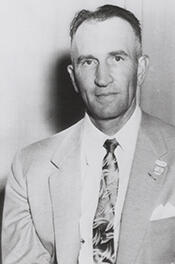
Here you will find contact information for Representative Lawrence Brock, including email address, phone number, and mailing address.
| Name | Lawrence Brock |
| Position | Representative |
| State | Nebraska |
| District | 3 |
| Party | Democratic |
| Status | Former Representative |
| Term Start | January 7, 1959 |
| Term End | January 3, 1961 |
| Terms Served | 1 |
| Born | August 16, 1906 |
| Gender | Male |
| Bioguide ID | B000849 |
About Representative Lawrence Brock
Lawrence Brock (August 16, 1906 – August 28, 1968) was a Nebraska Democratic politician who served one term as a United States Representative from Nebraska from 1959 to 1961. A member of the Democratic Party, he represented his state in the Eighty-sixth Congress during a significant period in American history, participating in the federal legislative process and advocating for the interests of his constituents.
Brock was born near Columbus, Platte County, Nebraska, on August 16, 1906. He grew up in rural Nebraska and attended the local public schools before graduating from Leigh High School in Leigh, Nebraska. Reflecting both the agricultural and small-town character of the region in which he was raised, his early life in eastern Nebraska would later inform his professional focus on farming, livestock, and rural development.
After completing high school, Brock pursued professional training in pharmacy. He graduated from the College of Pharmacy of the University of Nebraska in 1929, earning credentials that enabled him to enter a respected health-related profession at the outset of the Great Depression. Following his graduation, he became a pharmacist in Madison, Nebraska, where he practiced in a community setting and gained experience in small business and local affairs.
Brock subsequently expanded his activities beyond pharmacy into agriculture, becoming a cattle feeder and farmer. He developed a substantial presence in Nebraska’s livestock industry and rose to leadership positions in several key agricultural and rural organizations. He served as president of the Nebraska Livestock Feeders Association, the Cornbelt Livestock Feeders Association, and the Northeast Nebraska Rural Electric Association, roles that placed him at the forefront of efforts to promote livestock production, support rural electrification, and improve conditions for farmers and ranchers in the region.
Brock’s prominence in agricultural and rural affairs led naturally into public service and partisan political leadership. He was appointed a member of the Nebraska Highway Advisory Commission, where he contributed to the planning and oversight of the state’s transportation infrastructure during a period of expanding highway development. Within the Democratic Party, he emerged as a leading figure in Nebraska, serving as chair of the Nebraska Democratic Party from 1954 to 1956. In that capacity he helped organize party activities, recruit candidates, and shape the party’s platform in a predominantly Republican state. He was also a delegate to the 1956 Democratic National Convention, participating in the national nominating process and representing Nebraska Democrats in the selection of the party’s presidential ticket.
In 1958 Brock was elected as a Democrat to the Eighty-sixth United States Congress, representing Nebraska in the U.S. House of Representatives from January 3, 1959, to January 3, 1961. His service in Congress coincided with the closing years of the Eisenhower administration, a time marked by debates over farm policy, rural development, national infrastructure, and Cold War defense issues. During his single term, Brock contributed to the legislative process as a member of the House, bringing to bear his background in pharmacy, agriculture, and rural electrification on matters affecting his largely agricultural constituency. He ran for reelection in 1960 but was unsuccessful in his bid to return to Congress, thus concluding his formal legislative career after one term.
Following his departure from Congress, Brock continued his involvement in public service at the federal level. In February 1961 he was appointed administrator of the Farmers Home Administration in Washington, D.C., an agency of the United States Department of Agriculture responsible for providing credit and technical assistance to farmers, ranchers, and rural communities. In this position he played a role in implementing federal policies designed to improve rural housing, support family farms, and foster economic development in underserved areas, extending his long-standing commitment to the welfare of rural America.
Lawrence Brock died on August 28, 1968, in Zion, Illinois. He was interred in Wakefield Cemetery in Wakefield, Nebraska, returning in death to the state that had shaped his life and career. His public record reflects a trajectory from rural Nebraska origins and professional work in pharmacy and agriculture to leadership in state and national Democratic politics, service in the U.S. House of Representatives, and federal administration focused on the needs of farmers and rural communities.