Representative Lawrence Joseph Connery
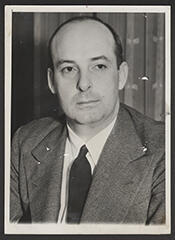
Here you will find contact information for Representative Lawrence Joseph Connery, including email address, phone number, and mailing address.
| Name | Lawrence Joseph Connery |
| Position | Representative |
| State | Massachusetts |
| District | 7 |
| Party | Democratic |
| Status | Former Representative |
| Term Start | January 5, 1937 |
| Term End | January 3, 1943 |
| Terms Served | 3 |
| Born | October 17, 1895 |
| Gender | Male |
| Bioguide ID | C000693 |
About Representative Lawrence Joseph Connery
Lawrence Joseph Connery (October 17, 1895 – October 19, 1941) was a Democratic U.S. Representative from Massachusetts who served in the United States Congress from 1937 to 1941, completing three terms in office during a significant period in American history. He was born in Lynn, Massachusetts, on October 17, 1895, and grew up in that industrial North Shore community. Connery attended local parochial and public schools in Lynn, reflecting the city’s strong working-class and immigrant traditions, and later pursued further studies at St. Mary’s College in St. Mary’s, Kansas.
Connery’s early adulthood was shaped by both journalism and military service. Before World War I, he was employed as a reporter for The Lynn Item, gaining experience in public affairs and local issues that would later inform his political career. In 1916, he served on the Mexican border with Company A, 9th Massachusetts Infantry, during the period of heightened tensions along the U.S.–Mexico border. With the nation’s entry into World War I, he enlisted in Company A, 101st Infantry Regiment, 26th Division, serving from March 25, 1917, until his honorable discharge on March 24, 1919. Connery spent nineteen months in France with the American Expeditionary Forces, an experience that placed him among the many veterans of the Great War who later entered public service.
Following his military service, Connery worked in private industry and pursued legal education. From 1919 to 1923, he was employed as chief purser aboard a United Fruit Company ship, a position that involved responsibility for financial accounts and passenger services and exposed him to international commerce and maritime operations. He then moved to Washington, D.C., where he attended Georgetown University Law School and graduated in 1926. Although he trained in the law, his early professional life continued to blend administrative and business responsibilities. In 1934, he engaged in the office-supplies and printing business in his hometown of Lynn, Massachusetts, further rooting his career in the local economic life of his district.
Connery’s path into national politics was closely intertwined with that of his older brother, William Patrick Connery Jr., who represented a Massachusetts district in Congress. From 1923 to 1937, Lawrence Connery served as secretary and chief administrative assistant to his brother, gaining extensive experience in legislative procedure, constituent service, and the operations of a congressional office. This behind-the-scenes role in Washington provided him with detailed knowledge of the House of Representatives and the Democratic Party’s agenda during the New Deal era.
Connery entered Congress in his own right following the death of his brother. He was elected as a Democrat to the Seventy-fifth Congress to fill the vacancy caused by William Connery’s death and took his seat on September 28, 1937. He was subsequently re-elected to the Seventy-sixth and Seventy-seventh Congresses, serving continuously from September 28, 1937, until his death in 1941. As a member of the House of Representatives, Lawrence Joseph Connery participated in the legislative process during a transformative period that included the later phases of the New Deal and the early years of World War II in Europe. He represented the interests of his Massachusetts constituents in this context, contributing to debates and votes on domestic recovery measures and issues of national defense and preparedness.
Connery’s congressional service was cut short by his sudden death in office. On October 19, 1941, while still serving in the Seventy-seventh Congress, he died of a heart attack in Arlington, Virginia, at the age of 46. His passing placed him among the members of the United States Congress who died in office during the first half of the twentieth century. Lawrence Joseph Connery was interred in St. Mary’s Cemetery in Lynn, Massachusetts, returning to the community where he had been born, educated, and maintained his business and political ties.