Representative Lawrence H. Fountain
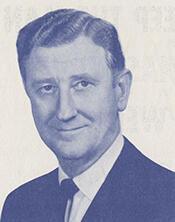
Here you will find contact information for Representative Lawrence H. Fountain, including email address, phone number, and mailing address.
| Name | Lawrence H. Fountain |
| Position | Representative |
| State | North Carolina |
| District | 2 |
| Party | Democratic |
| Status | Former Representative |
| Term Start | January 3, 1953 |
| Term End | January 3, 1983 |
| Terms Served | 15 |
| Born | April 23, 1913 |
| Gender | Male |
| Bioguide ID | F000319 |
About Representative Lawrence H. Fountain
Lawrence H. Fountain (April 23, 1913 – October 10, 2002) was an American lawyer, World War II veteran, and Democratic politician who represented North Carolina in the United States House of Representatives for 15 consecutive terms from 1953 to 1983. Over three decades in Congress, he contributed to the legislative process during a significant period in American history, participating in debates on civil rights, federalism, government oversight, and social policy while representing the interests of his constituents.
Fountain served in the United States military during World War II, an experience that preceded and informed his later public service. After the war, he pursued a career in law, establishing himself as an attorney in North Carolina. His legal training and wartime service helped shape his approach to governance and public policy, providing a foundation for his entry into elective office in the postwar era.
In 1947, Fountain was elected to the North Carolina Senate, where he served until 1952. During his tenure in the state legislature, he gained experience in lawmaking and constituent service at the state level, building a political base and reputation that would support his subsequent campaigns for national office. His work in the North Carolina Senate marked the beginning of a long career in public life and positioned him as a rising figure within the state’s Democratic Party.
Fountain was elected as a Democrat to the U.S. House of Representatives in 1952 and took his seat in January 1953, beginning a congressional career that would span from the 83rd through the 97th Congresses. As a member of the House of Representatives, he participated actively in the democratic process and represented the interests of his North Carolina constituents through a period that encompassed the Cold War, the civil rights movement, the Great Society, and the early Reagan years. He sponsored and supported a wide range of legislation, including measures related to government organization, federal assistance to state and local governments, and recognition of cultural and ethnic heritage.
Fountain’s legislative record included sponsorship of significant government-reform and fiscal measures. In the 96th Congress (1979–1980), he sponsored H.R. 7112, the State and Local Fiscal Assistance Act Amendments of 1980, which addressed federal revenue sharing and financial relations between the federal government and subnational governments. He also sponsored H.R. 7085 in the same Congress, an act to provide certain benefits to individuals held hostage in Iran and to similarly situated individuals, reflecting congressional concern for Americans affected by the Iran hostage crisis. In the 95th Congress (1977–1978), he sponsored H.R. 8588, an act to reorganize the executive branch of the federal government and increase its economy and efficiency by establishing Offices of Inspector General within numerous federal departments and agencies, including the Departments of Agriculture, Commerce, Housing and Urban Development, the Interior, Labor, and Transportation, as well as the Community Services Administration, the Environmental Protection Agency, the General Services Administration, the National Aeronautics and Space Administration, the Small Business Administration, and the Veterans’ Administration. This legislation strengthened internal oversight and accountability across the federal government.
Fountain also took part in symbolic and commemorative legislation. In the 97th Congress (1981–1982), he was associated with H.R. 4647, a bill to award special Congressional Gold Medals to bandleader Fred Waring, the widow of heavyweight boxing champion Joe Louis, and Western author Louis L’Amour. He was involved in joint resolutions recognizing ethnic and religious heritage, including H.J. Res. 155 in the 97th Congress, authorizing and requesting the President to issue a proclamation designating May 3 through May 10, 1981, as “Jewish Heritage Week,” and H.J. Res. 568 in the 96th Congress, designating October 12 through October 19, 1980, as “Italian-American Heritage Week.” These measures reflected congressional efforts to acknowledge the contributions of diverse communities to American life.
On civil rights and racial issues, Fountain aligned with many Southern Democrats of his era in opposition to federal desegregation mandates. He was a signatory to the 1956 Southern Manifesto, which opposed the desegregation of public schools ordered by the Supreme Court in Brown v. Board of Education. In Congress, he voted against the Civil Rights Acts of 1957, 1960, 1964, and 1968, as well as against the 24th Amendment to the U.S. Constitution, which abolished the poll tax in federal elections, and the Voting Rights Act of 1965. During the period of the Great Society and the “war on poverty,” he used his influence in negotiations over antipoverty legislation; as the price for his vote for legislation supporting the war on poverty, he demanded the firing of deputy director Adam Yarmolinsky, who, while with the Department of Defense, had helped force the integration of public places near military bases in North Carolina. These positions placed him firmly within the conservative wing of the Democratic Party on matters of race and federal intervention in civil rights.
Fountain’s interest in the structure and balance of American government extended beyond his legislative work. From 1981 to 1982, near the end of his congressional career, he served as a member of the Presidential Advisory Committee on Federalism. This committee was charged with advising the President on ways to restore and maintain proper relationships between federal, state, and local governments, reflecting ongoing debates over devolution, revenue sharing, and the appropriate scope of federal authority. His participation on this body was consistent with his legislative focus on intergovernmental relations and oversight of federal programs.
After choosing not to seek reelection in 1982, Fountain left Congress in January 1983, concluding three decades of continuous service in the House of Representatives. In his later years, he remained a figure of historical interest in North Carolina and national political history. His papers, the L. H. Fountain Papers, are preserved in the Southern Historical Collection at the University of North Carolina Library in Chapel Hill, North Carolina, providing researchers with extensive documentation of his legislative activities, policy interests, and role in mid-twentieth-century American politics. Lawrence H. Fountain died on October 10, 2002, closing a long life marked by military service, legal practice, and a prominent, if often controversial, career in public office.