Representative Lawrence Patton McDonald
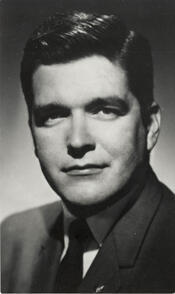
Here you will find contact information for Representative Lawrence Patton McDonald, including email address, phone number, and mailing address.
| Name | Lawrence Patton McDonald |
| Position | Representative |
| State | Georgia |
| District | 7 |
| Party | Democratic |
| Status | Former Representative |
| Term Start | January 14, 1975 |
| Term End | January 3, 1985 |
| Terms Served | 5 |
| Born | April 1, 1935 |
| Gender | Male |
| Bioguide ID | M000413 |
About Representative Lawrence Patton McDonald
Lawrence Patton McDonald (April 1, 1935 – September 1, 1983) was an American physician and politician who served as a Democratic Representative from Georgia in the United States Congress from 1975 to 1983. He represented Georgia’s 7th congressional district for five terms and was known for maintaining the most conservative voting record of any Democrat in Congress. A staunch anti-communist, he became chairman of the John Birch Society in 1983, months before his death, and was later remembered as a martyr by many American conservatives. His congressional service occurred during a significant period in American history, and he participated actively in the legislative process while representing the interests of his constituents.
McDonald trained and practiced as a physician before entering politics, establishing a medical career that preceded and informed his later public service. His professional background in medicine contributed to his public image as a disciplined and detail-oriented legislator. Although he was a member of the Democratic Party, his ideological orientation placed him firmly on the right wing of American politics, and he frequently aligned with conservative causes and organizations outside the party’s mainstream. His early political activities and writings reflected a deep preoccupation with constitutionalism, limited government, and opposition to what he regarded as collectivist and totalitarian threats.
Elected to the U.S. House of Representatives in 1974, McDonald took office in January 1975 and served continuously until his death in 1983. During his five terms in Congress, he developed a reputation as one of the chamber’s most outspoken and uncompromising conservatives. He crusaded against communism and what he perceived as its influence in American institutions and foreign policy. His legislative initiatives and public statements often focused on national sovereignty, internal security, and resistance to international organizations and agreements that he believed infringed upon U.S. independence. Within the Democratic caucus, he was associated with the “boll weevil” faction of conservative Southern Democrats who frequently sided with Republicans on key economic and national security issues.
McDonald’s legislative record reflected his ideological commitments in specific and often controversial proposals. He introduced or supported measures to repeal the Gun Control Act of 1968 and to remove limitations on the amount of outside income a Social Security recipient could earn. He sought to award honorary U.S. citizenship to Russian dissident Aleksandr Solzhenitsyn and to invite Solzhenitsyn to address a joint meeting of Congress, underscoring his solidarity with high-profile opponents of Soviet communism. He proposed prohibiting the use of federal funds to finance the purchase of American agricultural commodities by any Communist country and called for the creation of a select committee in the House of Representatives to investigate human rights abuses in Southeast Asia by Communist forces. He also advocated the creation of a House Committee on Internal Security, reflecting his belief in the need for a permanent congressional body to monitor subversion and internal threats.
In the realm of domestic policy and media regulation, McDonald introduced legislation to repeal Federal Communications Commission regulations that restricted editorializing and support of political candidates by noncommercial educational broadcasting stations, arguing that such rules infringed on free speech. He proposed abolishing the Federal Election Commission, which he viewed as an overreach into the political process, and pressed for an annual audit by the Comptroller General of the gold held by the United States, reflecting his concern with monetary policy and government transparency. He also supported increasing the national speed limit from 55 miles per hour (89 km/h) to 65 miles per hour (105 km/h). On social and institutional issues, he introduced measures to limit eligibility for appointment and admission to United States service academies to men and to place statues of African American leaders Booker T. Washington and George Washington Carver in the U.S. Capitol, combining cultural conservatism with recognition of selected historical figures.
McDonald’s foreign policy positions were marked by skepticism toward multilateral institutions and a strong emphasis on anti-communism. He advocated withdrawing the United States from the United Nations, arguing that the organization undermined American sovereignty and enabled the influence of communist and authoritarian regimes. His writings and speeches, including his contribution to the Congressional Record article “Why Does Spotlight Attack the Real Anti-Communists?” on September 9, 1981, elaborated his view that determined opposition to communism required vigilance against both foreign adversaries and what he saw as domestic enablers. In 1983 he was elected chairman of the John Birch Society, a prominent anti-communist organization, formalizing a relationship that had long been evident in his public positions and alliances.
Beyond his legislative work, McDonald was an active author and contributor to conservative literature. He wrote We Hold These Truths: A Reverent Review of the U.S. Constitution, first published in 1976 by ’76 Press and later reissued in a revised edition by the Larry McDonald Memorial Foundation, Inc. in 1992. In 1977 he authored Trotskyism and Terror: The Strategy of Revolution, with an introduction by M. Stanton Evans and a foreword by Marx Lewis, in which he examined revolutionary movements and their tactics. He wrote the introduction to Gary Allen’s The Rockefeller File (1976) and contributed the chapter “China in Africa” to Roger Pearson’s Sino-Soviet Intervention in Africa (1977), reflecting his interest in global communist strategy and influence. He also participated in The Future of the United Nations: A Roundtable Discussion, an audiobook produced in 1977 by the American Enterprise Institute for Public Policy Research, where he offered extended remarks on the United Nations, its past and future, and its relationship with the United States.
In late August 1983, McDonald traveled as part of a congressional delegation to South Korea to attend celebrations marking the 30th anniversary of the United States–South Korea Mutual Defense Treaty. He was to join three fellow members of Congress—Senator Jesse Helms of North Carolina, Senator Steve Symms of Idaho, and Representative Carroll Hubbard of Kentucky—for the commemoration. Bad weather on Sunday, August 28, 1983, forced the diversion of his flight from Atlanta to Baltimore, and by the time he reached John F. Kennedy International Airport in New York, he had missed his scheduled connection to South Korea by two or three minutes. Although he could have boarded a Pan Am Boeing 747 flight to Seoul, he chose instead to wait for the next Korean Air Lines departure, preferring its lower fares. As travel delays accumulated, Hubbard ultimately abandoned the trip, canceling his reservations and accepting a speaking engagement in Kentucky, while Helms also encountered delays that prevented him from joining McDonald on the same flight.
McDonald boarded Korean Air Lines Flight 007 at New York’s JFK Airport and occupied aisle seat 02B in the first-class section when the aircraft departed on August 31 at 12:24 a.m. local time for a 3,400-mile (5,500 km) flight to Anchorage, Alaska, for a scheduled stopover. After landing in Anchorage, the plane remained on the ground for approximately an hour and a half for refueling, reprovisioning, cleaning, and servicing. Passengers were given the option to leave the aircraft, but McDonald chose to remain on board and rest. During this stopover, Senator Helms arrived in Anchorage and invited McDonald to transfer to his flight, Korean Air Lines Flight 015, but McDonald declined, not wishing to be disturbed. With a fresh flight crew, KAL 007 departed Anchorage at 4:00 a.m. local time for its non-stop flight over the Pacific to Seoul’s Kimpo International Airport, a journey of nearly 4,500 miles (7,200 km) expected to take about eight hours.
On September 1, 1983, while en route to Seoul, Korean Air Lines Flight 007 deviated into Soviet airspace near Sakhalin Island. Soviet fighters, acting under the command of General Anatoly Kornukov, intercepted the aircraft and shot it down near Moneron Island. All passengers and crew aboard KAL 007, including Lawrence Patton McDonald, were killed. His death in office placed him among the members of the United States Congress who have been killed or wounded while serving, and specifically among those who died in office between 1950 and 1999. His passing prompted tributes in Congress and among conservative organizations, and his congressional papers from approximately 1974 to 1983 were later preserved at the Stuart A. Rose Manuscript, Archives, and Rare Book Library at Emory University.