Senator Lawrence Cowle Phipps
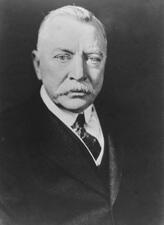
Here you will find contact information for Senator Lawrence Cowle Phipps, including email address, phone number, and mailing address.
| Name | Lawrence Cowle Phipps |
| Position | Senator |
| State | Colorado |
| Party | Republican |
| Status | Former Representative |
| Term Start | May 19, 1919 |
| Term End | March 3, 1931 |
| Terms Served | 2 |
| Born | August 30, 1862 |
| Gender | Male |
| Bioguide ID | P000317 |
About Senator Lawrence Cowle Phipps
Lawrence Cowle Phipps (August 30, 1862 – March 1, 1958) was a businessman and Republican politician who represented Colorado in the United States Senate from 1919 until 1931. His two terms in office spanned a significant period in American history, encompassing the aftermath of World War I, the prosperity of the 1920s, and the onset of the Great Depression, during which he participated in the legislative process and represented the interests of his Colorado constituents.
Phipps was born on August 30, 1862, in Amity, Washington County, Pennsylvania, the son of William Henry Phipps and Agnes McCall. During his childhood the family moved to Pittsburgh, Pennsylvania, where he came of age in an industrial city that was rapidly becoming a center of American steel production. His uncle, Henry Phipps, was a close associate of Andrew Carnegie and became the second-largest shareholder in the Carnegie Steel Company, a connection that would shape Lawrence Phipps’s early career and financial success.
Phipps entered the steel industry as a young man, joining Carnegie Steel Company as a clerk in Pittsburgh. Demonstrating administrative skill and business acumen, he rose steadily through the company’s ranks and ultimately advanced to the position of first vice president. Having accumulated substantial wealth through his executive role and investments, he retired from active business in 1901. That same year he moved west to Denver, Colorado, where he became active in local civic and financial affairs, pursuing various investment ventures and engaging in public policy debates. By 1917 he had emerged as a prominent voice for fiscal conservatism in the state, serving as president of the Colorado Taxpayers Protective League.
Building on his business reputation and civic involvement, Phipps entered electoral politics during World War I. In 1918 he ran for the United States Senate as a Republican and defeated the incumbent Democratic senator, John Franklin Shafroth. He took office on March 4, 1919, beginning the first of his two terms as a United States Senator from Colorado. As a member of the Republican Party, Phipps contributed to the legislative process during his tenure, aligning himself with the pro-business, limited-government conservatism characteristic of the party’s leadership in the 1920s. He was reelected in 1924, running under the memorable campaign slogan, “A vote for Lawrence C. Phipps is another vote for Coolidge,” which tied his candidacy closely to President Calvin Coolidge and the national Republican program. He chose not to seek a third term and did not run again in 1930, leaving the Senate when his second term ended in 1931.
After his congressional service, Phipps remained an influential figure in Colorado and continued to invest his fortune in projects that reflected both his conservative values and a sense of social responsibility. Between 1931 and 1933, during the early years of the Great Depression, he and his third wife, Margaret Rogers Phipps, built the Phipps Estate in Denver. The construction was undertaken in part to provide employment at a time of widespread economic hardship. The estate, a substantial mansion with extensive grounds, later became associated with higher education and public use when Mrs. Phipps donated the property to the University of Denver in 1964. Phipps’s prominence in Colorado was further reflected in the naming of Phippsburg, Colorado, in his honor.
Phipps’s family also maintained a visible role in Colorado’s public life after his retirement from politics. Two of his sons, Gerald and Allen Phipps, became notable sports entrepreneurs when they purchased and operated the Denver Broncos, contributing to the development of professional football in the region and extending the Phipps family’s influence into the mid-twentieth century.
In his later years, Phipps divided his time between Colorado and California. He died on March 1, 1958, in Santa Monica, California. His remains were returned to Colorado, where he was entombed in the Fairmount Mausoleum at Fairmount Cemetery in Denver. His long life spanned nearly a century of American industrial growth, political realignment, and economic upheaval, and his career linked the world of Gilded Age industry with the politics and public life of the interwar United States.