Representative Lawrence Beaumont Stringer
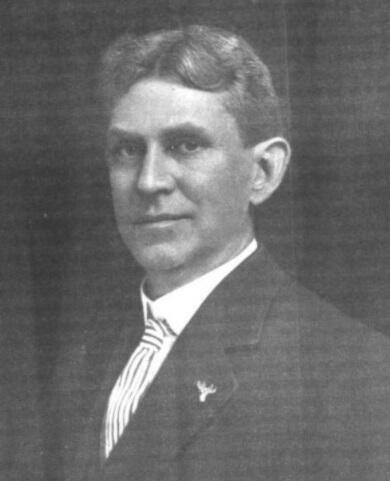
Here you will find contact information for Representative Lawrence Beaumont Stringer, including email address, phone number, and mailing address.
| Name | Lawrence Beaumont Stringer |
| Position | Representative |
| State | Illinois |
| District | -1 |
| Party | Democratic |
| Status | Former Representative |
| Term Start | April 7, 1913 |
| Term End | March 3, 1915 |
| Terms Served | 1 |
| Born | February 24, 1866 |
| Gender | Male |
| Bioguide ID | S001005 |
About Representative Lawrence Beaumont Stringer
Lawrence Beaumont Stringer (February 24, 1866 – December 5, 1942) was a U.S. Representative from Illinois, a state legislator, and a longtime judge in Logan County, Illinois. He was born near Atlantic City, New Jersey, on February 24, 1866. In 1876 he moved with his parents to Lincoln, Logan County, Illinois, where he was raised. He attended the public schools of Lincoln and, after completing his early education, enrolled at Lincoln University (later Lincoln College), from which he was graduated in 1887. Following his graduation, he worked as a reporter on a local newspaper in Lincoln, an experience that brought him into close contact with community affairs and public life.
Stringer’s involvement in politics began at an early age. A Democrat, he was elected to the Illinois House of Representatives and served as a member of that body from 1890 to 1892. During this period he combined legislative work with further professional preparation, deciding to pursue a career in law. He entered the Chicago College of Law, then the law department of Lake Forest University, and was graduated in 1896. After completing his legal studies, he was admitted to the bar and, in 1898, returned to Lincoln, Illinois, where he commenced the practice of law.
Stringer quickly became a prominent figure in Illinois Democratic politics. He served as a delegate to the Democratic State convention in 1900 and was chosen as chairman of that convention, reflecting his growing influence within the party. That same year he was elected to the Illinois State Senate, in which he served from 1900 to 1904. In 1904 he was the Democratic candidate for Governor of Illinois, though he was unsuccessful in that statewide race. His standing within the party remained strong, and in 1905 he was appointed chief justice of the Illinois State Court of Claims, a position he held until 1913. While serving on that court, he sought higher office and was an unsuccessful candidate for the Democratic nomination for United States Senator in 1908.
In 1912, Stringer was elected as a Democrat to the Sixty-third Congress, representing Illinois in the U.S. House of Representatives from March 4, 1913, to March 3, 1915. During his single term in Congress he participated in the legislative work of the early Woodrow Wilson administration, a period marked by significant progressive-era reforms at the federal level. He chose not to seek renomination to the House in 1914, instead becoming a candidate for the United States Senate in that year’s election; he was unsuccessful in that bid. After leaving Congress, he resumed the practice of law in Lincoln while continuing to play a role in state and local public affairs.
Stringer remained active in electoral politics after his congressional service. In 1924 he was an unsuccessful candidate for justice of the Supreme Court of Illinois, reflecting his continued ambition for higher judicial office. In addition to his private law practice, he maintained his engagement with the Democratic Party and with civic life in Logan County and central Illinois.
In 1918, Stringer was elected judge of Logan County, Illinois, an office he would hold for the remainder of his life. As county judge he presided over local judicial matters and became a long-serving judicial figure in the community where he had grown up and built his career. He continued in that capacity until his death in Lincoln, Illinois, on December 5, 1942. Lawrence Beaumont Stringer was interred in Union Cemetery in Lincoln, Illinois, closing a public career that had spanned more than five decades in legislative, judicial, and congressional service.