Senator Le Roy Percy
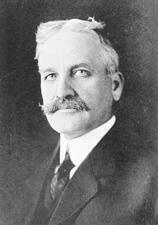
Here you will find contact information for Senator Le Roy Percy, including email address, phone number, and mailing address.
| Name | Le Roy Percy |
| Position | Senator |
| State | Mississippi |
| Party | Democratic |
| Status | Former Representative |
| Term Start | February 23, 1910 |
| Term End | March 3, 1913 |
| Terms Served | 1 |
| Born | November 9, 1860 |
| Gender | Male |
| Bioguide ID | P000223 |
About Senator Le Roy Percy
LeRoy Percy (November 9, 1860 – December 24, 1929) was an American attorney, planter, and Democratic politician who served as a United States Senator from Mississippi from 1910 to 1913. A member of the Democratic Party, he represented the interests of his state during a single term in office at a significant moment in American political and social history. He emerged as a prominent figure in the Mississippi Delta, combining a successful legal career with large-scale agricultural enterprises and an active role in state and national politics.
Percy was born into a prominent Southern family and was a grandson of Charles “Don Carlos” Percy, a connection that situated him within the planter and political elite of the post–Civil War South. He was educated at the University of the South at Sewanee, from which he graduated in 1879. He then pursued legal studies at the University of Virginia School of Law, receiving his degree in 1881. While at Virginia, he was a member of the Chi Phi fraternity, reflecting his integration into the social and professional networks that shaped Southern leadership in the late nineteenth century.
Admitted to the bar in 1881, Percy quickly achieved wealth and distinction as an attorney. Often compensated in land rather than cash, he parlayed his legal success into extensive agricultural holdings in the Mississippi Delta. Settling in Greenville, Mississippi, he became a major planter in one of the most fertile and economically important regions of the state. His Trail Lake plantation eventually encompassed some 20,000 acres and was worked by Black sharecroppers and Italian immigrants, illustrating both the persistence of sharecropping in the post-Reconstruction South and the recruitment of European labor to Delta agriculture. Percy also expanded his operations beyond Mississippi by leasing land in Chicot County in the Arkansas Delta, further consolidating his position as a leading Delta planter.
Percy’s economic influence and family background naturally drew him into public affairs and the Democratic politics that dominated Mississippi in this era. His standing in the state led to his election by the Mississippi legislature to the United States Senate in 1910, at a time when senators were still chosen by state legislatures rather than by direct popular vote. Serving from 1910 to 1913, he participated in the legislative process during a period marked by the Progressive Era’s reform currents and the continuing entrenchment of Jim Crow in the South. In the Senate, he took part in debates and legislation affecting both national policy and the particular interests of his agrarian constituency in the Delta.
The political landscape in Mississippi shifted dramatically with the advent of direct senatorial elections. In 1912, Percy sought to retain his seat in what became the first popular election for a U.S. Senator in the state. He was defeated by James K. Vardaman, a populist and outspoken white supremacist, who capitalized on resentment of the planter elite and attacked Percy for being relatively liberal on race issues and for his membership in the state’s entrenched landowning class. Vardaman, also a Democrat, ran unopposed in the general election, underscoring both the one-party dominance of Mississippi politics and the potency of racial demagoguery in the early twentieth century South.
After leaving the Senate in 1913, Percy remained a powerful and visible figure in Greenville and the Delta. In 1922, he came to national attention for his public confrontation with organizers of the revived Ku Klux Klan who were attempting to establish a foothold in Greenville. Drawing on his local influence, he helped unite a cross-section of the community against the Klan, and he articulated his opposition in a widely noted article, “The Modern Ku Klux Klan,” published in The Atlantic in July 1922. His stance against the Klan distinguished him from many contemporaries in Southern politics and added a notable chapter to his public life.
Percy’s leadership was again evident during the Great Mississippi Flood of 1927, one of the most devastating natural disasters in the region’s history. As floodwaters threatened Greenville and the surrounding Delta, he played a central role in local responses to the crisis. He appointed his son, William Alexander Percy, to direct the work of thousands of Black laborers on the levees near Greenville, an arrangement that reflected both the paternalistic structure of Delta society and the reliance on Black labor for flood control and agricultural recovery. His actions during the flood, later chronicled in historical accounts and documentaries such as “Fatal Flood,” highlighted the complex interplay of race, class, and power in the Delta during the early twentieth century.
LeRoy Percy continued to reside in Greenville and to manage his legal and planting interests until his death on December 24, 1929. By the time of his passing, he had left a multifaceted legacy as a wealthy Delta planter, a one-term United States Senator, and a regional leader who, while firmly rooted in the Southern elite, occasionally positioned himself against some of the most extreme racial and political movements of his era.