Representative Lee Herbert Hamilton
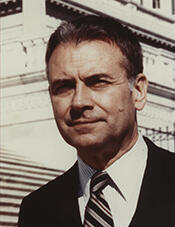
Here you will find contact information for Representative Lee Herbert Hamilton, including email address, phone number, and mailing address.
| Name | Lee Herbert Hamilton |
| Position | Representative |
| State | Indiana |
| District | 9 |
| Party | Democratic |
| Status | Former Representative |
| Term Start | January 4, 1965 |
| Term End | January 3, 1999 |
| Terms Served | 17 |
| Born | April 20, 1931 |
| Gender | Male |
| Bioguide ID | H000114 |
About Representative Lee Herbert Hamilton
Lee Herbert Hamilton (born April 20, 1931) is an American politician, lawyer, and public servant from Indiana who served as a Democratic member of the United States House of Representatives from 1965 to 1999. Over 17 consecutive terms in Congress, he represented Indiana’s 9th congressional district and became one of the chamber’s leading voices on foreign affairs, intelligence, and national security. Following his departure from Congress, he continued to play a prominent role in public life as a member of numerous national commissions and advisory boards, most notably as vice chairman of the National Commission on Terrorist Attacks Upon the United States, commonly known as the 9/11 Commission.
Hamilton was born in Daytona Beach, Florida, and raised in Evansville, Indiana. He attended public schools and graduated from Evansville Central High School in 1948. An outstanding high school basketball player, he led the Evansville Central Bears to three deep runs in the Indiana High School Athletic Association tournament: the state semifinals in 1946, the state quarterfinals in 1947, and the state championship game in March 1948. He was selected All-State as a senior and received the Trestor Award for mental attitude. Hamilton went on to attend DePauw University in Greencastle, Indiana, where he played basketball for Coach Jay McCreary and starred for the DePauw Tigers, leading the team in scoring average in 1951 and in rebounds in both 1951 and 1952. He graduated from DePauw in 1952 and then enrolled at the Indiana University School of Law, from which he received his law degree in 1956.
After completing his legal education, Hamilton established a private law practice in Columbus, Indiana, where he worked as a lawyer for the next decade. During these years he became active in local civic and political affairs, building the community ties that would underpin his later political career. His early professional life in Columbus provided him with firsthand experience of the legal system and the concerns of Indiana citizens, experience that would inform his legislative priorities once he entered Congress.
Hamilton was elected to the U.S. House of Representatives in the Democratic landslide of 1964 and took office on January 3, 1965. A member of the Democratic Party, he represented Indiana’s 9th congressional district continuously until January 3, 1999. His service in Congress occurred during a significant period in American history, spanning the Vietnam War, the civil rights era, the Cold War and its end, and the post–Cold War realignment. Over 17 terms in office, Hamilton participated actively in the legislative process and became known for his expertise in foreign policy, intelligence oversight, and congressional procedure. At the time of his retirement, he was one of only two surviving members of the large Democratic freshman class of 1965, the other being John Conyers. Because of his foreign policy credentials and his Midwestern political base, he was periodically mentioned as a potential Democratic vice-presidential running mate in 1984, 1988, and 1992.
During his congressional career, Hamilton chaired several key committees and panels. He served as chairman of the House Committee on Foreign Affairs (later the Committee on International Relations), where he helped shape U.S. foreign policy during the late Cold War and post–Cold War eras. He also chaired the U.S. House Permanent Select Committee on Intelligence, overseeing the nation’s intelligence community, and the Joint Committee on Printing, among other assignments. In 1987 he chaired the House Select Committee to Investigate Covert Arms Transactions with Iran, which examined the Iran–Contra affair. In that role, Hamilton chose not to pursue impeachment proceedings against President Ronald Reagan or Vice President (later President) George H. W. Bush, stating that he did not believe it would be “good for the country” to put the public through another impeachment trial. He later chaired the House October Surprise Task Force in 1992, which investigated allegations related to the 1980 presidential campaign. Throughout his tenure, he was widely regarded as a pragmatic, fair-minded legislator who sought bipartisan solutions and emphasized the institutional responsibilities of Congress.
After leaving Congress in 1999, Hamilton remained deeply engaged in national security, foreign policy, and governance issues. In November 2002, President George W. Bush nominated him to serve as vice chairman of the 9/11 Commission, officially titled the National Commission on Terrorist Attacks Upon the United States, which investigated the circumstances surrounding the September 11, 2001, terrorist attacks and issued a landmark report in 2004. On March 15, 2006, Congress announced the formation of the Iraq Study Group, organized by the United States Institute of Peace, with Hamilton serving as the Democratic co-chairman alongside former Secretary of State James A. Baker III; both men were widely regarded as master negotiators. Hamilton also served as a member of the Hart–Rudman Commission (the U.S. Commission on National Security/21st Century) and as co-chairman of the Commission to Investigate Certain Security Issues at Los Alamos, reflecting his ongoing involvement in national security and nuclear policy.
Hamilton’s post-congressional career included extensive service on advisory boards and commissions. He served on the President’s Homeland Security Advisory Council and on advisory boards to the Central Intelligence Agency and the United States Army. He became an Advisory Board member and co-chair for the Partnership for a Secure America, a not-for-profit organization dedicated to rebuilding a bipartisan center in American national security and foreign policy, and he served as co-chair of the National Security Preparedness Group at the Bipartisan Policy Center. From 2000 to 2001, he was the American member of the International Commission on Intervention and State Sovereignty, which developed the “Responsibility to Protect” doctrine later adopted by the United Nations in 2005. He was appointed co-chair of the Blue Ribbon Commission on America’s Nuclear Future from 2010 to 2012, alongside Brent Scowcroft, and became a member of the Washington, D.C.–based think tank the Inter-American Dialogue. He also joined the Board of Advisors of the Albright Stonebridge Group and served as an honorary co-chair of the World Justice Project, an organization dedicated to strengthening the rule of law worldwide.
In addition to his commission work, Hamilton held significant institutional leadership roles and pursued a strong interest in civic education. He served as president and director of the Woodrow Wilson International Center for Scholars in Washington, D.C., where he helped foster scholarship and dialogue on international affairs and public policy. He co-chaired, with former Supreme Court Justice Sandra Day O’Connor, the Campaign for the Civic Mission of Schools, which promotes civic learning in American education. He also served as an Advisory Board member for America Abroad Media and remained active in the ReFormers Caucus of Issue One, a bipartisan group of former elected officials focused on political reform. In electoral politics, he endorsed Barack Obama in the 2008 presidential election, reflecting his continued engagement with contemporary political debates.
Hamilton is also an accomplished author and commentator on Congress and foreign policy. His publications include “A Creative Tension: The Foreign Policy Roles of the President and the Congress” (with Jordan Tama, 2003), “How Congress Works and Why You Should Care” (2004), “Without Precedent: The Inside Story of the 9/11 Commission” (with Thomas H. Kean, 2007), “Strengthening Congress” (2009), and “The 9/11 Commission Report: Final Report of the National Commission on Terrorist Attacks Upon the United States” (2011, as part of the commission). In these works, he explains the workings and importance of Congress, reflects on his experiences as a House member, and proposes reforms to strengthen the legislative branch and improve U.S. foreign policy decision-making.
Over the course of his career, Hamilton has received numerous honors and recognitions. In 1982 he was inducted into the Indiana Basketball Hall of Fame in recognition of his outstanding high school basketball career and his achievements at DePauw University. In 2001 he received the Lifetime Contributions to American Diplomacy Award from the American Foreign Service Association. In 2005 he was honored with the U.S. Senator John Heinz Award for Greatest Public Service by an Elected or Appointed Official, presented annually by the Jefferson Awards. He was elected an honorary fellow of the National Academy of Public Administration in 2007 and received the Benjamin Harrison Presidential Site Advancing American Democracy Award in 2011. On November 24, 2015, President Barack Obama awarded him the Presidential Medal of Freedom at a White House ceremony, recognizing his decades of service in Congress and his leadership on national commissions. In 2018, Indiana University Bloomington announced that its School of Global and International Studies would be renamed the Hamilton Lugar School of Global and International Studies in honor of Hamilton and former U.S. Senator Richard Lugar, describing them as “two immensely accomplished Indiana statesmen and two of the nation’s most distinguished and influential voices in foreign policy.” A nine-mile stretch of Interstate 265 and Indiana 265 in Floyd and Clark counties, part of his former House district, was designated the “Lee H. Hamilton Highway” shortly after his retirement from the House in 1999.
Hamilton’s public life has also included moments of personal advocacy and personal loss. On February 25, 2011, he wrote a letter to President Barack Obama urging that the sentence of Jonathan Pollard, who had been convicted of providing classified information to Israel, be commuted to time served. Hamilton argued that Pollard’s life sentence was disproportionately severe for a crime that typically carried a sentence of two to four years, and he emphasized the suffering of Pollard’s family, with whom he had long been acquainted, calling clemency a matter of “basic compassion and justice.” Pollard was later granted parole on July 7, 2015, and released on November 20, 2015. On August 11, 2012, Hamilton’s wife, Nancy, an accomplished artist whose oil paintings and watercolors had been exhibited at The Commons and in a one-woman show at a Seymour, Indiana, art gallery in the 1980s, died in an auto-related accident in which no one else was injured. She had contributed thousands of volunteer hours at INOVA Alexandria Hospital in Virginia. Hamilton’s papers and congressional legacy are preserved in collections such as “A Legacy of Honor: The Congressional Papers of Lee H. Hamilton” at the Lilly Library in Bloomington, Indiana, and he continues to be cited and consulted as a leading authority on Congress, national security, and American foreign policy.