Senator Lee Mantle
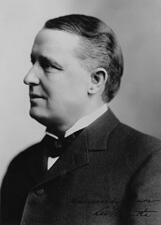
Here you will find contact information for Senator Lee Mantle, including email address, phone number, and mailing address.
| Name | Lee Mantle |
| Position | Senator |
| State | Montana |
| Party | Silver Republican |
| Status | Former Representative |
| Term Start | December 2, 1895 |
| Term End | March 3, 1899 |
| Terms Served | 1 |
| Born | December 13, 1851 |
| Gender | Male |
| Bioguide ID | M000116 |
About Senator Lee Mantle
Lee Mantle (December 13, 1851 – November 18, 1934) was an English-born American businessman, newspaper publisher, and politician from Montana who served as a United States Senator from 1895 to 1899. Originally a Republican and later affiliated with the Silver Republican Party during the height of the free silver movement, he played a prominent role in the political and economic development of Montana in the late nineteenth century.
Mantle was born in Birmingham, England, on December 13, 1851. His father died before he was born, leaving his mother a widow with young children. She converted to Mormonism and, seeking a new life, immigrated to the United States with her children. The family settled in Salt Lake City, Utah, in 1864. There, Mantle’s mother became disillusioned with the Church of Jesus Christ of Latter-day Saints after observing the practice of polygamy, which she believed had been concealed by the missionaries who had converted her. As a result, the Mantle family renounced the LDS Church. Mantle attended a village school in his youth, receiving a basic formal education before entering the workforce at a young age.
In 1870, Mantle moved to Idaho Territory, where he worked as a telegraph operator and stage agent for Western Union, gaining experience in communications and transportation that would serve him well in his later business and political career. He relocated to Butte, Montana, in 1877, at a time when the community was emerging as a major mining center. In Butte he became an agent for the Wells Fargo Express Company, placing him at the center of the region’s rapidly expanding commercial activity. Mantle was one of the organizers of Butte as an incorporated city and, in 1880, served on its first board of aldermen, helping to establish the framework of municipal government in the growing mining town.
Mantle quickly became a leading Republican voice in Montana Territory. In 1881, he founded the Daily Inter Mountain, the first Republican newspaper in western Montana, which he used to advocate for Republican policies and the interests of the mining industry. He was elected to the Territorial House of Representatives in 1882, 1886, and 1888, and in 1889 he served as speaker of the territorial house, a position that underscored his influence in territorial politics on the eve of Montana’s admission to the Union. After statehood, Mantle continued his local public service and was elected mayor of Butte, serving from 1892 to 1893, during which time he oversaw a city undergoing rapid industrial and population growth.
In 1893, following the expiration of a Senate term beginning March 4, Mantle was appointed by the governor of Montana to the United States Senate to fill the vacancy. The U.S. Senate, however, refused to seat him, ruling that the governor lacked authority to make such an appointment while the state legislature was in session. Mantle subsequently secured the office through election by the Montana legislature and served as a United States Senator from January 16, 1895, to March 3, 1899. His single term in the Senate coincided with a significant period in American history marked by economic turmoil, debates over monetary policy, and the rise of the free silver movement. During this time, Mantle participated in the legislative process, represented the interests of his Montana constituents—particularly those tied to mining and silver—and contributed to national debates over currency and economic policy.
Amid the national controversy over the gold standard and bimetallism, Mantle broke with the national Republican Party in 1896 and joined the Silver Republican Party, aligning himself with those who favored the free coinage of silver. He served as chairman of the Silver Republican Party in Montana, reflecting his leadership in the state’s pro-silver political faction. In 1899, he was an unsuccessful candidate for the U.S. Senate nomination, and his term in the Senate ended that year. With the decline of the Silver Republican movement, Mantle returned to the Republican Party in 1900, resuming his place within the mainstream of Montana Republican politics, though he did not again hold federal office.
Outside of elective office, Mantle remained a prominent figure in Montana’s economic and civic life. He continued as publisher of the Inter Mountain until 1901, using the paper as a platform for political commentary and regional advocacy. Over the years he accumulated substantial wealth through investments and ownership stakes in real estate, mining enterprises, insurance, and other business ventures, reflecting the broader economic expansion of the Rocky Mountain West in the late nineteenth and early twentieth centuries. In 1921, Mantle moved to California, where he spent his later years. Long a bachelor, he married for the first time in 1922 at the age of 70, wedding a 25-year-old woman he had known since her childhood. The couple had one son and remained married until his death.
Lee Mantle died in Los Angeles, California, on November 18, 1934. His remains were returned to Montana, and he was interred at Mount Moriah Cemetery in Butte, the city where he had built his fortune, launched his newspaper, and begun his political career.