Senator Lee Warren Metcalf
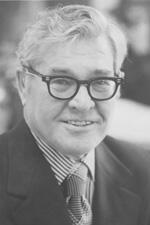
Here you will find contact information for Senator Lee Warren Metcalf, including email address, phone number, and mailing address.
| Name | Lee Warren Metcalf |
| Position | Senator |
| State | Montana |
| Party | Democratic |
| Status | Former Representative |
| Term Start | January 3, 1953 |
| Term End | January 12, 1978 |
| Terms Served | 7 |
| Born | January 28, 1911 |
| Gender | Male |
| Bioguide ID | M000671 |
About Senator Lee Warren Metcalf
Lee Warren Metcalf (January 28, 1911 – January 12, 1978) was an American lawyer, judge, and Democratic politician who served in the United States Congress for seven terms, first as a U.S. Representative from Montana from 1953 to 1961 and then as a U.S. Senator from 1961 until his death in 1978. He was the first of Montana’s U.S. Senators to have been born in the state and held the unique position of Permanent Acting President pro tempore of the Senate from 1963 to 1978, the only person ever to occupy that office. Over the course of his congressional career, he participated actively in the legislative process during a significant period in American history, representing the interests of his Montana constituents while helping to shape national policy.
Metcalf was born on January 28, 1911, in Stevensville, Ravalli County, Montana. Growing up in Montana at a time when the state’s economy and identity were closely tied to agriculture, mining, and public lands, he developed an early familiarity with the issues that would later define much of his public career, particularly conservation and the use of natural resources. His Montana upbringing also underscored his later distinction as the first native-born Montanan to serve the state in the U.S. Senate.
After completing his early education in Montana, Metcalf pursued higher education and legal training, becoming an attorney before entering public life. He studied law and was admitted to the bar, beginning a legal career that would lead him into public service as both a lawyer and a judge. His work as an attorney and his experience on the bench provided him with a grounding in statutory interpretation and public policy that proved valuable when he later moved into legislative office. This combination of legal and judicial experience helped shape his approach to complex national issues once he entered Congress.
Metcalf’s early public career included service as a judge, which enhanced his reputation within Montana and prepared him for federal office. Building on this foundation, he successfully ran for the U.S. House of Representatives in 1952 and took office in January 1953. As a member of the House from 1953 to 1961, he represented Montana during a period marked by the Cold War, postwar economic expansion, and the early stages of the modern civil rights movement. During his four terms in the House, he contributed to the legislative process and gained experience in national policymaking that would inform his later Senate service.
In 1960, when Democratic U.S. Senator James E. Murray chose not to seek reelection, Metcalf ran for Murray’s open Senate seat. He won the Democratic nomination over former Montana Governor John W. Bonner, demonstrating his strong standing within the state party. In the general election, he narrowly defeated Republican Orvin B. Fjare, a conservative former U.S. Representative, by a margin of 51 percent to 49 percent. Metcalf took office in the Senate in January 1961, beginning what would be a 17-year tenure. During this time he served through the administrations of Presidents John F. Kennedy, Lyndon B. Johnson, Richard Nixon, and Gerald Ford, participating in debates over civil rights, social welfare, foreign policy, and environmental protection. He was reelected after competitive campaigns in 1966 and 1972, reflecting both the changing political climate and his continued support among Montana voters. In 1977, he announced that he would not seek a fourth Senate term in 1978.
As a U.S. Senator, Metcalf became particularly well known for his work on conservation, public lands, and education. Regarded as “a pioneer of the conservation movement,” he worked to protect the natural environment and to regulate utilities that affected consumers and communities. He played a role in the passage of the Wilderness Act of 1964 and supported the creation of the Great Bear Wilderness and the Absaroka–Beartooth Wilderness, helping to preserve large tracts of Montana and neighboring states’ landscapes for future generations. In 1962, he introduced a “Save Our Streams” bill aimed at preserving natural recreation facilities and protecting fish and wildlife from damage caused by highway construction. He was also a longtime member of the Migratory Bird Conservation Commission, further underscoring his commitment to wildlife and habitat protection. Beyond conservation, Metcalf was active on education policy, emerging as a leading supporter of the Elementary and Secondary Education Act, efforts to extend G.I. Bill educational benefits to a new generation of veterans, and the development of legislation to improve federally aided vocational education. He also played a role, alongside Senator Mike Mansfield and others, in the leadership that led to the establishment of the Peace Corps, reflecting his interest in international service and development.
Within the Senate’s internal hierarchy, Metcalf’s most distinctive institutional role was his service as Permanent Acting President pro tempore, a position he held from 1963 until his death in 1978. This unique office, created to ensure continuity in presiding over the Senate in the absence of the President pro tempore, underscored the confidence his colleagues placed in his judgment and reliability. In this capacity, he helped maintain the orderly conduct of Senate business during a period that included the civil rights era, the Vietnam War, and significant domestic policy reforms. His long service in both the House and Senate, spanning from 1953 to 1978, placed him at the center of many of the major legislative developments of mid-twentieth-century America.
Lee Warren Metcalf died in office on January 12, 1978, shortly before completing his third full term in the Senate and a few weeks before his sixty-seventh birthday. His death ended a quarter-century of continuous congressional service. Having announced the previous year that he would not seek reelection in 1978, he left behind a record marked by sustained advocacy for conservation, education, and public service, as well as a distinctive institutional legacy as the Senate’s only Permanent Acting President pro tempore.