Senator Lee Slater Overman
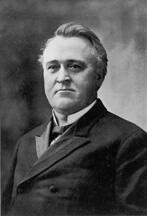
Here you will find contact information for Senator Lee Slater Overman, including email address, phone number, and mailing address.
| Name | Lee Slater Overman |
| Position | Senator |
| State | North Carolina |
| Party | Democratic |
| Status | Former Representative |
| Term Start | November 9, 1903 |
| Term End | December 12, 1930 |
| Terms Served | 5 |
| Born | January 3, 1854 |
| Gender | Male |
| Bioguide ID | O000140 |
About Senator Lee Slater Overman
Lee Slater Overman (January 3, 1854 – December 12, 1930) was a Democratic United States senator from North Carolina who served from 1903 until his death in 1930. A member of the Democratic Party, he contributed to the legislative process during five terms in office and was a prominent figure in national politics during a significant period in American history, spanning the Progressive Era, World War I, and the early interwar years. He was the first U.S. senator from North Carolina to be elected by popular vote, marking a major transition in the state’s political history following the adoption of the Seventeenth Amendment to the Constitution.
Overman was born in Salisbury, Rowan County, North Carolina, the son of William H. Overman and Mary E. Slater Overman. Raised in the post–Civil War South, he came of age during Reconstruction and its aftermath, an environment that shaped his political outlook and alliances. His early life in Salisbury, a regional center of commerce and law, exposed him to the legal and political culture that would later define his career.
Overman attended Trinity College in North Carolina (now Duke University), where he was a member of the Chi Phi fraternity and graduated with the Class of 1874. After completing his undergraduate studies, he taught at the Winston-Salem School for two years, gaining experience in education before returning to higher study. He subsequently earned a Master of Arts degree from Trinity College, further solidifying his academic credentials. His education at Trinity, then a leading Methodist institution in the state, helped connect him with influential political and professional networks that would prove important in his later public life.
Early in his career, Overman became closely associated with Zebulon Baird Vance, a former Confederate officer and one of North Carolina’s most influential political leaders and a leading opponent of Reconstruction policies. Overman served as one of Vance’s personal secretaries when Vance was elected governor of North Carolina, an experience that drew him directly into the workings of state government and Democratic Party politics. Through this role, Overman gained practical knowledge of administration, legislation, and party organization, which helped launch his own political career. He soon became involved in elective office and was first elected to the North Carolina House of Representatives, where he began to build a reputation as a capable legislator and party loyalist.
Overman’s service in the United States Senate began when he was chosen by the North Carolina legislature in 1902 to fill a Senate seat, taking office in 1903. At that time, U.S. senators were still selected by state legislatures, and he was again appointed by the legislature in 1909. His tenure in Congress occurred during a significant period in American history, as the nation grappled with industrialization, corporate power, labor unrest, and expanding federal authority. Overman’s economic views inclined him toward the progressive side within Southern Democratic politics; he favored reforms affecting corporate interests and labor, reflecting broader national debates over regulation and workers’ rights. In 1914, after the Seventeenth Amendment standardized the popular election of senators, Overman became the first U.S. senator from North Carolina to be elected by popular vote. This election marked the beginning of his second full term following the expiration of his initial six-year term, and he continued to be reelected, serving until 1930, when he died two years into his fifth term.
During World War I and the immediate postwar years, Overman played a prominent role in national security and internal security legislation. He wrote and sponsored the Overman Act of 1918, which granted President Woodrow Wilson extraordinary powers to coordinate and reorganize executive branch agencies in wartime, significantly strengthening the federal government’s capacity to manage the war effort. After the war, Overman chaired a Senate subcommittee commonly known as the Overman Committee, which investigated German and Bolshevik propaganda and activities in the United States during the first Red Scare from 1919 to 1921. Chosen to head this committee by President Wilson, Overman oversaw hearings that examined alleged subversive influences, including those associated with Bolshevism and radical labor movements. His work on the committee played a role in bringing on and shaping the so‑called Red Scare that affected American politics in 1919 and 1920. Many historians regard the Overman Committee as a precursor to later congressional investigations of alleged subversion, including the House Un-American Activities Committee.
Overman’s legislative record also reflected the racial politics of his time and region. In 1922, he was one of the leaders of a one-hour, forty-five-minute filibuster that helped defeat the Dyer Anti-Lynching Bill, a federal measure intended to address racial violence and lynching, particularly in the South. In his lengthy speech opposing the bill, he argued that it was a partisan attempt to solidify the Republican hold on the northern Black vote, claimed that the bill had been written by a Black person, and asserted that what he termed “ignorant” Black people in the South would interpret the legislation as permission to “commit the foulest of outrages.” His stance on this issue aligned with the prevailing segregationist and states’ rights views of many Southern Democrats of the era and contributed to the long delay in federal anti-lynching protections.
Overman remained an influential senator until his death in office on December 12, 1930, in Washington, D.C., while serving his fifth term, having been two years into that term. His long tenure in the Senate, from 1903 to 1930, made him one of North Carolina’s most enduring representatives in Congress, and he participated in the democratic process over nearly three decades, representing the interests of his constituents during a period of profound national change. His legacy was later commemorated during World War II when the United States Liberty ship SS Lee S. Overman was named in his honor. The vessel, launched as part of the wartime merchant fleet, struck a mine the year after its launch and sank over the course of a few days, a posthumous and symbolic reminder of his association with wartime governance and national service.