Representative Leland Merritt Ford
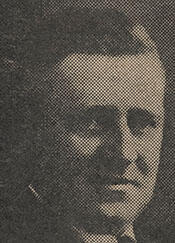
Here you will find contact information for Representative Leland Merritt Ford, including email address, phone number, and mailing address.
| Name | Leland Merritt Ford |
| Position | Representative |
| State | California |
| District | 16 |
| Party | Republican |
| Status | Former Representative |
| Term Start | January 3, 1939 |
| Term End | January 3, 1943 |
| Terms Served | 2 |
| Born | March 8, 1893 |
| Gender | Male |
| Bioguide ID | F000264 |
About Representative Leland Merritt Ford
Leland Merritt Ford (March 8, 1893 – November 27, 1965) was an American businessman and Republican politician who served two terms as a U.S. Representative from California from 1939 to 1943. His congressional service took place during a pivotal era encompassing the final years of the Great Depression and the early period of American involvement in World War II, during which he participated in the legislative process and represented the interests of his California constituents in the House of Representatives.
Ford was born in Eureka, Nevada, where he attended the local public schools. Seeking further education and practical training, he pursued various courses at several institutions, including the University of Arizona at Tucson, Virginia Polytechnic Institute at Blacksburg, the Sheldon School of Scientific Business in Chicago, Illinois, and the University of California, Los Angeles. Although he did not follow a traditional, single-institution academic path, this combination of studies reflected his interest in both technical and commercial subjects and provided a foundation for his later work in surveying, transportation, and real estate.
Ford began his career as a surveyor for the Southern Sierras Power Company in 1909 and 1910. He then entered the railroad industry, working for the Southern Pacific Railroad in California in 1911 and in New York in 1912 and 1913. In 1915 he moved to Los Angeles, California, where he was employed by the Union Pacific Railroad. Later that same year he relocated to Lynchburg, Virginia, and from 1915 to 1919 engaged in farming and livestock breeding, gaining experience in agricultural enterprise and land management. In 1919 he returned to California and settled in Santa Monica, where he entered the real estate business, a field that would remain central to his professional life.
Ford’s involvement in public affairs began at the local level in Santa Monica. He served as a member of the Santa Monica planning commission from 1923 to 1927, participating in the city’s development and land-use decisions during a period of rapid growth in Southern California. Building on this experience, he advanced to county-level office and served as a member of the Los Angeles County Board of Supervisors from 1936 to 1939. In this role he was involved in county governance and administration during the later years of the New Deal era, gaining broader visibility and political experience that helped pave the way for his election to Congress.
In 1938, Ford was elected as a Republican to the Seventy-sixth Congress and was reelected to the Seventy-seventh Congress, serving from January 3, 1939, to January 3, 1943. As a member of the House of Representatives, he contributed to the legislative process during two terms in office, representing California at a time of mounting international tension and eventual American entry into World War II. His tenure in Congress was marked by his controversial role in the treatment of Japanese Americans during the war. In the immediate aftermath of the attack on Pearl Harbor, Ford initially spoke in defense of Japanese Americans when Representative John Rankin of Mississippi proposed deporting every “Jap” in the country. However, after receiving a large volume of angry letters and telegrams from constituents, he reversed his position. He became the first congressman to lobby for the mass incarceration of Japanese Americans and subsequently spearheaded the anti-Japanese campaign in California, advocating policies that contributed to the eventual forced removal and internment of Japanese Americans on the West Coast.
Ford sought a third term in the House but was an unsuccessful candidate for reelection in 1942 to the Seventy-eighth Congress. After leaving Congress in January 1943, he returned to private life and resumed his real estate business in California. He later became a resident of the Pacific Palisades area of Los Angeles, continuing his involvement in property and business affairs while remaining a figure of some prominence in his community.
Leland Merritt Ford died in Santa Monica, California, on November 27, 1965. He was interred in Woodlawn Cemetery in Santa Monica. His career encompassed work in surveying, railroads, agriculture, real estate, and public office at the municipal, county, and federal levels, and his congressional service from 1939 to 1943 placed him at the center of significant and often contentious developments in American domestic policy during World War II.