Representative Leon Harry Gavin
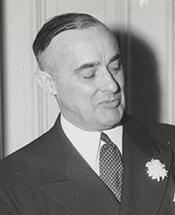
Here you will find contact information for Representative Leon Harry Gavin, including email address, phone number, and mailing address.
| Name | Leon Harry Gavin |
| Position | Representative |
| State | Pennsylvania |
| District | 23 |
| Party | Republican |
| Status | Former Representative |
| Term Start | January 6, 1943 |
| Term End | January 3, 1965 |
| Terms Served | 11 |
| Born | February 25, 1893 |
| Gender | Male |
| Bioguide ID | G000102 |
About Representative Leon Harry Gavin
Leon Harry Gavin (February 25, 1893 – September 15, 1963) was a Republican member of the U.S. House of Representatives from Pennsylvania who served in Congress from 1943 until his death in 1963. Over the course of 11 consecutive terms, he contributed to the legislative process during a significant period in American history, representing the interests of his constituents as a member of the House of Representatives.
Gavin was born in Buffalo, New York, on February 25, 1893. In 1915 he moved to Oil City, Pennsylvania, a relocation that would shape his later public and political career. Oil City and the surrounding Venango County region became the center of his professional life and the base from which he would eventually enter national politics.
During the First World War, Gavin served in the United States Army, attaining the rank of sergeant in the Fifty-first Infantry Regiment of the 6th Infantry Division. His military service during this global conflict provided him with experience in leadership and public service that informed his later civic and political activities. After the war, he remained active in local and regional public affairs, reflecting a continued commitment to national defense and community service.
In the years between World War I and his election to Congress, Gavin held a series of positions in public and civic administration in Pennsylvania. He served on the Defense Council of Venango County, Pennsylvania, participating in local defense and preparedness efforts. He was a member of the State Board of Appeals of the Selective Service System, where he helped adjudicate matters related to military conscription. In the private and civic sector, he worked as the executive secretary of the Oil City Chamber of Commerce, a role that placed him at the center of local economic and business development. His interests also extended to conservation policy, and from 1958 to 1963 he served as a member of the National Migratory Bird Conservation Commission, participating in federal efforts to protect wildlife and manage natural resources.
Gavin entered national office when he was elected as a Republican to the 78th United States Congress. He was subsequently reelected to the ten succeeding Congresses, serving continuously from January 3, 1943, until his death on September 15, 1963. His congressional tenure thus spanned World War II, the early Cold War, the Korean War, and the beginning of the civil rights era, a period marked by major domestic and international developments. As a member of the Republican Party in the House of Representatives, he participated in the democratic process and contributed to legislation affecting both his Pennsylvania district and the nation as a whole.
During his time in Congress, Gavin took part in key legislative decisions of the mid-twentieth century. He voted in favor of the Civil Rights Act of 1957 and the Civil Rights Act of 1960, measures that sought to protect voting rights and strengthen federal enforcement of civil rights. He also supported the 24th Amendment to the U.S. Constitution, which prohibited the use of poll taxes in federal elections, thereby expanding access to the ballot box. These votes placed him among those members of Congress who backed early federal civil rights initiatives during a transformative period in American social and political life.
Leon Harry Gavin died in office from a cerebral hemorrhage in Washington, D.C., on September 15, 1963, while still serving in the U.S. House of Representatives. His death brought to a close more than two decades of continuous congressional service. He was interred in Arlington National Cemetery, reflecting both his status as a veteran of World War I and his long tenure as a member of Congress.