Representative Leon Sacks
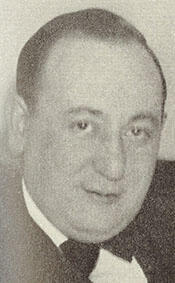
Here you will find contact information for Representative Leon Sacks, including email address, phone number, and mailing address.
| Name | Leon Sacks |
| Position | Representative |
| State | Pennsylvania |
| District | 1 |
| Party | Democratic |
| Status | Former Representative |
| Term Start | January 5, 1937 |
| Term End | January 3, 1943 |
| Terms Served | 3 |
| Born | October 7, 1902 |
| Gender | Male |
| Bioguide ID | S000008 |
About Representative Leon Sacks
Leon Sacks (October 7, 1902 – March 11, 1972) was an American lawyer and Democratic politician who served three terms as a member of the U.S. House of Representatives from Pennsylvania from 1937 to 1943. He represented his constituents during a significant period in American history, contributing to the legislative process in the late New Deal era and on the eve of and during the early years of World War II.
Sacks was born on October 7, 1902, in Philadelphia, Pennsylvania, the son of Russian-Jewish immigrants. Raised in Philadelphia, he was part of a growing Jewish community that was establishing itself in the city’s professional and political life in the early twentieth century. His family background and urban upbringing in a major industrial and commercial center helped shape his later interests in law, public service, and Democratic Party politics.
Sacks pursued higher education at the University of Pennsylvania in Philadelphia. He graduated from the Wharton School of the University of Pennsylvania in 1923, receiving training in business and economics that would inform his later work as a lawyer and legislator. He continued his studies at the same institution, earning a degree from the law department of the University of Pennsylvania in 1926. That same year, after his admission to the bar, he commenced the practice of law in Philadelphia, beginning a legal career that would run in parallel with his growing involvement in public affairs.
By the mid-1930s, Sacks had moved from private practice into state-level public service. In February 1935 he was appointed deputy Attorney General of Pennsylvania, a position he held until January 1937. In this role he participated in the legal work of the state during a period marked by the implementation of New Deal–era policies and economic recovery efforts. He also became active in party organization, being elected a member of the Democratic State Committee in 1936 and serving in that capacity until 1942. His work in state government and party leadership helped establish his reputation within Pennsylvania’s Democratic ranks and set the stage for his election to national office.
Sacks was elected as a Democrat to the Seventy-fifth Congress in the 1936 elections and took his seat in the U.S. House of Representatives in January 1937. He was subsequently reelected to the Seventy-sixth and Seventy-seventh Congresses, serving continuously from 1937 to 1943. During his three terms in Congress, he participated in the democratic process at the federal level, representing the interests of his Pennsylvania constituents while the nation confronted the final years of the Great Depression and the mounting global crisis that led to World War II. He contributed to the legislative work of the House during this transformative period in American history. In 1942, he was an unsuccessful candidate for reelection, bringing his congressional service to a close at the end of his third term in January 1943.
Following his departure from Congress, Sacks entered military-related service during World War II. He served with the Army Air Forces Eastern Flying Training Command, holding the rank of lieutenant colonel, from January 4, 1943, to January 10, 1946. In this capacity he was associated with the training infrastructure that supported the wartime expansion of American air power. After his release from active duty, he resumed the practice of law in Philadelphia, returning to the profession he had begun two decades earlier.
In the postwar years, Sacks remained active in public service at the state and local levels, particularly in matters affecting veterans and electoral administration. He served as a member of the State Veterans Commission from 1951 to 1969, reflecting his ongoing engagement with issues facing former servicemembers in the decades after World War II. From 1952 to 1965 he was chairman of the registration commission of Philadelphia, a position that placed him at the center of voter registration and election oversight in the city. He also served as a member of the Military Reservations Commission from 1957 to 1967, further extending his involvement in military and veterans’ affairs within Pennsylvania.
Leon Sacks died in Philadelphia on March 11, 1972, at the age of 69. His career spanned private law practice, state legal service, party leadership, three terms in the U.S. House of Representatives, wartime service with the Army Air Forces, and two decades of postwar work on veterans’ and electoral commissions in Pennsylvania, marking him as a significant Jewish-American public figure in mid-twentieth-century Philadelphia and state politics.