Representative Leonard Wood Hall
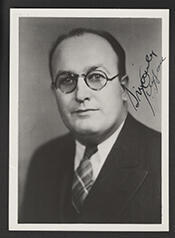
Here you will find contact information for Representative Leonard Wood Hall, including email address, phone number, and mailing address.
| Name | Leonard Wood Hall |
| Position | Representative |
| State | New York |
| District | 2 |
| Party | Republican |
| Status | Former Representative |
| Term Start | January 3, 1939 |
| Term End | January 3, 1953 |
| Terms Served | 7 |
| Born | October 2, 1900 |
| Gender | Male |
| Bioguide ID | H000060 |
About Representative Leonard Wood Hall
Leonard Wood Hall (October 2, 1900 – June 2, 1979) was an American lawyer and Republican politician who served seven terms as a United States Representative from New York from 1939 to 1953. He was born at Sagamore Hill, the manor house of future President Theodore Roosevelt, near Oyster Bay, New York, the son of Franklyn Herbert Hall and Mary Anne (née Garvin) Hall. His father served as Roosevelt’s coachman and later as the White House librarian, placing Hall’s early life in close proximity to national political life and the Roosevelt household on Long Island.
Hall attended public schools in New York and went on to study law at Georgetown University in Washington, D.C., graduating from its law department in 1920. He was admitted to the bar in 1922 and commenced the practice of law in New York City. His legal training and early professional experience in the city provided the foundation for a career that would combine law, local officeholding, and national politics. On May 10, 1934, in Oyster Bay, he married Gladys Dowsey, the daughter of a local Republican political leader; she had two children from a previous marriage, and the marriage further strengthened Hall’s ties to the Republican organization in Nassau County.
Hall’s public career began in state and local office. He was elected as a member of the New York State Assembly from Nassau County’s 2nd District in 1927 and 1928. He then served as Sheriff of Nassau County from 1929 to 1931, gaining administrative and law-enforcement experience at the county level. After his term as sheriff, he returned to the State Assembly, serving again as a member in 1934, 1935, 1936, 1937, and 1938. During these years he became a prominent figure in Long Island Republican politics and built the legislative and political record that would support his candidacy for national office.
Hall was elected as a Republican to the 76th, 77th, 78th, 79th, 80th, 81st, and 82nd United States Congresses, holding office as a Representative from New York from January 3, 1939, to December 31, 1952. His seven terms in the House of Representatives spanned a significant period in American history, encompassing the end of the Great Depression, World War II, and the early Cold War. As a member of the House, Leonard Wood Hall participated in the democratic process, contributed to the legislative work of Congress, and represented the interests of his New York constituents. A member of the Republican Party throughout his congressional career, he was also active in national party affairs and served as a delegate to the Republican National Conventions of 1948, 1952, 1956, and 1968.
Hall resigned from Congress on December 31, 1952, to assume judicial office as Surrogate of Nassau County, reflecting his continued engagement with both law and public service at the county level. He subsequently resigned that post to become Chairman of the Republican National Committee, serving from 1953 to 1957. As RNC chairman during the presidency of Dwight D. Eisenhower, Hall played a central role in national party strategy, organization, and fundraising at a time when the Republican Party controlled the White House and sought to consolidate its mid‑twentieth‑century electoral base.
After stepping down as party chairman, Hall continued to be involved in national and international affairs. In April 1958, President Eisenhower designated him as the President’s personal representative at the opening of the Brussels World’s Fair, underscoring his status as a trusted political ally and senior party figure. He resumed the practice of law in Garden City and New York City as senior partner in the firm of Hall Casey Dickler & Brady. Later in 1958 he briefly sought the Republican nomination for Governor of New York, but withdrew in favor of Nelson A. Rockefeller, who went on to defeat incumbent Governor W. Averell Harriman in the general election. In 1964, during the presidential campaign of Republican nominee Barry M. Goldwater, a group of party establishment donors urged Goldwater to replace his close friend Denison Kitchel as national campaign manager with Hall, whose experience as RNC chairman they valued; Goldwater, however, declined to make the change and retained Kitchel.
In his later years Hall resided in Locust Valley, New York, maintaining his long-standing ties to the North Shore of Long Island. He died on June 2, 1979, in Glen Cove, New York. He was interred in the Memorial Cemetery of St. John’s Church (Episcopal) in Laurel Hollow, a burial place for a number of notable American public figures and cultural leaders, including Henry L. Stimson, William S. Paley, and Arthur Dove. Leonard Wood Hall’s career spanned local, state, and national office, and combined legal practice, legislative service, and party leadership over more than five decades of public life.