Representative Leonard George Wolf
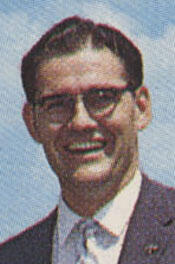
Here you will find contact information for Representative Leonard George Wolf, including email address, phone number, and mailing address.
| Name | Leonard George Wolf |
| Position | Representative |
| State | Iowa |
| District | 2 |
| Party | Democratic |
| Status | Former Representative |
| Term Start | January 7, 1959 |
| Term End | January 3, 1961 |
| Terms Served | 1 |
| Born | October 29, 1925 |
| Gender | Male |
| Bioguide ID | W000675 |
About Representative Leonard George Wolf
Leonard George Wolf (October 29, 1925 – March 28, 1970) was an American World War II veteran, agricultural economist, and Democratic politician who served one term as a U.S. Representative from Iowa’s 2nd congressional district. Elected in 1958, he served in the United States Congress from January 3, 1959, to January 3, 1961, during a significant period in American history, and was defeated when seeking re-election in 1960. As a member of the House of Representatives, he participated in the legislative process and represented the interests of his constituents in eastern Iowa.
Wolf was born on a farm in Dane County, Wisconsin, near Mazomanie, on October 29, 1925. He attended the public schools of Mazomanie, reflecting a rural Midwestern upbringing that would later inform his professional focus on agriculture and farm policy. Growing up in a farming community during the interwar years and the Great Depression, he was exposed early to the economic challenges facing American farmers, experiences that helped shape his later political positions and career in agricultural economics.
During World War II, Wolf served in the United States Navy from 1944 to 1946. He was assigned to duty in the Pacific Ocean theater, where he was part of the broader U.S. naval effort in the closing years of the war. His military service as a young man contributed to his public standing as a veteran and provided him with firsthand experience of global conflict and postwar reconstruction issues that would later intersect with his work on international development and hunger relief.
After his discharge from the Navy, Wolf pursued higher education under the opportunities available to returning veterans. He enrolled at the University of Wisconsin–Madison, where he studied agricultural economics, and graduated in 1949. That same year he moved to Elkader, Iowa, a small community in the northeastern part of the state. In Elkader, he began building a career closely tied to the agricultural economy of the region, grounding his later political advocacy in both academic training and practical experience.
From 1952 to 1958, Wolf worked in Elkader as a retail feed dealer, serving local farmers and livestock producers. In addition to his business activities, he delivered public speeches and lectures, developing a reputation as an articulate advocate on agricultural and rural issues. His engagement with farm communities and his understanding of the economic pressures facing them provided the foundation for his entry into electoral politics and his challenge to long-serving Republican representation in his district.
Wolf first ran for Congress in 1956, seeking to unseat longtime Republican incumbent Henry O. Talle in Iowa’s 2nd congressional district. His candidacy was aided by a drop in farm prices, which created dissatisfaction among farmers, but was hindered by the presence of a popular Republican president, Dwight D. Eisenhower, at the top of the ticket. Although Wolf lost the race, he received a higher percentage of the vote than any of Talle’s previous opponents, demonstrating growing Democratic strength and establishing himself as a credible challenger in a traditionally Republican district.
In the 1958 midterm elections, Wolf again faced Talle in a rematch. By that time, prices received by farmers for their products had risen, but not enough to offset an even greater increase in production costs, contributing to an anti-Republican mood in many rural areas that had long been the party’s base in Iowa. Against this backdrop, and drawing on his agricultural background and prior campaign experience, Wolf narrowly defeated Talle, unseating the incumbent and winning election to the Eighty-sixth Congress. His term in Congress began on January 3, 1959. As a Democratic member of the House of Representatives, Wolf contributed to the legislative process during a pivotal era marked by the early stages of the civil rights movement and evolving federal farm and economic policies, and he worked to represent the interests of his largely rural constituency.
Wolf sought re-election in 1960 but was defeated amid a broader resurgence of Republican strength in Iowa that year. In a close race, he was unseated by Republican James E. Bromwell. His congressional service thus concluded on January 3, 1961, after one term in office. Although his time in Congress was brief, it reflected the shifting political and economic currents in mid-20th-century Iowa, particularly the tensions surrounding farm income, costs, and federal agricultural policy.
After leaving Congress, Wolf devoted his career to international development and the fight against hunger and malnutrition. In 1961 he was appointed special assistant to the director of the International Cooperation Administration’s Mission in Brazil, a U.S. foreign aid program that predated the establishment of the Agency for International Development (USAID). He served in Brazil until 1965, working on programs aimed at improving nutrition and agricultural conditions. In 1966 he coordinated a child feeding program for Latin America, extending his efforts to address malnutrition on a regional scale. The following year, in 1967, he was involved in coordinating relief and feeding efforts in India following a severe drought, contributing to international responses to food shortages in South Asia.
In 1968, Wolf was appointed executive director of the American Freedom From Hunger Foundation, a private organization dedicated to combating global hunger and promoting improved nutrition and agricultural development. In this role he continued to apply his expertise in agriculture, economics, and public policy to international humanitarian efforts, reflecting a career-long commitment to the welfare of rural populations both in the United States and abroad. Leonard George Wolf died on March 28, 1970, in Washington, D.C. He was interred in St. Barnabas Cemetery in Mazomanie, Wisconsin, returning in death to the community near where he had been born.