Representative Leonidas Carstarphen Dyer
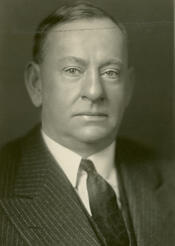
Here you will find contact information for Representative Leonidas Carstarphen Dyer, including email address, phone number, and mailing address.
| Name | Leonidas Carstarphen Dyer |
| Position | Representative |
| State | Missouri |
| District | 12 |
| Party | Republican |
| Status | Former Representative |
| Term Start | April 4, 1911 |
| Term End | March 3, 1933 |
| Terms Served | 11 |
| Born | June 11, 1871 |
| Gender | Male |
| Bioguide ID | D000591 |
About Representative Leonidas Carstarphen Dyer
Leonidas Carstarphen Dyer (June 11, 1871 – December 15, 1957) was an American politician, reformer, civil rights activist, attorney, and military officer who represented Missouri in the United States House of Representatives from 1911 to 1933. A Republican, he served eleven terms in Congress, from the 62nd through the 72nd Congresses, and became nationally known for his progressive reform work, his authorship of key federal criminal statutes, and his leadership in the movement for federal anti-lynching legislation.
Dyer was born on June 11, 1871, and came of age in an era of rapid industrialization and social change in the United States. Details of his early family life and schooling are less extensively documented than his later public career, but he pursued legal studies and entered the bar, establishing himself as an attorney in St. Louis, Missouri. His early professional experiences in that city, particularly his encounters with predatory lending practices and urban poverty, helped shape his reformist outlook and his commitment to using law and public office to curb economic abuses and protect vulnerable citizens.
When the Spanish–American War began in 1898, Dyer enrolled in the United States Army as a private. He served in combat during the Santiago campaign in Cuba and distinguished himself during the conflict. By the end of the war he had been promoted to the rank of colonel and served on the staff of Herbert S. Hadley, who would later become governor of Missouri. This military experience, occurring early in his adult life, contributed to his public reputation as a disciplined and patriotic figure and provided him with connections in Missouri Republican politics that would later support his congressional career.
After the war, Dyer returned to St. Louis and served as an assistant circuit attorney. In that role he became a prominent advocate of anti-usury reform. He gained national attention by championing the case of a railroad clerk who had borrowed $100 and was being charged 34 percent monthly interest—equivalent to 408 percent annually—after having already paid $480 in interest over 14 months without any reduction of the principal. In the presence of Attorney Dyer, the moneylender ultimately tore up the worker’s loan. Building on this and similar experiences, Dyer organized a group of wealthy St. Louis merchants who conducted investigations and exerted pressure to keep interest rates low in Missouri. His anti-usury campaign, rooted in his legal practice, marked him as a progressive reformer and laid the groundwork for his later legislative initiatives.
Dyer entered national politics in 1910, when he successfully ran for the U.S. House of Representatives as a Republican from Missouri’s 12th Congressional District, a district that would come to have a majority African-American population. He followed another Republican, Harry Coudrey, in representing the district. Dyer took his seat in the 62nd Congress in 1911 and was repeatedly re-elected, serving continuously until 1933, although his tenure was briefly interrupted between 1914 and 1915 due to a dispute over the results of the 1912 election; he was ultimately re-elected in 1914 and returned to the House. Over the course of his service, he participated in 1,556 of 2,035 roll-call votes, missing 482 votes, or about 28 percent, with particularly high rates of missed votes during April–June 1912 and October–December 1922.
As a legislator, Dyer pursued a broad reform agenda. Continuing his earlier work against predatory lending, he authored an anti-usury law in 1914 that applied to the District of Columbia, then directly governed by Congress. This statute limited excessive loan rates charged by bank lenders in the nation’s capital and reflected his ongoing concern with economic fairness and consumer protection. In 1919 he authored a landmark motor-vehicle theft law that made transporting stolen automobiles across state lines a federal crime. This measure significantly expanded federal law enforcement authority in response to the growing problem of interstate auto theft; by 1956, the Federal Bureau of Investigation reported that the law had enabled the recovery of stolen cars valued at more than $212 million. During the era of Prohibition, Dyer took a less restrictive stance than many of his contemporaries, voting against various anti-liquor measures, including the Eighteenth Amendment to the U.S. Constitution, which established national prohibition of alcoholic beverages.
Dyer’s most enduring national prominence came from his leadership in the campaign for federal anti-lynching legislation. In May and July 1917, violent racial conflicts in St. Louis and East St. Louis, Illinois, deeply affected him. In East St. Louis, white ethnic workers on strike attacked Black strikebreakers, and the violence escalated into a major race riot. Two white police officers were killed early in the confrontation, and in retaliation white mobs killed at least 35 Black residents, mutilated bodies, and threw some victims into the Mississippi River. White rioters openly targeted and lynched Black people, and those who tried to intervene were threatened with violence. White Illinois National Guardsmen sent to restore order often failed to stop the attacks and in some instances participated in them. Atrocities included the shooting of a Black child who was then thrown into a burning building, and assaults by white prostitutes on Black women. Of the 134 persons indicted after the riots, nearly one-third were Black; only nine white defendants who went to trial were imprisoned, while 12 Black defendants were convicted and sent to prison, resulting in a conviction rate more than double for Black defendants compared with whites.
Representing a district in St. Louis with mostly African-American residents, many of whom had migrated from the South during the Great Migration, Dyer was distressed by such mob violence and the broader pattern of lynching in the South, where Black citizens had been largely disfranchised between 1890 and 1911 through constitutional changes and discriminatory laws. Disfranchisement excluded them from juries and political office and left them with virtually no formal political power. Working closely with W. E. B. Du Bois and Walter White of the National Association for the Advancement of Colored People (NAACP), who were leading a national anti-lynching campaign, Dyer agreed to sponsor federal legislation to address the problem. In 1918 he introduced what became known as the Dyer Anti-Lynching Bill. Black leaders had pressed the Republican Party to include support for such legislation in its 1920 national platform, and the party did so. President Warren G. Harding publicly endorsed Dyer’s efforts, speaking in favor of the bill in Birmingham, Alabama, and stating that he would sign it if it reached his desk.
Dyer reintroduced a revised version of the anti-lynching bill in 1921. The measure sought to make lynching a federal crime and to allow federal prosecution where state authorities failed to act, including provisions to punish state officials who were remiss in suppressing lynchings. Supporters argued that lynching and mob violence deprived African Americans of rights guaranteed by the Fourteenth Amendment, including the right to a speedy and fair trial by an impartial jury, to be informed of charges, to present witnesses, and to have counsel. The bill attracted what contemporary observers described as “insistent countrywide demand.” On January 26, 1922, the House of Representatives passed the bill by a wide margin, 230 to 119, marking the first time in the twentieth century that federal anti-lynching legislation had cleared one chamber of Congress. During the Senate’s consideration of the bill, however, some Republicans, notably Senator William Borah of Idaho, raised constitutional objections, particularly to the provisions penalizing state officials. Southern white Democratic senators mounted a prolonged filibuster in December 1922 that blocked a vote on the measure and stalled all national business in the Senate for a week. Recognizing that they could not overcome the filibuster, Republican leaders conceded defeat. Subsequent attempts to advance the bill in 1923 and 1924 also failed. During this period, many Black Americans expressed deep frustration with the slow pace of action; a silent protest march took place in 1922 in front of the Capitol and the White House, with demonstrators carrying signs such as “Congress discusses constitutionality while the smoke of burning bodies darkens the heavens.”
Dyer’s advocacy for anti-lynching legislation and his broader civil rights record made him a prominent figure among African-American voters, particularly in his own district. However, the repeated failure of Congress to enact the Dyer Anti-Lynching Bill contributed to growing disillusionment with the Republican Party among Black voters. During the Great Depression, many of his constituents were also drawn to Democratic candidates by the early work and welfare programs of President Franklin D. Roosevelt’s administration. Dyer was defeated for re-election in 1932 and again in subsequent attempts in 1934 and 1936, after which he retired from active politics. Over the course of his eleven terms, he had participated actively in the legislative process, representing Missouri’s 12th District and contributing to major debates on economic regulation, criminal law, civil rights, and national social policy.
Leonidas Carstarphen Dyer lived for many years after leaving Congress, witnessing the continued evolution of federal civil rights policy and the eventual revival of anti-lynching efforts long after his own bill had failed. He died on December 15, 1957. His career left a legacy as a progressive Republican reformer, a veteran of the Spanish–American War, and an early and persistent congressional advocate for federal protection of African-American civil rights.