Representative Leonidas Felix Livingston
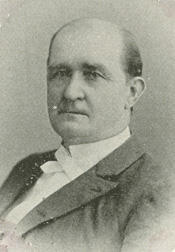
Here you will find contact information for Representative Leonidas Felix Livingston, including email address, phone number, and mailing address.
| Name | Leonidas Felix Livingston |
| Position | Representative |
| State | Georgia |
| District | 5 |
| Party | Democratic |
| Status | Former Representative |
| Term Start | December 7, 1891 |
| Term End | March 3, 1911 |
| Terms Served | 10 |
| Born | April 3, 1832 |
| Gender | Male |
| Bioguide ID | L000368 |
About Representative Leonidas Felix Livingston
Leonidas Felix Livingston (April 3, 1832 – February 11, 1912) was an American farmer, Confederate States Army veteran, and Democratic politician who served 10 terms as a U.S. Representative from Georgia from 1891 to 1911. Born near Covington, Newton County, Georgia, he was raised in a rural setting and attended the common schools of the area. From an early age he engaged in agricultural pursuits, establishing the foundation for a lifelong connection to farming and agrarian interests that would later shape his public career.
At the outbreak of the American Civil War, Livingston entered the Confederate States Army as a private in August 1861. He served throughout the duration of the war, remaining in Confederate service until its conclusion in 1865. After the war, he returned to Newton County, Georgia, where he resumed agricultural pursuits. In the difficult Reconstruction-era South, Livingston emerged as a representative of the farming community, using his experience and standing as a farmer to build a career in public life and agricultural advocacy.
Livingston’s political career began at the state level. He served as a member of the Georgia House of Representatives in 1876, 1877, and from 1879 to 1881, participating in the post-Reconstruction reorganization of state government and the reassertion of Democratic control in Georgia. He then served in the Georgia State Senate in 1882 and 1883. Alongside his legislative duties, he became a prominent leader in agricultural organizations. He served as vice president of the Georgia State Agricultural Society for eleven years and as its president for four years, reflecting his influence in shaping agricultural policy and promoting the interests of farmers in the state. He also served as president of the Georgia State Alliance for three years, aligning himself with the broader agrarian and farmers’ alliance movements that were gaining strength in the South during the late nineteenth century.
Building on his state-level prominence and leadership in agrarian circles, Livingston was elected as a Democrat to the Fifty-second Congress and to the nine succeeding Congresses, serving in the U.S. House of Representatives from March 4, 1891, to March 3, 1911. During these 10 consecutive terms, he represented Georgia in the national legislature through a period marked by industrialization, the rise of the Populist movement, and significant debates over monetary policy, tariffs, and agricultural reform. As a member of the Democratic Party, Leonidas Felix Livingston contributed to the legislative process and participated in the democratic governance of the nation, representing the interests of his constituents, particularly those in the agricultural communities from which he came.
Livingston’s service in Congress occurred during a significant period in American history, spanning the Gilded Age and the Progressive Era. While in the House of Representatives, he took part in deliberations on issues affecting the rural South and the country at large, drawing on his background in farming and his leadership in agricultural organizations. His long tenure reflected sustained support from his district, although he ultimately faced changing political currents. In 1910 he was an unsuccessful candidate for renomination, bringing his two decades of continuous congressional service to a close at the end of the Sixty-first Congress in March 1911.
After leaving Congress, Livingston again engaged in agricultural pursuits in Newton County, returning to the vocation that had defined much of his life before and between his periods of public service. He remained associated with the community near Covington where he had been born and had long maintained his home and farming interests. His later years were spent away from elective office but still rooted in the agrarian life that had shaped his political perspective.
Leonidas Felix Livingston died in Washington, D.C., on February 11, 1912, less than a year after the end of his final term in Congress. He was interred in Bethany Church Cemetery near Covington, Georgia, close to the area where he had been born and had spent much of his life. His career spanned service as a Confederate soldier, state legislator, agricultural leader, and ten-term member of the United States House of Representatives, reflecting the trajectory of a nineteenth-century Southern farmer who rose to national office while remaining closely tied to the agricultural interests of his home state.