Representative Leonidas Sexton
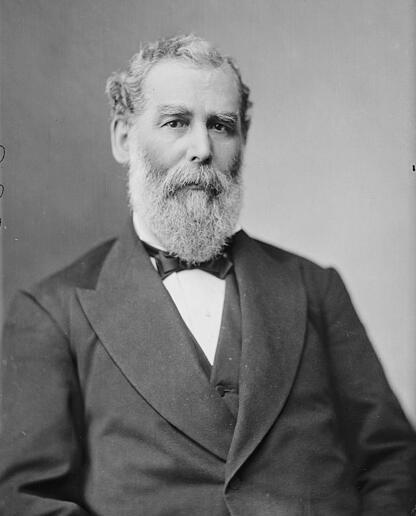
Here you will find contact information for Representative Leonidas Sexton, including email address, phone number, and mailing address.
| Name | Leonidas Sexton |
| Position | Representative |
| State | Indiana |
| District | 4 |
| Party | Republican |
| Status | Former Representative |
| Term Start | October 15, 1877 |
| Term End | March 3, 1879 |
| Terms Served | 1 |
| Born | May 19, 1827 |
| Gender | Male |
| Bioguide ID | S000263 |
About Representative Leonidas Sexton
Leonidas Sexton (May 19, 1827 – July 4, 1880) was an American lawyer and Republican politician who served one term as a U.S. Representative from Indiana from 1877 to 1879 and previously as Lieutenant Governor of Indiana from 1873 to 1877. His congressional service took place during a significant period in American history, in the decade following the Civil War, when he participated in the legislative process and represented the interests of his Indiana constituents in the House of Representatives.
Sexton was born in Rushville, Rush County, Indiana, on May 19, 1827. He was educated in the public schools of his native county, reflecting the expanding system of common schools in the antebellum Midwest. Seeking higher education, he enrolled at Jefferson College in Canonsburg, Pennsylvania—an institution that later became part of Washington & Jefferson College—and was graduated in 1847. His early life in a growing Indiana community and his formal education in Pennsylvania helped shape his professional ambitions and prepared him for a career in law and public service.
After completing his college studies, Sexton returned to Indiana and read law in Rushville. To further his legal training, he attended the Cincinnati Law School in 1848 and 1849, at a time when formal legal education was becoming more structured in the United States. He was admitted to the Indiana bar in 1850 and commenced the practice of law in Rushville. His legal practice established him as a prominent member of the local bar and provided the foundation for his entry into state politics.
Sexton’s political career began in the Indiana General Assembly. In 1856 he served as a member of the Indiana House of Representatives, participating in state legislative affairs during a period marked by growing sectional tensions over slavery and national policy. Remaining aligned with the emerging Republican Party, he continued to build his reputation as a public official and party leader in Indiana over the following years.
Sexton rose to statewide office when he was elected the 17th Lieutenant Governor of Indiana. He served in that capacity from January 1873 to January 1877, presiding over the Indiana Senate and supporting the administration during the post–Civil War and Reconstruction era. His tenure as lieutenant governor coincided with significant political and economic adjustments in Indiana and across the nation, and it further elevated his standing within the Republican Party.
In 1876 Sexton was elected as a Republican to the Forty-fifth Congress, representing Indiana in the U.S. House of Representatives from March 4, 1877, to March 3, 1879. During his single term in Congress, he contributed to the legislative process at the federal level, participating in debates and votes that reflected the concerns of his district and the broader issues confronting the country in the aftermath of Reconstruction. His service in Congress from 1877 to 1879 marked the culmination of his national political career. He was an unsuccessful candidate for reelection in 1878 to the Forty-sixth Congress, bringing his brief tenure in the House to a close.
After leaving Congress, Sexton did not return to national office. In his later years he remained connected to the legal and political circles shaped by his long career, though the details of his professional activities after 1879 are less fully documented. He died in Parsons, Labette County, Kansas, on July 4, 1880. His remains were returned to his native state, and he was interred in East Hill Cemetery in Rushville, Indiana, closing a life that had been closely tied to the legal and political development of Indiana in the mid-19th century.