Representative Leonor Kretzer Sullivan
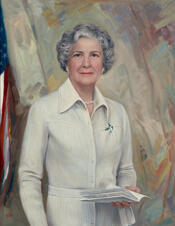
Here you will find contact information for Representative Leonor Kretzer Sullivan, including email address, phone number, and mailing address.
| Name | Leonor Kretzer Sullivan |
| Position | Representative |
| State | Missouri |
| District | 3 |
| Party | Democratic |
| Status | Former Representative |
| Term Start | January 3, 1953 |
| Term End | January 3, 1977 |
| Terms Served | 12 |
| Born | August 21, 1902 |
| Gender | Female |
| Bioguide ID | S001057 |
About Representative Leonor Kretzer Sullivan
Leonor Kretzer Sullivan (August 21, 1902 – September 1, 1988) was an American politician who served as a U.S. Representative from Missouri from 1953 to 1977. A member of the Democratic Party, she was the first woman in Congress from Missouri and held her seat for 12 consecutive terms, contributing to the legislative process during a significant period in American history.
Sullivan was born Leonor Kretzer on August 21, 1902, in St. Louis, Missouri. Three of her grandparents were German immigrants, reflecting the strong German-American presence in the St. Louis area at the turn of the twentieth century. She grew up in this urban, immigrant-influenced environment, which helped shape her understanding of working-class and ethnic communities that she would later represent in Congress.
Sullivan attended Washington University in St. Louis, pursuing higher education at a time when relatively few women did so. After her studies, she became a teacher and later director at the St. Louis Comptometer School, an institution that trained students in the operation of comptometers, an early form of mechanical calculator widely used in business and industry. Her work in education and business training provided her with administrative and organizational experience that would prove valuable in her later political career.
Leonor Kretzer married John B. Sullivan, who was elected to the U.S. House of Representatives from Missouri and served four terms in Congress. During his time in office, she served as his administrative aide, gaining firsthand knowledge of congressional operations, constituent service, and legislative procedure. After her husband’s death in 1951, she continued her work on Capitol Hill as an aide to Congressman Leonard Irving of Missouri. She remained in that position until 1952, when she left to run for Congress herself, drawing on her experience and political connections to launch an independent career.
In 1952, Sullivan was elected to the U.S. House of Representatives, taking office on January 3, 1953. She was re-elected eleven times, serving a total of 12 terms until January 3, 1977. As a member of the House of Representatives, Leonor Kretzer Sullivan participated actively in the democratic process and represented the interests of her Missouri constituents during an era marked by the Cold War, the civil rights movement, and major expansions of federal social programs. Within the House, she served for many years as Secretary of the House Democratic Caucus, a leadership-adjacent position that underscored the respect she commanded within her party and her role in internal party organization and strategy.
Sullivan became particularly noted for her work on domestic policy, especially nutrition and anti-poverty programs. She played a key role in helping to create the federal food stamp program, a major initiative to assist low-income Americans in obtaining adequate nutrition. Her efforts faced opposition from Agriculture Secretary Ezra Taft Benson during the Eisenhower administration, but the program ultimately became law in the 1960s during the Kennedy and Johnson administrations and evolved into a central component of the modern social safety net. Her legislative record also reflected strong support for civil rights. She did not sign the 1956 Southern Manifesto, a document opposing racial integration, and she voted in favor of the Civil Rights Acts of 1957, 1960, 1964, and 1968. In addition, she supported the 24th Amendment to the U.S. Constitution, which banned the poll tax in federal elections, and voted for the Voting Rights Act of 1965, landmark measures that expanded and protected voting rights for African Americans and other minorities.
On questions of gender and social policy, Sullivan’s positions were more complex and sometimes at odds with many other women’s rights advocates of her era. In the early 1970s, she was one of very few members of Congress, and the only woman member of Congress, to vote against the Equal Rights Amendment (ERA) for women. She expressed concerns that the ERA might have unintended consequences and did not view it as the best means to advance women’s status under the law. Sullivan also opposed abortion and called for the passage of a Human Life Amendment to the Constitution, aligning herself with emerging pro-life efforts during the period following the Supreme Court’s decision in Roe v. Wade.
Sullivan chose not to seek re-election in 1976, concluding her congressional service on January 3, 1977. She was succeeded in the House by Richard A. “Dick” Gephardt, who would later become House Majority Leader. Her retirement marked the end of nearly a quarter-century of continuous service in Congress, during which she had become one of the longest-serving women in the House up to that time and a prominent figure among women in the United States House of Representatives.
In the years following her retirement, Sullivan continued to be recognized for her contributions to public life. In 1979, she was included in the Supersisters trading card set, a collection produced and distributed to highlight notable women; one of the cards featured her name and picture, reflecting her status as a pioneering female officeholder. Her legacy was also commemorated in her hometown when the former Wharf Street in front of the Gateway Arch in downtown St. Louis was renamed Leonor K. Sullivan Boulevard in her honor, symbolically linking her name to one of the city’s most prominent landmarks.
Leonor Kretzer Sullivan died on September 1, 1988, at St. Anthony’s Medical Center in St. Louis, Missouri. She was buried at Calvary Cemetery in St. Louis. Her long tenure in Congress, her role as the first woman in Congress from Missouri, and her legislative work on food assistance and civil rights left a lasting imprint on both her state and the nation.