Representative LeRoy Hagen Anderson
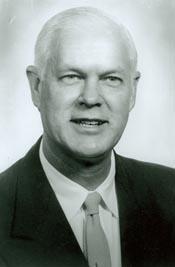
Here you will find contact information for Representative LeRoy Hagen Anderson, including email address, phone number, and mailing address.
| Name | LeRoy Hagen Anderson |
| Position | Representative |
| State | Montana |
| District | 2 |
| Party | Democratic |
| Status | Former Representative |
| Term Start | January 3, 1957 |
| Term End | January 3, 1961 |
| Terms Served | 2 |
| Born | February 2, 1906 |
| Gender | Male |
| Bioguide ID | A000200 |
About Representative LeRoy Hagen Anderson
LeRoy Hagen Anderson (February 2, 1906 – September 25, 1991) was a Democratic U.S. Representative from Montana who served in the United States Congress from 1957 to 1961. Born in Ellendale, Dickey County, North Dakota, he was the grandson of Norwegian immigrants. In 1909 he moved with his parents to Conrad, Pondera County, Montana, a community that would remain his lifelong home and the base of his later political and professional activities.
Anderson was educated in Montana and pursued higher education at Montana State College (now Montana State University) in Bozeman, where he graduated with a Bachelor of Science degree in 1927. Demonstrating strong aptitude in the sciences, he undertook postgraduate work in mathematics and physical chemistry at the California Institute of Technology in Pasadena, California, from 1935 to 1938. After his formal studies, he returned to Montana and worked as a wheat and cattle rancher, combining his scientific training with the practical demands of agricultural life on the northern plains.
During the Second World War, Anderson entered active military service and distinguished himself in combat. He served as commander of an armored task force in the European Theater of Operations, participating in campaigns from the Normandy landings through the advance to the Elbe River. Separated from active duty in 1945 with the rank of lieutenant colonel, he was decorated for valor and leadership, receiving the Silver Star and the French Croix de Guerre with Palm. After the war, he continued his military involvement in the Army Reserve, rising to the rank of major general and commanding the 96th Infantry Division Reserve from 1948 through 1962, thereby maintaining a significant role in the nation’s postwar reserve forces.
Anderson’s political career began at the state level in Montana. He served as a member of the Montana House of Representatives in 1947 and 1948, representing his local constituency and gaining experience in legislative affairs. He then served in the Montana State Senate from 1949 through 1956, where he emerged as a leading figure in the Democratic Party, holding the position of Democratic floor leader from 1954 to 1956. In 1954 he sought election to the Eighty-fourth Congress but was unsuccessful in that initial bid for federal office.
In 1956 Anderson was elected as a Democrat to the United States House of Representatives, winning a seat in the Eighty-fifth Congress and subsequently being reelected to the Eighty-sixth Congress. His tenure in the House extended from January 3, 1957, to January 3, 1961. During these two terms, he represented Montana’s interests in Washington, D.C., participated in the legislative process, and contributed to national debates during a significant period in American history marked by the early Cold War, domestic economic growth, and the beginnings of the modern civil rights movement. As a member of the House of Representatives, he took part in the democratic process and worked to advance the concerns of his constituents at the federal level.
In 1960 Anderson chose not to seek renomination to the House of Representatives. Instead, he pursued higher office and became a candidate for the Democratic nomination for United States Senator from Montana, though he was unsuccessful in securing the nomination. After leaving Congress, he resumed his engineering pursuits, drawing on his scientific education and practical experience, and continued his involvement in public affairs at the state level.
Anderson returned to the Montana State Senate later in his career, serving again as a state senator from 1966 to 1970. Throughout these years he remained closely identified with Conrad, Montana, where he continued to reside and to be engaged in civic, professional, and political life. He lived in Conrad until his death there on September 25, 1991, closing a life that combined military service, scientific training, agricultural enterprise, and decades of public service at both the state and national levels.