Senator Lester Jesse Dickinson
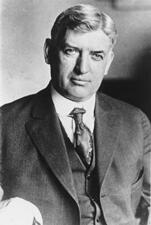
Here you will find contact information for Senator Lester Jesse Dickinson, including email address, phone number, and mailing address.
| Name | Lester Jesse Dickinson |
| Position | Senator |
| State | Iowa |
| Party | Republican |
| Status | Former Representative |
| Term Start | May 19, 1919 |
| Term End | January 3, 1937 |
| Terms Served | 7 |
| Born | October 29, 1873 |
| Gender | Male |
| Bioguide ID | D000323 |
About Senator Lester Jesse Dickinson
Lester Jesse (“L. J.” or “Dick”) Dickinson (October 29, 1873 – June 4, 1968) was a Republican United States Representative and Senator from Iowa who served in Congress during a significant period in American history, from the end of World War I through the New Deal era. Described by Time magazine as “a big, friendly, white-thatched Iowa lawyer,” he was known for his advocacy on behalf of farmers, his opposition to many New Deal policies, and his brief emergence as a dark horse presidential prospect in 1936. A member of the Republican Party, he contributed to the legislative process over seven terms in office, representing his Iowa constituents first in the House of Representatives and later in the Senate.
Dickinson was born on a farm near Derby, Lucas County, Iowa, on October 29, 1873, to Levi and Willimine Morton Dickinson. When he was five years old, his family moved to another farm outside Danbury in Woodbury County, Iowa. His early life was marked by the typical labors of a farm boy in late nineteenth‑century rural Iowa: he worked on his father’s farm, peddled milk from the family dairy, and clerked in a hardware store. He also showed an early interest in public speaking, practicing orations behind the barn. These experiences rooted him firmly in the agricultural and small‑town culture that would later shape his political outlook and legislative priorities.
Dickinson attended the local schools and graduated from Danbury High School in 1892. He went on to Cornell College in Mount Vernon, Iowa, from which he graduated in 1898. He then enrolled at the University of Iowa College of Law in Iowa City, earning his law degree in 1899. That same year he was admitted to the bar and commenced the practice of law in Algona, in Kossuth County in north‑central Iowa. In 1901 he married Myrtle Call, daughter of Ambrose A. Call, one of the founders of Algona, further cementing his ties to the community in which he would live and build his career. According to contemporary accounts, including Time, Dickinson led a personally abstemious life; he did not drink, smoke, or take part in sports or fashionable society.
Alongside his legal practice, Dickinson quickly became active in local public service and the state militia. He served as a second lieutenant in the 52nd Infantry, Iowa National Guard, from 1900 to 1902. In Algona he was city clerk from 1900 to 1904, gaining experience in municipal administration. He then served as county attorney for Kossuth County from 1909 to 1913, prosecuting cases and building a reputation as a capable lawyer. In 1910 he made an unsuccessful bid for the Republican nomination for a seat in the Iowa House of Representatives, an early indication of his political ambitions. Though that effort failed, it introduced him to state‑level politics and the Republican Party organization that would later support his rise to national office.
Dickinson entered national politics in the 1918 election cycle. That year he challenged incumbent Republican Congressman Frank P. Woods in the primary for the seat in Iowa’s 10th congressional district, which covered a swath of north‑central Iowa including Boone, Calhoun, Carroll, Emmet, Greene, Hamilton, Humboldt, Hancock, Kossuth, Palo Alto, Pocahontas, Winnebago, and Webster counties. Woods, then chairman of the National Republican Congressional Committee, had voted against the 1917 declaration of war on the German Empire, a stance that had become a serious political liability during wartime. Dickinson capitalized on that vulnerability, defeating Woods in the primary and then winning the general election against the Democratic nominee, as did every Republican nominee in that district from its creation in 1882 until its elimination in 1931. He took his seat in the U.S. House of Representatives on March 4, 1919.
During his House service, Dickinson emerged as an influential spokesman for agricultural interests. He became recognized as the House’s leader of that body’s first, historic “Farm Bloc,” a coalition of legislators who sought to address the economic challenges facing American farmers in the post–World War I era. He was a strong advocate for the McNary–Haugen Farm Relief Bill, which aimed to maintain prewar price levels for farm products by increasing federal purchases for sale overseas. His advocacy reflected both his rural upbringing and the concerns of his largely agricultural district. He was reelected to the House in 1920, 1922, 1924, 1926, and 1928, serving continuously from March 4, 1919, to March 3, 1931. During the last six years of his House tenure, his cousin Fred Dickinson Letts served as a U.S. Representative from Iowa’s 2nd congressional district (from March 1925 to March 1931), giving the Dickinson family a notable presence in the state’s congressional delegation.
Dickinson’s prominence in Republican circles grew during the 1920s. In 1924 he was mentioned as a dark horse candidate for the Republican nomination for vice president. However, President Calvin Coolidge signaled to the Republican National Convention that he would accept another Iowan, Judge and former Senator William Squire Kenyon, as his running mate. After that message, Dickinson’s name faded from serious consideration, and the convention ultimately chose Charles G. Dawes on the third ballot. Nonetheless, Dickinson’s emergence in vice‑presidential speculation underscored his rising national profile within the party.
In 1930, Dickinson sought higher office in the United States Senate. The seat held by Democratic Senator Daniel F. Steck—the first Democrat to represent Iowa in the Senate since the Civil War—was up for election. Steck’s tenure had been unusual: he had reached the Senate in 1926 after the body voted to unseat Republican Smith W. Brookhart, who had initially been declared the winner of the 1924 election but was opposed by many conservative Republicans for his anti‑business, pro‑labor views. As a result, Steck’s presence in the Senate was widely viewed as an anomaly, and several Republicans vied for the chance to challenge him in 1930. Running as a supporter of the controversial Smoot–Hawley Tariff Act, Dickinson defeated sitting Iowa Governor John Hammill and two other opponents in the Republican primary and then easily defeated Steck in the general election. He entered the Senate on March 4, 1931, and served until January 3, 1937.
As a senator, Dickinson continued to represent the interests of his Iowa constituents and to participate actively in the legislative and democratic processes of the era. In 1932 he was chosen to deliver the keynote address at the Republican National Convention, at which fellow Iowan Herbert Hoover was renominated for what would prove to be an unsuccessful bid for reelection to the presidency. With the advent of Franklin D. Roosevelt’s administration in 1933 and the launch of the New Deal, Dickinson became one of the more vocal Republican critics of the new policies. In a 1934 speech, he argued that the only real beneficiaries of the Agricultural Adjustment Act were the “brain trusters” who designed the programs, remarking that, “taken from their dismal classrooms, chicken farms, editorial rooms and law offices, they now loiter behind mahogany desks solving problems of the world.” Time magazine noted in 1936 that he demanded “sane, honest industrial and agricultural programs” and a return “to the ideas of our New England forefathers,” capturing his conservative critique of expansive federal intervention.
By early 1936, Dickinson’s stature as a New Deal opponent and his reputation as a solid Midwestern conservative led some to view him as a possible presidential contender. Time reported that he was interested in the chance to run against President Roosevelt and speculated that “the buzzing in his large, well‑shaped head” was the question, “If Warren Harding could get the Republican Presidential nomination in 1920, why can’t I get it in 1936?” The magazine drew an explicit parallel between Dickinson and Harding, suggesting that Dickinson, like Harding, might personify a “return to normalcy” after what Republicans viewed as a hectic Democratic regime. Old‑time Harding supporters were said to be quietly conducting a pre‑convention campaign on his behalf, unobtrusively making friends and building him up as a potential compromise candidate on whom irreconcilably opposed factions could unite in the event of a convention deadlock.
Those presidential ambitions, however, never materialized. At the 1936 Republican National Convention there was no deadlock; Kansas Governor Alfred Landon emerged as the only viable candidate and was nominated on the first ballot. Meanwhile, Dickinson faced a difficult reelection campaign for his Senate seat. In the Republican primary he confronted a crowded field of challengers, including former Senator Smith W. Brookhart. Although Dickinson did not secure an outright majority, he won a sufficient plurality to advance automatically to the general election. His Democratic opponent was Iowa Governor Clyde Herring. In the November 1936 election, Herring defeated Dickinson by fewer than 36,000 votes, ending Dickinson’s Senate career after one term. His Senate service, from March 4, 1931, to January 3, 1937, thus spanned the onset of the Great Depression, the Hoover administration’s response, and the early, formative years of the New Deal.
After his 1936 defeat, Dickinson remained active in politics. As support for Roosevelt and the New Deal began to wane in Iowa and a bitter split developed within the state Democratic Party between New Dealers and more independent‑minded Democrats such as incumbent Senator Guy Gillette, Dickinson sought a return to the Senate. In 1938 he ran for Gillette’s seat. He first faced a strong contest in the Republican primary, in which he defeated U.S. Representative Lloyd Thurston. In the general election, however, he again fell just short, losing to Gillette by fewer than 3,000 votes. The narrow margin echoed his close loss in 1936 and effectively ended his efforts to regain a place in the Senate.
Following his departure from elective office, Dickinson resumed his legal career. He initially returned to Algona, where he had first established himself as an attorney at the turn of the century. In June 1939 he joined a Des Moines law firm that his son, L. Call Dickinson, had founded in 1936. The former senator’s association significantly enhanced the firm’s reputation, and over time it became one of the leading business law firms in Des Moines and in the state of Iowa. Known informally for decades as “the Dickinson firm,” it is now known as Dickinson, Mackaman, Tyler & Hagen, P.C. Dickinson lived to an advanced age, remaining a respected elder statesman of Iowa Republicanism. He died on June 4, 1968. His papers are preserved in the Lester Jesse Dickinson Papers at the University of Iowa Special Collections & University Archives, documenting a career that spanned local office, the House of Representatives, and the United States Senate during a transformative era in American political and economic life.