Senator Lester Callaway Hunt
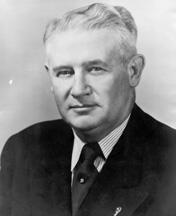
Here you will find contact information for Senator Lester Callaway Hunt, including email address, phone number, and mailing address.
| Name | Lester Callaway Hunt |
| Position | Senator |
| State | Wyoming |
| Party | Democratic |
| Status | Former Representative |
| Term Start | January 3, 1949 |
| Term End | June 19, 1954 |
| Terms Served | 1 |
| Born | July 8, 1892 |
| Gender | Male |
| Bioguide ID | H000975 |
About Senator Lester Callaway Hunt
Lester Callaway Hunt, Sr. (July 8, 1892 – June 19, 1954), was an American Democratic politician from the state of Wyoming who served as the 19th governor of Wyoming and as a United States Senator from Wyoming. A member of the Democratic Party, he was the first person elected to two consecutive terms as Wyoming’s governor, serving from January 4, 1943, to January 3, 1949, and later represented Wyoming in the U.S. Senate from January 3, 1949, until his death on June 19, 1954. His single Senate term coincided with a significant period in American history, marked by the early Cold War, the rise of McCarthyism, and the domestic policy debates of the Truman and Eisenhower administrations.
Hunt was born on July 8, 1892, and became associated early in life with Wyoming, where he would build his political career. By the early 1930s he had established himself sufficiently in Fremont County to win election to the Wyoming House of Representatives in 1933. In that role he sponsored eugenics legislation that would have permitted the sterilization of inmates at Wyoming institutions if they were “afflicted with insanity, idiocy, imbecility, feeblemindedness, or epilepsy.” The proposal, similar to laws enacted in several neighboring states in the 1920s, ultimately failed, and Hunt later stated that he regretted having sponsored it, a reflection of his evolving views on public policy and civil liberties.
Hunt’s statewide prominence grew rapidly. He was elected Wyoming Secretary of State in 1934 and re-elected in 1938, serving from 1935 to 1943. During his tenure as Secretary of State, he played a notable role in shaping one of Wyoming’s most enduring symbols. In 1935 he commissioned muralist Allen Tupper True to design the Bucking Horse and Rider emblem that has appeared on Wyoming license plates since 1936. He also personally claimed the copyright to the Wyoming Guidebook, a Work Projects Administration publication, after the governor and legislature failed to act to preserve the Bucking Horse and Rider design as the state’s intellectual property. The book proved popular, and questions arose as to whether Hunt benefited personally from its sales. He demonstrated that he had endorsed all quarterly royalty checks and turned them over to the state treasurer, and in 1942 he transferred the copyright to the State of Wyoming.
Building on this record, Hunt was elected governor of Wyoming in 1942 and re-elected in 1946, becoming the first person to win two consecutive gubernatorial terms in the state. As the 19th governor, serving from January 4, 1943, to January 3, 1949, he led Wyoming through the final years of World War II and the immediate postwar period. His administration dealt with wartime mobilization, the transition to a peacetime economy, and the management of state resources during a time of national change. His success as governor and his reputation as a capable administrator positioned him for higher office and broadened his influence within the Democratic Party in a predominantly Republican state.
In 1948, Hunt was elected by a decisive margin to the United States Senate, defeating incumbent Republican Senator E. V. Robertson. He began his Senate term on January 3, 1949, and served until his death in 1954. As a senator, Hunt combined fiscal conservatism and skepticism of “big government” with support for a range of social and economic programs. He backed public housing initiatives and favored increased federal aid to education. In 1949 he recommended that the American Medical Association and the American Dental Association consider endorsing a federal program of low-cost health insurance policies with low deductibles to cover “medical, surgical, hospital, laboratory, nursing and dental services.” Addressing an ADA convention, he argued that the freedom and independence of medical and dental practice could not be preserved merely by denouncing socialization or by “stand-pat opposition,” signaling his interest in pragmatic approaches to health policy.
During his Senate service, Hunt was an active participant in national legislative affairs. He served on the Senate Crime Investigating Committee, commonly known as the Kefauver Committee, which examined organized crime, and on the Senate Armed Services Committee, where he engaged with defense and national security issues during the early Cold War. He supported foreign aid programs and backed calls for disarmament designed to demonstrate that Soviet peace proposals were not serious. Following Dwight D. Eisenhower’s landslide presidential victory in 1952, Hunt announced that he felt obliged to support the new administration’s legislative proposals wherever possible. He cited complete agreement with plans for agricultural subsidies, the expansion of Social Security, the creation of a Fair Employment Practices Commission, and the abolition of racial segregation in the District of Columbia. In this period he supported a number of federal social programs and advocated for federal support of low-cost health and dental insurance policies, while continuing to emphasize responsible fiscal management.
Hunt’s Senate career became most widely known for his outspoken opposition to Senator Joseph R. McCarthy and the broader anti-Communist campaign that McCarthy led. Hunt challenged McCarthy and his allies by championing a proposed law to restrict Congressional immunity and allow individuals to sue members of Congress for slanderous statements. He called for reform of Senate rules, stating that if Congress could no longer control its members by “the rules of society, justice and fair play,” it had a moral obligation to take “drastic steps” to remedy such situations. His criticism of McCarthy’s tactics made him a prominent target in the 1954 election cycle and placed him at the center of the national struggle over civil liberties and political intimidation.
In June 1953, Hunt’s family became entangled in the politics of the era when his son, commonly known as Buddy Hunt, was arrested in Washington, D.C., on charges of soliciting sex from an undercover male police officer at a time when homosexual acts were prohibited by law. Some Republican senators, including McCarthy, used the incident to exert political pressure, threatening Hunt with prosecution of his son and wide publication of the event unless he abandoned plans to run for re-election and resigned immediately. Hunt refused to resign. His son was convicted and fined on October 6, 1953. On April 15, 1954, Hunt publicly announced his intention to seek re-election to the Senate, but he later changed his mind after McCarthy renewed the threat to exploit his son’s arrest in the campaign. Contemporaries noted that Hunt had been experiencing kidney trouble and had recently undergone a physical examination in the hospital, but private accounts suggested that the ordeal surrounding his son’s case and the anticipated use of it in his re-election campaign were the principal factors in his deteriorating emotional state.
On June 19, 1954, Lester Hunt died by suicide in his Senate office in Washington, D.C., bringing his Senate service and political career to a sudden end. He was serving as a major in the Army Reserve Corps at the time of his death. His death dealt a serious blow to McCarthy’s public image and was later regarded as one of the factors contributing to McCarthy’s censure by the Senate later in 1954. Hunt was buried on June 22, 1954, in Cheyenne at Beth El Cemetery following a brief church service. On June 24, acting Wyoming Governor C. J. Rogers appointed Republican Edward D. Crippa to fill the remainder of Hunt’s Senate term, which was due to expire in January. The circumstances of Hunt’s death and the political pressures surrounding his son’s case continued to reverberate. On July 4, the conservative Washington Times-Herald reported Buddy Hunt’s arrest and conviction from the previous year, with the senator’s death giving the story wider circulation than it had previously received. Subsequent affidavits and correspondence, including an affidavit by prosecutor John Blick and a sharply worded letter from Hunt’s cousin William M. Spencer to Senator Herman Welker, highlighted the controversy over the tactics allegedly used to pressure Hunt not to seek re-election. On November 2, 1954, Democrat Joseph C. O’Mahoney won Hunt’s former Senate seat, defeating Republican nominee Congressman William Henry Harrison III, thereby returning the seat to Democratic control.
In later years, Buddy Hunt built a career in social and community work, serving on the staff of Catholic Charities in Chicago and then working for the Industrial Areas Foundation of Chicago. With colleague Nicholas von Hoffman, he co-authored a paper titled “The Meanings of ‘Democracy’: Puerto Rican Organizations in Chicago,” published in 1956 in ETC: A Review of General Semantics. Decades after his father’s death, in October 2015, he gave his first on-camera interview about his arrest and his father’s suicide for the Yahoo News documentary “Uniquely Nasty: The U.S. Government’s War on Gays.” Buddy Hunt died in Chicago on January 6, 2020, at the age of 92, closing a long personal chapter that had been deeply intertwined with the political and social climate of his father’s era.