Representative Lester Lionel Wolff
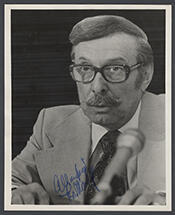
Here you will find contact information for Representative Lester Lionel Wolff, including email address, phone number, and mailing address.
| Name | Lester Lionel Wolff |
| Position | Representative |
| State | New York |
| District | 6 |
| Party | Democratic |
| Status | Former Representative |
| Term Start | January 4, 1965 |
| Term End | January 3, 1981 |
| Terms Served | 8 |
| Born | January 4, 1919 |
| Gender | Male |
| Bioguide ID | W000680 |
About Representative Lester Lionel Wolff
Lester Lionel Wolff (January 4, 1919 – May 11, 2021) was an American politician who served as a Democratic member of the United States House of Representatives from Long Island, New York, from January 3, 1965, to January 3, 1981. A member of the Democratic Party for the entirety of his congressional career, he represented New York’s 3rd congressional district and, after redistricting, the 6th congressional district, serving eight consecutive terms. Over the course of his long public life, he became known for his work on Asian and Pacific affairs, civil rights, health care, and foreign policy, as well as for his later roles in international trade, academia, and public affairs broadcasting.
Wolff was born in Manhattan, New York City, on January 4, 1919, to Jewish parents Hannah (Bartman) and Samuel Wolff, a marketer who worked at Ruppert Breweries. He was raised in New York City and educated in its public schools, graduating from George Washington High School in 1935. He went on to attend New York University, from which he graduated in 1939. An observant Jew throughout his life, Wolff prayed daily and remained active in Jewish communal and philanthropic organizations, including the United Jewish Appeal and B’nai B’rith.
After completing his studies, Wolff lectured at New York University from 1939 until 1941 and later became a department chair at the City College of New York. During World War II, he served in the Civil Air Patrol, where he was a squadron commander and subchaser, participating in coastal patrol and anti-submarine activities. Following the war, he pursued a career in journalism and business. He worked for the Long Island Press and The Bronx Home News, then founded his own firm specializing in the food industry and served as executive director of the New York Conference of Retail Grocers. In the emerging field of television, he became producer and host of “Between the Lines,” a local public affairs program, and produced a celebrity variety show starring Wendy Barrie. His early political orientation was as a liberal Republican, but he became disillusioned with the increasingly conservative direction of the Republican Party under Barry Goldwater and subsequently switched to the Democratic Party.
Wolff’s growing interest in public policy led to his selection in 1957 by the U.S. House of Representatives as chairman of the Advisory Committee to the Subcommittee on Consumer Study, giving him early experience with congressional processes and consumer issues before he himself sought elective office. In the 1964 elections, he was elected to Congress from New York, taking his seat in the House of Representatives on January 3, 1965. He served continuously until January 3, 1981, initially representing New York’s 3rd congressional district and, after redistricting, the 6th district. During his sixteen years in Congress, he participated actively in the legislative process and represented the interests of his Long Island constituents during a period marked by the civil rights movement, the Vietnam War, and major expansions of the federal social safety net.
In Congress, Wolff quickly established himself as a prominent voice on foreign affairs and domestic reform. He served as Chairman of the House Foreign Affairs Subcommittee on Asian and Pacific Affairs and as Chairman of the Select Committee on Narcotics Abuse and Control. He commanded the Congressional Squadron of the Civil Air Patrol, rising to the rank of colonel, reflecting his continued connection to the organization in which he had served during World War II. He voted for the Voting Rights Act of 1965 and supported the creation of Medicare and Medicaid, aligning himself with the Great Society legislative agenda. An active participant in the civil rights movement, he attended the funeral of Martin Luther King Jr. He opposed the Vietnam War, advocated stricter gun laws, and opposed construction of a proposed transportation link across Long Island Sound, reflecting environmental and local concerns of his district.
Wolff was particularly noted for his engagement in international affairs, especially in Asia and the Pacific. He was regarded as one of the most widely traveled members of Congress, frequently undertaking overseas fact-finding missions. In 1978, he was part of a congressional delegation to the People’s Republic of China, where he met with Vice Premier Deng Xiaoping during a pivotal period in U.S.–China relations. He was the principal author of the Taiwan Relations Act, which was signed into law on April 10, 1979, and which has remained a cornerstone of U.S. policy toward Taiwan following the normalization of relations with the People’s Republic of China. He also introduced amendments to the White House–sponsored Foreign Assistance Act of 1969 aimed at restoring momentum for direct peace talks between Israel and the Arab states, and he played a role in the diplomatic efforts surrounding the Camp David Accords. Despite his legislative accomplishments, Wolff was defeated for reelection in 1980 in an upset by 27-year-old Republican John LeBoutillier, ending his congressional service at the close of the 96th Congress.
Following his departure from Congress, Wolff remained active in international business, diplomacy, and public affairs. He served as president of the International Trade and Development Agency, drawing on his congressional experience in trade and foreign policy. He later leveraged his expertise in Asian affairs to work as a paid lobbyist for Myanmar’s military government, a role that drew criticism given the regime’s repressive character. In academia and policy research, he became chair and then director of the Pacific Community Institute at Touro College, where he continued to focus on Asia-Pacific relations. He also served as a director of the Griffon Corporation from 1987 to 2007. As an author, he published numerous books on foreign policy, particularly relating to Asia and U.S. international relations.
Wolff maintained a significant presence in the media and public discourse well into his later years. Beginning in the mid-1980s, he hosted the weekly PBS public affairs program “Ask Congress,” which he continued for decades, interviewing lawmakers and policy experts and interpreting congressional activity for a broader audience. He remained engaged in contemporary politics, active on Twitter, and was a vocal critic of the presidency of Donald J. Trump. In February 2019, he donated his congressional papers to Adelphi University in Garden City, New York, ensuring that his legislative and diplomatic records would be preserved for research. In February 2020, in recognition of his environmental advocacy and service, the Oyster Bay National Wildlife Refuge on Long Island was renamed the Congressman Lester Wolff Oyster Bay National Wildlife Refuge.
In his personal life, Wolff married Blanche Silvers in 1940; the couple remained married until her death in 1997. His long association with the Civil Air Patrol was recognized nationally when, in 2014, he accepted the Congressional Gold Medal—the highest civilian award in the United States—on behalf of the volunteers of the Civil Air Patrol who had served during World War II. With the death of former Representative James D. Martin on October 30, 2017, Wolff became the oldest living former member of Congress. He turned 100 years old in January 2019 and continued to write and comment on public affairs thereafter. Lester Lionel Wolff died at a hospital in Syosset, New York, on May 11, 2021, at the age of 102. At the time of his death, he was the last living former U.S. representative born in the 1910s.