Representative Levin Irving Handy
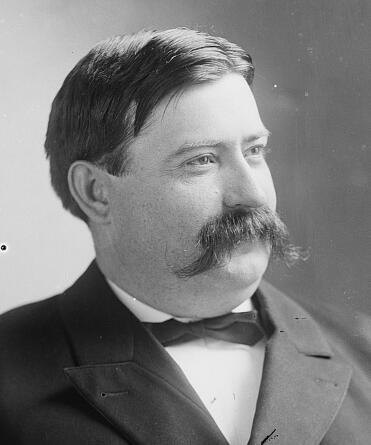
Here you will find contact information for Representative Levin Irving Handy, including email address, phone number, and mailing address.
| Name | Levin Irving Handy |
| Position | Representative |
| State | Delaware |
| District | At-Large |
| Party | Democratic |
| Status | Former Representative |
| Term Start | March 15, 1897 |
| Term End | March 3, 1899 |
| Terms Served | 1 |
| Born | December 24, 1861 |
| Gender | Male |
| Bioguide ID | H000156 |
About Representative Levin Irving Handy
Levin Irving Handy (December 24, 1861 – February 3, 1922) was an American educator, lawyer, and politician from Wilmington in New Castle County, Delaware. Known by his middle name, he was a member of the Democratic Party who served one term as a U.S. Representative from Delaware from 1897 to 1899. His service in Congress occurred during a significant period in American history, and as a member of the House of Representatives he participated in the legislative process and represented the interests of his constituents.
Handy was born on December 24, 1861, in Berlin, Maryland, the son of the Rev. William C. Handy, a Presbyterian minister. His family background combined religious, legal, and political traditions: his grandfathers were William W. Handy, a prominent lawyer in Somerset County, Maryland, and the Rev. Robert J. Breckinridge of Kentucky, a noted clergyman and public figure. He was also the nephew of William C. P. Breckinridge, a prominent Confederate Army officer and later a U.S. Representative from Kentucky. Because his father’s ministry required frequent moves, Handy spent his childhood in various locations, including New York, Kentucky, and the Eastern Shore of Maryland, experiences that exposed him early to different communities and regional cultures.
Handy began his professional life in education. He taught school at Dames Quarter in Somerset County, Maryland, and in 1881, at the age of nineteen, he was selected to be principal of the high school at Smyrna, Delaware. Demonstrating rapid advancement in the field, by 1887 he had become superintendent of all the public schools in Kent County, Delaware. In 1890 he was hired as principal of the Old Newark Academy in Newark, Delaware, a position that placed him at the center of one of the state’s leading educational institutions. During these years he frequently spoke at teachers’ training schools in the region, contributing to the professional development of educators and the improvement of public instruction.
While engaged in educational work, Handy also pursued legal studies. He read law under John R. Nicholson of Dover, Delaware, combining his responsibilities as an educator with preparation for the bar. In 1892 he retired from teaching and moved into journalism, becoming an editorial writer for the Wilmington Every Evening newspaper. He continued his legal studies and was admitted to the bar in 1899, after which he began the practice of law in Delaware. His experience as a teacher, school administrator, journalist, and lawyer provided a broad foundation for his subsequent political career.
Handy’s formal entry into politics coincided with his retirement from teaching. A committed Democrat, he became chairman of the Democratic State Committee in Delaware in 1892 and held that position until 1896. He sought the Democratic nomination for U.S. Representative in 1894 but lost the nomination to Samuel Bancroft, who was subsequently defeated in the general election. Handy remained active in party affairs, building a reputation as an effective organizer and spokesman for Democratic interests in the state.
In the election held on the first Tuesday after November 1, 1896, Handy was elected to the U.S. House of Representatives from Delaware, defeating incumbent Republican Representative Jonathan S. Willis. He took office on March 4, 1897, at the beginning of the 55th Congress, serving during the administration of President William McKinley. As a Democratic member of a Republican-dominated House, he served in the minority, contributing to debates and the legislative process during a period marked by issues of economic policy, currency, and the nation’s emerging role on the world stage. His term ended on March 3, 1899, in accordance with the two-year term then in effect for U.S. Representatives. Seeking reelection in 1898, he was defeated by Republican John H. Hoffecker, a Smyrna businessman who was also a relative of Handy’s wife.
After leaving Congress, Handy remained active in Democratic politics in Delaware and nationally. He attended the Democratic National Conventions of 1900, 1904, and 1908 as a party delegate or participant, reflecting his continuing influence in party affairs. In 1904 he ran unsuccessfully for the office of state Attorney General. He made one further attempt to return to Congress in the election of 1908 but was defeated by Republican William H. Heald. Alongside these political efforts, he continued his legal practice in Delaware, drawing on his combined experience in education, journalism, and public service.
In his personal life, Handy married Mary Bell in 1887, and they had two children, L. Irving Handy Jr. and Margaret Handy. His daughter Margaret became a prominent physician in Wilmington, Delaware, practicing medicine for fifty-five years and emerging as a leader in establishing milk banks for premature babies. Her work in pediatrics and infant care gained wide recognition, and the artist Andrew Wyeth painted her portrait, titled “Children’s Doctor.” Levin Irving Handy died in Wilmington, Delaware, on February 3, 1922. He was buried in Glenwood Cemetery in Smyrna, Delaware, a community closely associated with his early educational and political career.