Senator Lewis Heisler Ball
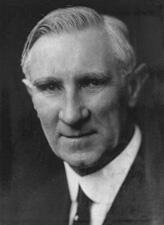
Here you will find contact information for Senator Lewis Heisler Ball, including email address, phone number, and mailing address.
| Name | Lewis Heisler Ball |
| Position | Senator |
| State | Delaware |
| Party | Republican |
| Status | Former Representative |
| Term Start | December 2, 1901 |
| Term End | March 3, 1925 |
| Terms Served | 3 |
| Born | September 21, 1861 |
| Gender | Male |
| Bioguide ID | B000100 |
About Senator Lewis Heisler Ball
Lewis Heisler Ball (September 21, 1861 – October 18, 1933) was an American physician and Republican politician from Mill Creek Hundred, New Castle County, Delaware, who served as a U.S. Representative and as a U.S. Senator from Delaware. Known by his middle name, he played a notable role in Delaware’s contentious turn-of-the-century Republican politics and participated in the legislative process in Congress during a significant period in American history, including the Progressive Era and World War I.
Ball was born in Mill Creek Hundred, New Castle County, Delaware, the son of John Ball and Sarah (Baldwin) Ball. He attended the Rugby Academy in Wilmington, Delaware, and went on to Delaware College at Newark, Delaware, from which he graduated in 1882. Pursuing a career in medicine, he entered the University of Pennsylvania School of Medicine in Philadelphia and received his medical degree in 1885. After completing his medical training, Ball began the practice of medicine at Brandywine Springs, near Wilmington, in 1887. On November 14, 1893, he married Katherine Springer Justis, establishing his home and professional life in northern Delaware.
Before entering national office, Ball emerged as a leader in Delaware’s Republican Party at a time when it was deeply divided. At the turn of the twentieth century, Delaware politics were dominated by a bitter struggle within the Republican ranks, largely driven by the ambitions of gas company industrialist J. Edward Addicks, who spent much of his personal fortune attempting to secure a seat in the U.S. Senate. Addicks’s efforts created a powerful “Union Republican” faction, particularly in heavily Democratic Kent and Sussex Counties, while provoking intense opposition from the “Regular Republicans” of New Castle County, many of whom regarded him as a carpetbagger from Philadelphia. Ball was a prominent “Regular Republican” and an outspoken opponent of Addicks. In this capacity he was elected State Treasurer of Delaware in 1898, gaining statewide prominence as the party’s internal conflict increasingly paralyzed the state’s ability to fill its U.S. Senate seats.
Ball’s first service in the United States Congress came in the House of Representatives. In the midst of the Addicks controversy, he was elected as a Republican to the U.S. House of Representatives in 1900 and served with the Republican majority in the Fifty-seventh Congress from March 4, 1901, to March 3, 1903, during the administrations of Presidents William McKinley and Theodore Roosevelt. His tenure in the House coincided with a period of national expansion and reform, and he represented Delaware’s at-large district while his own state’s General Assembly was deadlocked over the election of U.S. Senators.
The Senate deadlock in Delaware formed the backdrop to Ball’s first elevation to the upper chamber. In 1899 one of Delaware’s U.S. Senate seats became vacant, and the Union Republicans in the Delaware General Assembly attempted to elect Addicks. Lacking sufficient votes to seat him, they nevertheless blocked the election of any other candidate, leaving the seat vacant for four years. When the other Senate seat came open in 1901, it too remained unfilled because of the same impasse. The prolonged failure of the General Assembly to elect senators became a national embarrassment and a powerful example of the weaknesses of legislative election of U.S. Senators. In 1903, under mounting national pressure, Addicks relented, and a compromise was reached: Ball was elected on March 2, 1903, to the remaining two years of the first vacant term, and Addicks’s lieutenant, J. Frank Allee, was elected to the second seat. Ball thus entered the U.S. Senate with the Republican majority in the Fifty-eighth Congress and served until the expiration of the term in 1905. When his term ended, the General Assembly again deadlocked and took another two years to fill the seat, further reinforcing nationwide arguments for the Seventeenth Amendment, which later established the popular election of U.S. Senators.
After leaving the Senate in 1905, Ball remained an influential figure in Delaware Republican politics, aligned with the Regular Republican faction and increasingly at odds with emerging party leaders. He later returned to the Senate through the new system of popular election. In 1918, in Delaware’s second popular election for U.S. Senator, Ball was elected as a Republican, defeating incumbent Democratic Senator Willard Saulsbury Jr. He served from this election through the early 1920s, during which time he was part of the Republican majority in the Sixty-sixth, Sixty-seventh, and Sixty-eighth Congresses. During the Sixty-sixth Congress he was chairman of the Committee on Enrolled Bills, overseeing the final preparation of legislation passed by Congress, and in the Sixty-seventh and Sixty-eighth Congresses he served on the Committee on the District of Columbia. He was also appointed a member of the rent commission of Washington, D.C., a body created to address housing and rent issues in the capital in the post–World War I period.
Ball’s work on the Washington rent commission proved controversial and provoked hostility from some affected interests. In August 1921, after he had received a threatening letter, a shot was fired at him as he drove an automobile; he was not injured in the incident. During his Senate service he also participated in major national debates of the era. Notably, in June 1919 he cast his vote in favor of the Nineteenth Amendment to the United States Constitution, which provided for women’s suffrage, aligning himself with the successful national movement to extend the franchise to women. Despite his seniority and committee assignments, Ball was never widely regarded as an especially effective senator in terms of securing federal patronage and projects for Delaware, a factor that contributed to political rivalries within his own party.
Within Delaware’s Republican Party, Ball became a rival of T. Coleman du Pont, the former president of E. I. du Pont de Nemours and Company and the effective party leader in the state. Du Pont harbored presidential ambitions and sought to position himself as a national figure in the 1920 Republican National Convention. Ball initially supported him but then deserted him after the first ballot, contributing to the collapse of du Pont’s hopes for the presidential nomination. Their rivalry deepened when, in 1922, Ball failed to support du Pont’s bid for a full term in the U.S. Senate. By 1924, du Pont was determined to settle what he saw as a political score and successfully opposed Ball for the Republican nomination for another full Senate term. As a result, Ball’s Senate service, which had encompassed three terms in Congress and extended through much of the period from 1901 to the mid-1920s, came to an end, and he returned to private life in Delaware.
Lewis Heisler Ball died on the morning of October 18, 1933, at his home in Faulkland, Delaware, from pneumonia. He was buried in St. James Episcopal Church Cemetery near Stanton, Delaware. His career, spanning medical practice, state office, service in the U.S. House of Representatives, and two separate periods in the U.S. Senate, unfolded during a transformative era in American politics and reflected both the internal struggles of Delaware’s Republican Party and the broader national movement toward more democratic methods of choosing United States Senators.