Representative Lewis Williams Douglas
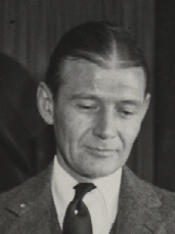
Here you will find contact information for Representative Lewis Williams Douglas, including email address, phone number, and mailing address.
| Name | Lewis Williams Douglas |
| Position | Representative |
| State | Arizona |
| District | At-Large |
| Party | Democratic |
| Status | Former Representative |
| Term Start | December 5, 1927 |
| Term End | March 3, 1933 |
| Terms Served | 3 |
| Born | July 2, 1894 |
| Gender | Male |
| Bioguide ID | D000455 |
About Representative Lewis Williams Douglas
Lewis Williams Douglas (July 2, 1894 – March 7, 1974) was an American politician, diplomat, businessman, and academic whose public career spanned state and national politics, higher education, corporate leadership, and international diplomacy. He was born in Bisbee, Cochise County, Arizona Territory, the son of James Douglas, Jr., a mining executive with the Phelps Dodge Company, and Josephine “Josalee” Williams Douglas. He spent his childhood in the mining communities of Bisbee and Nacozari de García, Sonora, Mexico, before being sent east at age eleven at the insistence of his grandfather, James Douglas, to obtain a formal education. This early uprooting from the frontier mining camps to elite Eastern schools helped shape his later blend of Western political instincts and Eastern establishment connections.
Douglas’s formal education began at Hackley School in Tarrytown, New York, where he studied for two years before transferring to Montclair Academy in Montclair, New Jersey. At Montclair Academy he distinguished himself both academically and in character development, graduating with the class of 1912 and winning awards that reflected his seriousness of purpose and leadership potential. On the advice of railroad magnate Arthur Curtiss James, he enrolled at Amherst College in Amherst, Massachusetts. There he joined the Alpha Delta Phi fraternity, participated in athletics, and became active in student government. Initially indifferent to his studies, his academic performance improved markedly after taking a course in logic from Amherst’s president, Alexander Meiklejohn. Douglas graduated cum laude in 1916 with a degree in economics. He then entered the Massachusetts Institute of Technology in Cambridge, Massachusetts, to prepare for a career as a mining engineer, further aligning his professional plans with his family’s mining interests.
With the entry of the United States into the First World War, Douglas interrupted his technical studies to volunteer for military service. Commissioned a Second Lieutenant in July 1917, he was first assigned to field artillery and later became an assistant to General Henry A. Greene, commander of the 91st Infantry Division. Promoted to First Lieutenant in the spring of 1918, he was deployed to France in the summer of that year and served as an assistant G‑3 in the operations branch of division headquarters, directing communications. He saw action at Saint-Mihiel and in the Meuse–Argonne Offensive and was awarded the Belgian Croix de Guerre for heroism. Discharged from the Army in February 1919, Douglas returned to Jerome, Arizona, where he renewed his acquaintance with Margaret “Peggy” Zinsser. During 1920 he taught at Amherst College—serving as a teaching assistant to Ernest Barker and R. H. Tawney—and at Hackley School. He married Peggy Zinsser on June 18, 1921, and the couple settled in Jerome, where he took a position at his father’s United Verde Extension mine, combining family business responsibilities with growing civic and political interests.
Douglas entered elective politics in 1922, when he agreed to run for one of the Jerome area’s seats in the Arizona State House of Representatives. Despite his lack of prior political experience, his family name, personal wealth, and distinguished war record proved decisive, and he won both a contested Democratic primary and the general election. Serving a single two‑year term in the Arizona legislature, he emerged as a conservative Democrat who emphasized fiscal responsibility and opposed most labor legislation. He objected to the recently signed Colorado River Compact and proposed an amendment authorizing the state to tax electricity generated within Arizona’s borders, reflecting his concern for state control over natural resources. Although some newspapers speculated that he would seek a seat in the Arizona State Senate in 1924, Douglas declined to run for any office that year and instead pursued a series of private business ventures, maintaining his profile as a prominent figure in Arizona’s economic and civic life.
Douglas returned to electoral politics in 1926, when Arizona’s sole Congressman, Carl Hayden, announced his candidacy for the United States Senate against incumbent Senator Ralph H. Cameron. Seizing the opportunity to succeed Hayden, Douglas entered the race for Arizona’s at‑large seat in the United States House of Representatives. Benefiting again from his family’s prominence, his war service, and the strong backing of the state’s Democratic press, he easily defeated five rivals for the Democratic nomination and went on to win the general election by nearly 20,000 votes. Lewis Williams Douglas served as a Representative from Arizona in the United States Congress from March 4, 1927, to March 3, 1933, sitting in the 70th through the 73rd Congresses and completing three terms in office. A member of the Democratic Party, he contributed to the legislative process during a significant period in American history, participating in the democratic process and representing the interests of his Arizona constituents. In the House he served on the Committee on Irrigation and Reclamation and the Committee on Public Lands, where he dealt with issues central to the development of the American West. Although a Democrat, he frequently voted with Republicans and acquired a reputation as a man of principle, particularly for his adherence to the economic orthodoxy of the era. During the onset of the Great Depression he argued that low tariffs and a balanced federal budget were essential to economic recovery, and he opposed the bonus bill sought by unemployed veterans, a stance that drew intense criticism.
In 1932 Douglas, though personally preferring a more conservative standard-bearer, loyally supported Franklin D. Roosevelt as the Democratic nominee for president. In December of that year he met with Roosevelt in Albany, New York, and soon became a key member of the president‑elect’s advisory circle. Widely mentioned as a possible Secretary of State, Treasury, or War, he was instead asked by Roosevelt to serve as Director of the Bureau of the Budget after the president’s first choice, J. Swagar Sherley, declined for health reasons. Assured by Roosevelt of a commitment to a balanced budget, Douglas accepted and took office in 1933. His tenure as budget director, however, was marked by growing frustration. While he supported emergency measures such as the Emergency Banking Act, the Economy Act, and relief programs like the Civilian Conservation Corps as necessary responses to the crisis, he strongly opposed what he regarded as excessive federal intervention in the economy, including the Agricultural Adjustment Act, the Tennessee Valley Authority Act, and the Securities Act of 1933. He objected to Roosevelt’s decision to take the United States off the gold standard—reportedly calling it “the end of western civilization”—and became increasingly alarmed by mounting deficit spending. Learning in June 1934 of the president’s intention to seek an additional $600 million appropriation on top of $2.5 billion already spent, Douglas concluded he could no longer support the administration’s fiscal course and resigned as budget director effective August 30, 1934.
After leaving the Roosevelt administration, Douglas received numerous offers from universities and private firms. He chose the corporate sector, becoming vice president of the American Cyanamid Company and relocating to New York City. He remained active in public affairs and, beginning in 1935, served as a member of the Rockefeller Foundation, sitting on its executive committee from 1936 to 1939. In the 1936 presidential election, Republican nominee Alf Landon considered Douglas as a possible vice‑presidential running mate but was dissuaded by party leaders; Douglas nonetheless publicly announced that he would vote for Landon as a protest against the New Deal. In August 1937 he was approached by Sir Edward Beatty about becoming principal of McGill University in Montreal, Quebec, Canada. Dissatisfied with corporate life, Douglas accepted and was installed as principal on January 7, 1938. He later described his McGill years as the happiest of his life. Confronted with a university budget deficit and what he regarded as socialist tendencies within the social science faculty, he reduced expenditures, vigorously solicited private donations, and restored McGill to financial stability. He also inaugurated a public lecture series to promote conservative viewpoints. Although he modified tenure policies to make it easier to remove radical faculty members, he resisted efforts to curtail academic freedom, particularly as debates over Canada’s role in world affairs intensified in 1939. Never intending to remain long in academic administration, he left McGill at the end of 1939 and returned to the United States to become president of the Mutual of New York Life Insurance Company, a lucrative post that allowed him to remain engaged in national and international issues. An internationalist, he joined the Committee to Defend America by Aiding the Allies and lobbied Roosevelt to expand aid to Great Britain, yet he supported Republican Wendell Willkie in the 1940 presidential election because he opposed Roosevelt’s break with the two‑term tradition.
With the American entry into the Second World War, Douglas again sought public service. He briefly served as deputy to W. Averell Harriman, the American Lend‑Lease representative in Britain, before being appointed deputy administrator of the War Shipping Administration (WSA). Although Admiral Emory S. Land remained the nominal head of the WSA due to his friendship with President Roosevelt, Douglas emerged as the agency’s effective chief, managing the complex task of coordinating American shipping needs in a global conflict. He served as deputy administrator until March 1944, when health problems and increasing tensions with Land led to his resignation. He then traveled to Europe as a special adviser to General Lucius D. Clay, assisting in the reconstruction of German finance in the immediate postwar period. Douglas was elected to the American Philosophical Society in 1942, reflecting his growing stature in intellectual and policy circles. From 1942 to 1947 he served as a trustee of the Rockefeller Foundation, further cementing his role at the intersection of philanthropy, policy, and international affairs.
In February 1947 President Harry S. Truman appointed Douglas United States Ambassador to the United Kingdom, following the death of the previous appointee, O. Max Gardner. As ambassador in London, he enjoyed enhanced authority because Secretary of State George C. Marshall delegated considerable responsibility to senior envoys. Douglas played an important role in the passage and implementation of the Marshall Plan as it applied to Britain and was closely involved in coordinating the Anglo‑American response to the Berlin Blockade of 1948. In April 1949 he suffered a serious accident while fly‑fishing, which permanently damaged his left eye and forced a prolonged and only partial recovery; he thereafter wore an eyepatch for the rest of his life. His distinctive appearance later inspired the one‑eyed “Hathaway man” of a well‑known mid‑twentieth‑century American advertising campaign, although the model in the advertisements was Baron George Wrangell. Douglas resigned as ambassador in 1950 and returned to the United States, settling in Tucson, Arizona. He became chairman and director of the Southern Arizona Bank and Trust Company, serving from 1949 until 1966, and sat on the boards and commissions of several major institutions, including the General Motors Corporation, the Council on Foreign Relations, the Government Study of Foreign Economic Problems, and the President’s Task Force on American Indians.
In his later years Douglas remained a Democrat but often endorsed Republican candidates, reflecting his enduring fiscal conservatism and skepticism of expansive federal programs. He declined repeated suggestions that he seek further elective office but stayed active in both Arizona and national politics. In 1964 he notably supported President Lyndon B. Johnson over Arizona Senator Barry Goldwater, expressing doubts about Goldwater’s suitability for the presidency despite their shared Arizona roots and some overlapping conservative views. Lewis Williams Douglas died in Tucson, Arizona, on March 7, 1974, from complications following surgery to remove an intestinal obstruction. His remains were cremated and his ashes scattered over the hills of Jerome, Arizona, symbolically returning him to the mining community that had shaped his early life and political identity. In 2002 he was posthumously inducted into the Hall of Great Westerners of the National Cowboy & Western Heritage Museum, recognizing his long and varied service as a Western statesman, national legislator, and international diplomat.