Representative Lewis Porter Featherstone
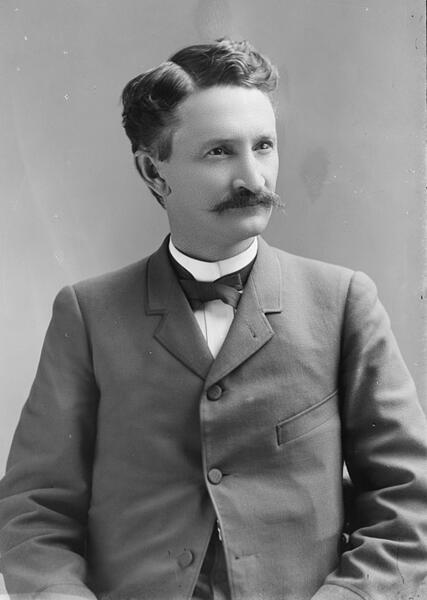
Here you will find contact information for Representative Lewis Porter Featherstone, including email address, phone number, and mailing address.
| Name | Lewis Porter Featherstone |
| Position | Representative |
| State | Arkansas |
| District | 1 |
| Party | Union Labor |
| Status | Former Representative |
| Term Start | December 2, 1889 |
| Term End | March 3, 1891 |
| Terms Served | 1 |
| Born | July 28, 1851 |
| Gender | Male |
| Bioguide ID | F000056 |
About Representative Lewis Porter Featherstone
Lewis Porter Featherstone (July 28, 1851 – March 14, 1922) was an American planter, farm activist, and politician who served as a Union Labor Party Representative from Arkansas in the United States Congress from 1889 to 1891. His single term in the House of Representatives occurred during a significant period in American history marked by agrarian unrest and the rise of third-party movements, and he became known as a prominent advocate for the interests of farmers and rural laborers.
Featherstone was born on July 28, 1851, in Oxford, Lafayette County, Mississippi, the eldest son of Lewis H. Featherstone and Elizabeth (Porter) Featherstone. He attended the common schools in his youth and later pursued legal studies at the Cumberland School of Law at Cumberland University in Lebanon, Tennessee. In 1874 he married Alice White, and the couple had five children. Although trained in the law, Featherstone’s principal pursuits and public identity were rooted in agriculture and farm organization rather than in legal practice.
Beginning in 1872, Featherstone engaged in planting in Shelby County, Tennessee, where he farmed until 1881. Seeking broader opportunities in the post-Reconstruction South, he moved to Forrest City in St. Francis County, Arkansas, where he continued as a planter. His experience as a working agriculturist in both Tennessee and Arkansas brought him into close contact with the economic difficulties faced by small farmers, and this background helped propel him into leadership roles within the agrarian reform movement of the 1880s.
Featherstone entered public office as a Democrat and served in the Arkansas House of Representatives in 1887 and 1888. During the same period, he emerged as a leading farm organizer. In 1887 he was elected president of the Agricultural Wheel, a powerful Arkansas-based farmers’ organization that sought improved conditions for agricultural producers, and he was reelected to that post in 1888. Through the Agricultural Wheel, he became a central figure in efforts to unite farmers around issues such as fair freight rates, equitable credit, and electoral reforms, laying the groundwork for his later involvement with third-party politics.
In 1888, Featherstone ran for the Fifty-first Congress as a Union Labor Party candidate from Arkansas, challenging incumbent Democrat William H. Cate. Although Cate was initially declared re-elected, Featherstone contested the result, alleging election fraud. The dispute culminated in the contested-election case of Featherstone v. Cate before the U.S. House of Representatives. After hearings and review of the evidence, the House unseated Cate and seated Featherstone in 1890. He thus served as a Representative from Arkansas in the United States Congress from 1889 to 1891, with his active service in the House running from his seating in 1890 until March 3, 1891. As a member of the Union Labor Party in the House of Representatives, he participated in the legislative process during one term in office and represented the interests of his agrarian and labor-oriented constituents. He was an unsuccessful candidate on the Union Labor ticket for reelection in 1890 to the Fifty-second Congress.
By 1892, Featherstone, who had been constantly under political attack for supporting efforts to preserve the right of Black citizens and poor whites to vote, joined other Union Labor members in aligning with the emerging Populist Party. He served as platform committee chairman at the Arkansas Populist state convention, where delegates adopted a resolution—introduced by a Black delegate from the St. Francis County delegation—calling on Arkansas “to elevate the down-trodden sons and daughters of industry in all matters … irrespective of race or color.” Featherstone also headed the Arkansas delegation to the Populist national convention in Omaha in 1892, underscoring his prominence in the broader Populist movement. After the defeat of the Arkansas Populists in 1892 and the subsequent reassertion of Democratic dominance through laws that disenfranchised many Black and poor white voters, he withdrew from active politics as populism in the state faded.
In his later years, Featherstone relocated to Texas, eventually settling in Galveston. There he turned from agriculture and politics to business pursuits, engaging in railroad building and in the development of the iron resources of Texas. During the Spanish–American War in 1898, he received a commission as a first lieutenant in the First United States Volunteer Infantry, a unit mustered in Galveston; he was later promoted to captain. The regiment saw no service outside the United States and was mustered out at the end of the conflict, but his commission reflected his continued public service during a time of national mobilization.
Lewis Porter Featherstone died in Longview, Texas, on March 14, 1922. He was interred at Mission Burial Park South in San Antonio, Texas. His career as a planter, state legislator, agrarian organizer, third-party leader, and brief member of Congress placed him among the notable figures of the late nineteenth-century agrarian and Populist movements in Arkansas and the broader South.