Senator Lewis Fields Linn
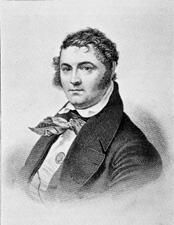
Here you will find contact information for Senator Lewis Fields Linn, including email address, phone number, and mailing address.
| Name | Lewis Fields Linn |
| Position | Senator |
| State | Missouri |
| Party | Democratic |
| Status | Former Representative |
| Term Start | December 2, 1833 |
| Term End | March 3, 1843 |
| Terms Served | 2 |
| Born | November 5, 1796 |
| Gender | Male |
| Bioguide ID | L000338 |
About Senator Lewis Fields Linn
Lewis Fields Linn (November 5, 1796 – October 3, 1843) was an American physician and Democratic politician who represented Missouri in the United States Senate from 1833 until his death in 1843. His decade of service in the Senate, spanning two full terms and part of a third, occurred during a significant period in American history marked by westward expansion, partisan realignment, and debates over land policy. A member of the Democratic Party and initially elected as a Jacksonian, he contributed to the legislative process while representing the interests of his Missouri constituents. Linn is among the hundreds of members of Congress who were slaveowners.
Linn was born near Louisville, Kentucky, on November 5, 1796. Orphaned at a young age, he received only a meager academic education, largely because of the deaths of his parents. He was raised by his older half-brother, Henry Dodge, who would later become a prominent territorial governor and U.S. senator. Under Dodge’s care, Linn began studying medicine in Louisville as a teenager. During the War of 1812 he served as a surgeon with troops commanded by Henry Dodge, gaining early practical experience in military medicine despite his youth. After the war he continued his professional training and completed his medical studies at Philadelphia Medical College in 1816.
Upon being admitted to practice as a medical doctor, Linn relocated to Ste. Genevieve, in what was then the Missouri Territory and later the state of Missouri. Establishing himself as a physician in this early river settlement, he earned regional recognition for his major role in combating two cholera epidemics, which enhanced both his professional reputation and his standing in the community. His medical work and public service during these health crises helped propel him into political life in the young state.
Linn’s formal political career began at the state level. He served in the Missouri Senate in 1827, participating in the legislative affairs of a state that had only recently been admitted to the Union. In 1832 he was appointed to a state commission charged with settling land claims based on grants made by the government of France prior to the incorporation of the region into the United States. This work on French and Spanish land titles in Missouri foreshadowed his later involvement with federal land policy and claims as a member of the United States Senate.
In 1833 Linn was elected to the United States Senate as a Jacksonian Democrat, filling the vacancy created by the death of Senator Alexander Buckner. He took his seat on October 25, 1833, and was subsequently re-elected as a Democrat in 1836 and again in 1842, serving continuously from 1833 until his death in 1843. During his Senate career, Linn held important committee assignments that reflected both his earlier experience and the priorities of a rapidly expanding nation. He served as chairman of the Committee on Private Land Claims from 1835 to 1841, during the Twenty-fourth through Twenty-sixth Congresses, where he dealt extensively with disputes over land titles and claims in newly settled or transitioning territories. From 1841 to 1843, during the Twenty-seventh Congress, he chaired the Committee on Agriculture, overseeing matters related to farming, rural development, and agricultural policy. Throughout his tenure, he participated in the democratic process and represented Missouri’s interests during a period of significant growth and change.
Linn remained in Ste. Genevieve as his home base throughout his national service, and he died there on October 3, 1843, while still in office as a United States senator. His death brought to a close ten years of continuous representation of Missouri in the Senate. He was buried in Ste. Genevieve Memorial Cemetery. His passing placed him among the members of the United States Congress who died in office during the nineteenth century.
Linn’s legacy is reflected in the geography of the American West and Midwest. Four states—Iowa, Kansas, Missouri, and Oregon—have counties named in his honor. Several towns also bear his name, including Linneus, Missouri; Linn, Missouri; West Linn, Oregon; and Linnton, Oregon, commemorating his role in the era of western expansion and his advocacy for frontier interests. His family connections linked him to other notable public figures of the period: he was the half-brother of Henry Dodge and the uncle of Dodge’s son, Augustus C. Dodge, both of whom served in the United States Senate. Linn was also the brother-in-law of James Hugh Relfe, a Missouri politician, and the uncle of William Pope McArthur, a United States Navy officer known for his surveys of the Pacific Coast.