Representative Lewis Lovering Morgan
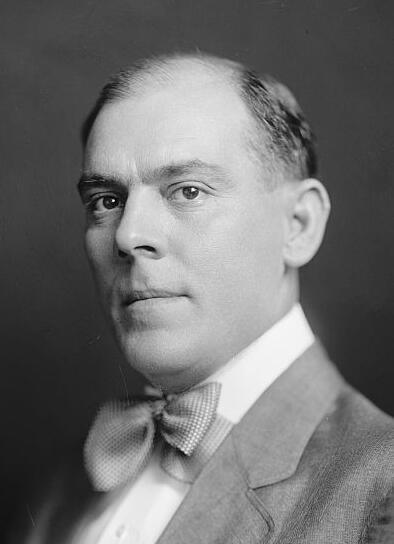
Here you will find contact information for Representative Lewis Lovering Morgan, including email address, phone number, and mailing address.
| Name | Lewis Lovering Morgan |
| Position | Representative |
| State | Louisiana |
| District | 6 |
| Party | Democratic |
| Status | Former Representative |
| Term Start | April 4, 1911 |
| Term End | March 3, 1917 |
| Terms Served | 3 |
| Born | March 2, 1876 |
| Gender | Male |
| Bioguide ID | M000955 |
About Representative Lewis Lovering Morgan
Lewis Lovering Morgan (March 2, 1876 – June 10, 1950) was an American lawyer and Democratic politician from Covington, Louisiana, who represented Louisiana’s 6th congressional district in the United States House of Representatives from November 5, 1912, to March 4, 1917. Over the course of three terms in Congress, he participated actively in the legislative process during a significant period in American history, representing the interests of his constituents and contributing to the work of the Democratic Party in the House of Representatives.
Morgan was born on March 2, 1876, in Covington, St. Tammany Parish, Louisiana. He grew up in the post-Reconstruction South, in a region whose political and economic life was closely tied to agriculture, trade, and the emerging influence of New Orleans as a regional center. Details of his early family life and schooling are not extensively documented, but his subsequent legal and political career indicate a solid grounding in the civic and educational institutions of Louisiana at the turn of the twentieth century.
Pursuing higher education and the study of law, Morgan prepared for admission to the bar in Louisiana, entering a profession that was a traditional pathway into public life in the state. After completing his legal studies and meeting the requirements for practice, he was admitted to the bar and established himself as an attorney in Covington. His work as a lawyer brought him into contact with local business interests, landowners, and public officials, and helped to build the professional reputation and community standing that later supported his entry into elective office.
Morgan’s political career developed within the Democratic Party, which dominated Louisiana politics in the early twentieth century. Before his election to Congress, he became active in party affairs and local public life, aligning himself with the issues and priorities that resonated with voters in his region. His background as a practicing attorney and his familiarity with the concerns of St. Tammany Parish and surrounding areas positioned him as a credible candidate when a vacancy arose in the state’s congressional delegation.
Lewis Lovering Morgan entered the United States House of Representatives as a Democrat from Louisiana’s 6th congressional district, first winning election to fill a vacancy and taking his seat on November 5, 1912. He then secured reelection and served continuously until March 4, 1917, completing three terms in office. His tenure in Congress coincided with the administration of President Woodrow Wilson and with major national debates over economic regulation, banking and currency reform, and the United States’ evolving role in world affairs on the eve of World War I. As a member of the House of Representatives, Morgan participated in the democratic process by debating legislation, voting on national policy, and advocating for the needs and interests of his Louisiana constituents within the broader framework of the Democratic majority.
During these years, Morgan’s district encompassed a mix of rural parishes and growing communities whose economies depended on agriculture, forestry, and regional commerce. In Congress, he was part of a Southern Democratic bloc that generally supported Wilsonian domestic reforms while also attending closely to issues such as transportation, river and harbor improvements, and federal support for regional development. Although the detailed record of his committee assignments and specific legislative initiatives is limited in surviving summaries, contemporary biographical references and congressional directories consistently note his role as an active participant in the legislative work of the House and as a reliable Democratic vote on key measures of the era.
After leaving Congress on March 4, 1917, Morgan returned to Louisiana and resumed the practice of law, maintaining his professional base in Covington and remaining engaged in state and regional affairs. He continued to be identified in reference works such as “Who’s Who in Louisiana and Mississippi” (1918) as a figure of note in the legal and political life of the state. In subsequent years he remained associated with the Democratic Party and with public questions affecting Louisiana, and his name appears in later political reference sources, including Congressional Quarterly’s compilations on elections and gubernatorial politics, reflecting his continued relevance in the state’s political landscape even after his congressional service had ended.
Lewis Lovering Morgan died on June 10, 1950, and his passing was noted in the New Orleans Times-Picayune on June 11, 1950, which recorded his career as a lawyer and former member of Congress. Remembered as a Covington attorney who rose to represent Louisiana’s 6th district in the U.S. House of Representatives during a transformative period in American history, he left a record of service that linked his local legal practice with the broader responsibilities of national legislative office.