Representative Lewis Winans Ross
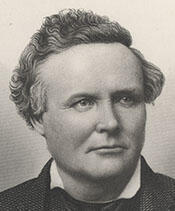
Here you will find contact information for Representative Lewis Winans Ross, including email address, phone number, and mailing address.
| Name | Lewis Winans Ross |
| Position | Representative |
| State | Illinois |
| District | 9 |
| Party | Democratic |
| Status | Former Representative |
| Term Start | December 7, 1863 |
| Term End | March 3, 1869 |
| Terms Served | 3 |
| Born | December 8, 1812 |
| Gender | Male |
| Bioguide ID | R000451 |
About Representative Lewis Winans Ross
Lewis Winans Ross (December 8, 1812 – October 29, 1895) was an American attorney, merchant, soldier, and Democratic politician who served as a Representative from Illinois in the United States Congress from 1863 to 1869. Widely known as an antiwar Peace Democrat, or Copperhead, during the American Civil War, he represented Illinois’s 9th congressional district for three consecutive terms and was an influential figure in both state and national politics during a period of profound national crisis.
Ross was born near Seneca Falls, New York, on December 8, 1812, the oldest son of Ossian M. Ross and Mary (Winans) Ross. In 1820 he moved with his family to Illinois, where his father had received land in the Illinois Military Tract in recognition of service in the War of 1812. The following year, in 1821, the family settled in a frontier community that Ossian Ross named Lewistown, Illinois, in honor of his son. Lewis Ross was educated in local pioneer schools before attending Illinois College in Jacksonville, Illinois, from which he graduated in 1838. He then read law under Josiah Lamborn, a prominent Illinois lawyer, and was admitted to the bar in 1839, commencing the practice of law in Lewistown.
On June 13, 1839, Ross married Frances Mildred Simms (1822–1902) in Lewistown. The couple had twelve children: John Wesley Ross (1841–1902), who became a distinguished attorney and president of the Washington, D.C., Board of Commissioners; Mary Frances Ross (1843–1844); Ossian Reuben Ross (1845–1863), who committed suicide while a student at the University of Michigan; Ellen Caroline Ross (1846–1880); Lewis Cass “Lute” Ross (1848–1916); Frank Rutledge Ross (1851–1886); Henry Lee Ross (1852–1856); Alice Ross (1854–1855); Pike Clinton Ross (1855–1917); Frances Walker Ross (1857–1885); Jennie L. Ross (1859–1941); and an unnamed daughter who died in infancy, whose gravestone is marked simply “Babe.” The Ross family became one of the most prominent in Lewistown and Fulton County, and their home, later known as the Ross Mansion, was a local landmark.
From an early age, Ross combined public service with military experience on the frontier. In 1827 he served in Captain Constant’s Company, Colonel Neale’s Detachment of the Illinois Mounted Riflemen during the Winnebago Indian disturbances. He again saw military service in the Black Hawk War of 1832 as a sergeant in Bogart’s Brigade, Captain John Sain’s Company, Odd Battalion of Mounted Rangers. During the Mexican–American War he organized a volunteer unit, Company K of the 4th Illinois Infantry, commanded by Colonel Edward D. Baker, and was elected captain of the company. Two of his brothers, First Lieutenant Leonard F. Ross and Private Pike C. Ross, served under him in this unit. In 1861, at the outset of the Civil War, Illinois Governor Richard Yates offered him a commission as colonel of volunteers, but Ross declined the appointment. Nonetheless, he was widely addressed as “Colonel Ross” for the rest of his life and in subsequent historical accounts.
Ross’s political career in Illinois began well before his service in Congress. A Democrat, he was elected to the Illinois House of Representatives for two non-consecutive terms, serving from 1840 to 1842 and again from 1844 to 1846, during which time Abraham Lincoln was also a member of the legislature. In addition to practicing law, Ross engaged in mercantile and real estate enterprises in Lewistown and nearby Havana, Illinois, building what would become substantial business and property holdings. In 1860 he was the unsuccessful Democratic candidate for lieutenant governor of Illinois. He later served as a delegate to the Illinois State Constitutional Conventions of 1862 and 1870. The 1862 convention produced a proposed “Copperhead constitution” that was rejected by the voters, but Ross played a prominent role in the framing of the Constitution of Illinois that was ultimately ratified in 1870.
Ross was elected as a Democrat to the Thirty-eighth, Thirty-ninth, and Fortieth Congresses, serving from March 4, 1863, to March 3, 1869, as the Representative from Illinois’s 9th congressional district. His tenure in the House of Representatives coincided with the Civil War and the early years of Reconstruction, and he contributed to the legislative process during three terms in office. While in Congress, he served on the House Committee on Agriculture and the Committee on Indian Affairs. He was also appointed to the Joint Special Committee on the Condition of the Indian Tribes, commonly known as the Doolittle Committee after its chairman, Senator James R. Doolittle. In that capacity, Ross participated in investigations into the treatment of Native American tribes by military and civil authorities, including inquiries into the Sand Creek Massacre of 1864, also known as the Chivington Massacre, in which Colorado Territory militia attacked a village of peaceful Cheyenne and Arapaho.
During the Civil War, Ross emerged as one of the leading Peace Democrats in Illinois. A close personal friend and ardent supporter of Senator Stephen A. Douglas, he had backed Douglas’s senatorial and presidential campaigns and continued to espouse Douglas’s views after the senator’s death in 1861. In a notable address to the House of Representatives in 1864, Ross invoked Douglas’s legacy and called for an end to the war through “mutual concessions and a fair and just compromise.” His opposition to many of the Lincoln administration’s war policies led some contemporaries to suspect him of Southern sympathies. During draft riots in Fulton County, a cannon was reportedly trained on his house for several days. Nevertheless, his views reflected those of many of his constituents, and he was twice re-elected to Congress, underscoring his continued support at home.
In the Reconstruction era, Ross generally aligned with the moderate policies of President Andrew Johnson and opposed the measures advanced by Radical Republicans in Congress. He supported Johnson’s veto of the Freedmen’s Bureau bill, a veto that Congress ultimately overrode, arguing that the bureau discriminated against white citizens who might also need government assistance in the war’s aftermath. Ross frequently expressed regret that the compromise proposals of Senators John J. Crittenden and Stephen A. Douglas had not prevailed in the months leading up to the Civil War. In an 1868 address to the House, he argued against H.R. 439, supplemental to “An act to provide for the more efficient Government of the Rebel States,” contending that the federal government lacked constitutional authority to impose military rule on the former Confederate states. His remarks on this occasion led to a heated and sometimes ad hominem exchange with fellow Illinois Representative Elihu B. Washburne, a leading Radical Republican. Although some contemporaries considered Ross a possible candidate for Vice President of the United States in 1868, he chose not to seek higher office and retired from elective politics at the close of his third term in Congress.
After leaving Congress in 1869, Ross devoted himself to managing his extensive real estate and business interests in Lewistown and Havana. In 1878 he participated in the incorporation of the Fulton County Narrow-Gauge Railroad Company, which ultimately constructed a line between Galesburg and West Havana, Illinois, contributing to the region’s economic development. He continued to be a leading figure in local finance and, in 1893, was elected president of the Lewistown National Bank, a position in which he remained active until his death. His prominence in business and civic affairs reinforced his status as one of Fulton County’s most influential citizens.
Lewis Winans Ross died in Lewistown, Illinois, on October 29, 1895, from the rupture of a blood vessel in his head. He was interred in Oak Hill Cemetery in Lewistown, in a family plot that also contains the graves of his grandmother Abigail Lee Ross, his parents, his wife, and nine of his twelve children. Original correspondence and documents related to his life and career, including letters exchanged with Stephen A. Douglas, letters written to his wife during the Mexican–American War, and account books for the general stores he and his sons operated in Lewistown and Havana, as well as records of his real estate and personal property, are preserved in the Abraham Lincoln Presidential Library in Springfield, Illinois. Ross’s legacy also entered American literature: he served as the model for the character Washington McNeely in Edgar Lee Masters’s “Spoon River Anthology,” while two of his sons inspired other characters in that work. The suicide of his son Ossian Reuben Ross is reflected in Masters’s portrayal of Harry McNeely, and Lewis Cass Ross was the basis for Lucious Atherton. The “great mansion-house” described in the anthology refers to the Ross Mansion, a New England–style residence modeled after a Hudson River estate admired by Ross. The mansion was demolished in 1962, and the site at Broadway Street and Milton Avenue in Lewistown is now Ross Mansion Park, commemorating the family’s long-standing influence in the community.