Representative Lilius Bratton Rainey
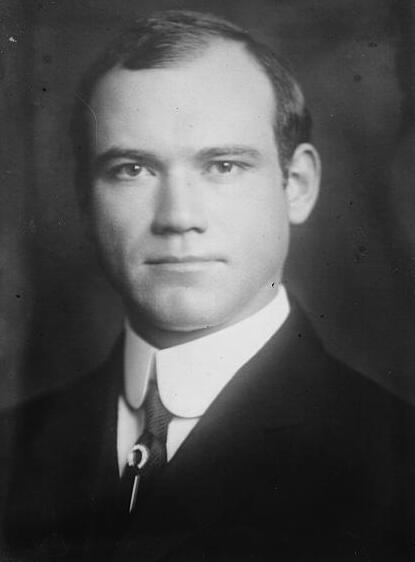
Here you will find contact information for Representative Lilius Bratton Rainey, including email address, phone number, and mailing address.
| Name | Lilius Bratton Rainey |
| Position | Representative |
| State | Alabama |
| District | 7 |
| Party | Democratic |
| Status | Former Representative |
| Term Start | May 19, 1919 |
| Term End | March 3, 1923 |
| Terms Served | 2 |
| Born | July 27, 1876 |
| Gender | Male |
| Bioguide ID | R000017 |
About Representative Lilius Bratton Rainey
Lilius Bratton Rainey (July 27, 1876 – September 27, 1959) was a Democratic U.S. Representative from Alabama who served in the United States Congress from 1919 to 1923. He was born in Dadeville, Tallapoosa County, Alabama, on July 27, 1876, and spent his early years in that community before moving to Fort Payne, Alabama. He attended the common schools and grew up in the post-Reconstruction South, an environment that shaped his early understanding of law, politics, and public service.
Rainey pursued higher education in Alabama, first enrolling at the Alabama Polytechnic Institute in Auburn, Alabama, from which he graduated in 1899. He then studied law at the University of Alabama in Tuscaloosa, completing the law department’s course of study in 1902. That same year he was admitted to the bar and commenced the practice of law in Gadsden, Etowah County, Alabama. His legal training and early practice laid the groundwork for a career that would combine military service, municipal office, and ultimately national legislative responsibilities.
In addition to his legal work, Rainey became involved in the Alabama National Guard. He was elected a captain in the Guard in 1903, reflecting both local confidence in his leadership and his interest in public service beyond the courtroom. He was reelected and commissioned again in 1906, but he resigned his command in 1907. Returning his focus more fully to civic and legal affairs, he built a reputation as a capable attorney in Gadsden.
Rainey’s first significant public office came at the municipal level. He served as city solicitor of Gadsden from 1911 to 1917, acting as the city’s legal representative and prosecutor in municipal matters. In this capacity he gained practical experience in public law and governance, and he became a recognized figure in local Democratic politics. His work as city solicitor, combined with his legal practice, positioned him as a viable candidate for higher office at a time when Alabama was firmly within the Democratic Party’s “Solid South” alignment.
Rainey entered national politics when he was elected as a Democrat to the Sixty-sixth Congress to fill the vacancy caused by the death of Representative John L. Burnett. He took his seat in the U.S. House of Representatives on September 30, 1919. He was subsequently reelected to the Sixty-seventh Congress, serving continuously from September 30, 1919, to March 3, 1923. During these two terms in office, he represented his Alabama constituents in the House of Representatives and contributed to the legislative process during a significant period in American history, which included the immediate post–World War I era, the early years of Prohibition, and the beginning of national debates over economic adjustment and veterans’ issues. As a member of the Democratic Party, he participated in the democratic process and worked to represent the interests of his district within the broader context of Southern and national politics. He declined to be a candidate for renomination in 1922, thereby concluding his congressional service at the end of his second term.
After leaving Congress, Rainey resumed the practice of law in Gadsden, where he continued to be active in professional and civic affairs. He also served as a trustee of the state department of archives and history in Montgomery, Alabama, a role that reflected his interest in the preservation of Alabama’s historical records and heritage. This trusteeship extended his public service beyond elective office and into the stewardship of the state’s institutional memory.
Rainey practiced law in Gadsden until his death. He died there on September 27, 1959, closing a long life that had spanned from the late nineteenth century through the mid-twentieth century and had included military service, municipal office, and two terms in the United States Congress. He was interred in Glenwood Cemetery in Fort Payne, Alabama, returning in death to the community where he had spent part of his early life.