Representative Lincoln Dixon
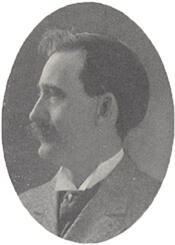
Here you will find contact information for Representative Lincoln Dixon, including email address, phone number, and mailing address.
| Name | Lincoln Dixon |
| Position | Representative |
| State | Indiana |
| District | 4 |
| Party | Democratic |
| Status | Former Representative |
| Term Start | December 4, 1905 |
| Term End | March 3, 1919 |
| Terms Served | 7 |
| Born | February 9, 1860 |
| Gender | Male |
| Bioguide ID | D000374 |
About Representative Lincoln Dixon
Lincoln Dixon (February 9, 1860 – September 16, 1932) was an American lawyer and Democratic politician who served seven consecutive terms as a U.S. Representative from Indiana from 1905 to 1919. Over the course of his congressional career, he represented his constituents during a significant period in American history, contributing to the legislative process in the House of Representatives through seven terms in office.
Dixon was born in Vernon, Jennings County, Indiana, on February 9, 1860. He attended the local Vernon Academy, receiving his early education in his hometown. Demonstrating academic promise, he enrolled at Indiana University in Bloomington, from which he graduated with honor in 1880. His education at Indiana University provided the foundation for his subsequent legal and political career, and it placed him among the better-educated public men of his generation in Indiana.
Shortly after completing his university studies, Dixon moved to Washington, D.C., where in 1881 he was employed as a clerk in the United States Department of the Interior. This early exposure to the workings of the federal government preceded his formal entry into the legal profession. He returned to Vernon and studied law, and in 1882 he was admitted to the bar. Dixon commenced the practice of law in North Vernon, Indiana, establishing himself as a local attorney. His early public service included work as reading clerk of the Indiana House of Representatives in 1883, a position that familiarized him with legislative procedure and state politics.
Dixon’s legal and political career advanced when he was elected prosecuting attorney for the sixth judicial circuit of Indiana, a post he held from 1884 to 1892. In this capacity he gained prominence as a trial lawyer and public official. His involvement with the Democratic Party deepened over time; he served as a member of the Democratic State Committee from 1897 to 1904, helping to shape party strategy and organization in Indiana. This period of party leadership laid the groundwork for his eventual election to national office and reflected his growing influence within Democratic circles.
In 1904, Dixon was elected as a Democrat to the Fifty-ninth Congress, and he subsequently won reelection to the six succeeding Congresses, serving from March 4, 1905, to March 3, 1919. As a member of the U.S. House of Representatives, he participated fully in the democratic process and represented the interests of his Indiana constituents during a transformative era that included the Progressive movement and World War I. A member of the Democratic Party throughout his tenure, Dixon contributed to the legislative work of the House over seven terms in office. His continuous service ended when he was an unsuccessful candidate for reelection in 1918 to the Sixty-sixth Congress.
After leaving Congress in 1919, Dixon resumed the practice of law, returning to his profession in Indiana. He remained active in Democratic Party affairs at the state and national levels, again serving on the Democratic State Committee from 1920 to 1927. He was chosen as a delegate to the Democratic National Conventions in 1920 and 1924, participating in the selection of the party’s presidential nominees and in the formulation of national platforms. In 1924 he was placed in charge of the Democratic campaign in the western United States, a role that underscored his organizational skills and standing within the party.
Dixon’s later public service extended to the federal regulatory sphere. In 1927, President Calvin Coolidge appointed him a member of the United States Tariff Commission, where he took part in the complex work of advising on tariff policy and trade matters during a period of significant economic change. He retired from the commission in 1930 but was reappointed by President Herbert Hoover on June 17, 1931, reflecting bipartisan confidence in his experience and judgment. He continued to serve on the Tariff Commission until his death.
Lincoln Dixon died while on a visit in Lyndon, Jefferson County, Kentucky, on September 16, 1932, still an active member of the United States Tariff Commission. He was interred in Vernon Cemetery in his hometown of Vernon, Indiana, closing a career that had spanned local, state, and national service over more than five decades.