Representative Lionel Van Deerlin
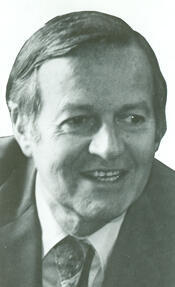
Here you will find contact information for Representative Lionel Van Deerlin, including email address, phone number, and mailing address.
| Name | Lionel Van Deerlin |
| Position | Representative |
| State | California |
| District | 42 |
| Party | Democratic |
| Status | Former Representative |
| Term Start | January 9, 1963 |
| Term End | January 3, 1981 |
| Terms Served | 9 |
| Born | July 25, 1914 |
| Gender | Male |
| Bioguide ID | V000024 |
About Representative Lionel Van Deerlin
Lionel Lathrop Van Deerlin (July 25, 1914 – May 17, 2008) was an American journalist, educator, and Democratic politician who served nine terms as a United States Representative from California from 1963 to 1981, representing a San Diego area district. His congressional service, spanning 18 years, took place during a significant period in American history, and he participated actively in the legislative process while representing the interests of his constituents in a region heavily influenced by the military and emerging telecommunications industries.
Van Deerlin was born in Los Angeles, California, and spent his formative years in Southern California. He graduated from Oceanside High School in Oceanside, California, in 1933. He then attended the University of Southern California, where he studied journalism and became editor of the student newspaper, the Daily Trojan. He earned a Bachelor of Arts degree in journalism from USC in 1937, laying the foundation for a professional life that would combine reporting, broadcasting, and public service.
During World War II, Van Deerlin served for four years in the United States Army, primarily in the Field Artillery. He was assigned to the staff of the Stars and Stripes newspaper in the Mediterranean theater and saw overseas service in Italy. Rising to the rank of staff sergeant, he gained firsthand experience with both military affairs and wartime journalism. After the war, he resumed his career in the press, working as a journalist in Minneapolis, Minnesota, and Baltimore, Maryland, before returning to California.
Van Deerlin eventually settled in the San Diego area, where he became deeply involved in local journalism and politics. He first ran unsuccessfully for Congress in 1952. In San Diego he served as city editor of the San Diego Daily Journal, a newspaper founded by former Congressman Clinton D. McKinnon. He later moved into broadcast journalism, becoming news director of XETV in Tijuana–San Diego, then the ABC affiliate serving the San Diego market, and subsequently working at NBC affiliate KFSD-AM-FM-TV. After a second unsuccessful bid for Congress in 1958, he returned to XETV as a newscaster and news director, further raising his public profile in the region.
In 1962, Van Deerlin was elected to the U.S. House of Representatives from California’s newly created 37th Congressional District, becoming the first Democrat to represent a San Diego–based district in Congress since Clinton D. McKinnon left office in 1953. A member of the Democratic Party, he contributed to the legislative process during nine consecutive terms in office, serving from January 3, 1963, to January 3, 1981. His district, centered on the San Diego area, was renumbered the 41st District in 1972 and the 42nd District in 1974, but he continued to win reelection, reflecting sustained support from his constituents. As a member of the House of Representatives during a period marked by the civil rights movement, the Vietnam War, and major economic and technological change, he participated in the democratic process and represented the interests of a community closely tied to defense and communications industries.
Van Deerlin became particularly influential in telecommunications policy as chairman of the House Subcommittee on Communications. In that role, he encouraged competition in the telecommunications industry and conducted hearings that contributed to the eventual breakup of AT&T’s telephone monopoly. He was known as an advocate for a broad interpretation of First Amendment rights for broadcasters, emphasizing the importance of robust public discourse and access to information in electronic media. His work on communications issues positioned him as a key congressional voice on the regulation and future of broadcasting and telephone services during a transformative era for the industry.
In 1980, Van Deerlin faced a strong challenge from Republican attorney Duncan Hunter. Initially regarded as a long-shot candidate, Hunter gained traction by portraying Van Deerlin as weak on defense in a district whose economy was heavily dependent on military installations and defense-related employment. Hunter’s community activities, including efforts to help low-income individuals obtain legal assistance, further bolstered his appeal. Van Deerlin, who had not faced a serious contest since his first race, was slow to respond to the challenge, and Hunter narrowly defeated him in the general election. Following Van Deerlin’s defeat, Democrats struggled to regain competitiveness in the area; they have only rarely surpassed 40 percent of the vote in the district, which, after multiple rounds of redistricting, is now numbered as the 50th District.
After leaving Congress in 1981, Van Deerlin remained active in public life as an educator and commentator. He joined the faculty of San Diego State University, where he became a professor emeritus and continued to engage students and the public on issues of politics, media, and governance. In recognition of his contributions to communications policy and education, San Diego State University established the Lionel Van Deerlin Endowed Chair in Communications in his honor. He also wrote a weekly opinion column, published every Thursday, for The San Diego Union-Tribune, drawing on his experience in journalism and Congress to comment on contemporary political and civic issues. Reflecting on changes in the political climate, he remarked in an April 23, 2004 speech before the Osher Forum, broadcast by UC-TV, that “Twenty-five years ago in Congress you not only trusted the opposing party, you enjoyed their company. Today, they hardly speak.”
Lionel Van Deerlin died at his home in San Diego, California, on May 17, 2008, at the age of 93. His long career bridged print and broadcast journalism, military service, legislative leadership in telecommunications policy, and later work as a professor and columnist, leaving a lasting imprint on both his San Diego community and national communications policy.