Senator Littleton Waller Tazewell
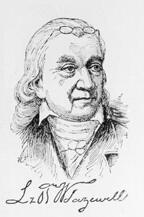
Here you will find contact information for Senator Littleton Waller Tazewell, including email address, phone number, and mailing address.
| Name | Littleton Waller Tazewell |
| Position | Senator |
| State | Virginia |
| Party | Jackson |
| Status | Former Representative |
| Term Start | December 2, 1799 |
| Term End | March 3, 1833 |
| Terms Served | 3 |
| Born | December 17, 1774 |
| Gender | Male |
| Bioguide ID | T000108 |
About Senator Littleton Waller Tazewell
Littleton Waller Tazewell (December 17, 1774 – May 6, 1860) was a Virginia lawyer, plantation owner, and politician who served as a U.S. Representative, U.S. Senator, and the 26th Governor of Virginia, as well as a member of the Virginia House of Delegates. He was born in Williamsburg in the Colony of Virginia shortly before Christmas 1774, the son of Henry Tazewell and Dorothy Elizabeth Waller. His father served as clerk of the revolutionary conventions during the early years of the American Revolution, and his mother died when he was a child. Tazewell’s maternal grandfather, the prominent lawyer and judge Benjamin Waller, instructed him in Latin, and he was privately tutored by John Wickham before entering higher education.
Tazewell graduated from the College of William & Mary at Williamsburg in 1791. After reading law, he was admitted to the Virginia bar in 1796 and commenced legal practice in James City County, Virginia. He married Ann Stratton Nivison, with whom he had at least six daughters and two sons, although only four of their daughters survived their mother. Alongside his legal career, Tazewell became a substantial plantation owner and enslaver in the Hampton Roads region, a status that would shape both his economic interests and his political outlook throughout his life.
Tazewell entered public life as a member of the Virginia House of Delegates, representing James City County from 1798 to 1800. He resigned that seat when he was elected to fill the vacancy in the Sixth United States Congress caused by the resignation of John Marshall. Serving as a U.S. Representative from November 26, 1800, to March 4, 1801, he aligned himself politically as a Jeffersonian Republican. After his brief initial service in Congress, he moved in 1802 to Norfolk, Virginia, where he continued his legal practice and expanded his political base. He represented Norfolk Borough in the Virginia General Assembly in the sessions of 1804–1805 and 1805–1806, and later again represented James City County in the House of Delegates from 1809 to 1812. Norfolk voters returned him once more as their delegate in 1816–1817. During this period he also played a notable role in foreign-relations tensions at home: on July 5, 1807, he helped defuse the impressment crisis in Norfolk harbor arising from the confrontation between the British warship HMS Leopard and the American frigate USS Chesapeake, working with Norfolk mayor Richard E. Lee to calm a volatile situation.
In the years following the War of 1812, Tazewell combined commercial, legal, and public service interests. He joined General Taylor, George Newton, and others in forming the Roanoke Commercial Company, an enterprise intended to expand traffic through the Dismal Swamp Canal and channel goods from as far inland as Bedford County through the port of Norfolk. He also served as one of the commissioners of claims under the treaty with Spain that ceded Florida to the United States in 1821, adjudicating financial and property claims arising from that transfer. Politically, as the Jeffersonian Republican Party fractured in the 1820s, Tazewell associated himself with the Jacksonian Democrats, sometimes referred to as the Jackson Party, reflecting his alignment with Andrew Jackson’s wing of the former Republican coalition.
Virginia legislators elected Tazewell to the United States Senate in 1824 to fill the vacancy caused by the death of Senator John Taylor. Re-elected in 1829, he served in the Senate from December 7, 1824, to July 16, 1832, a period that overlapped with the presidencies of John Quincy Adams and Andrew Jackson and coincided with major national debates over tariffs, internal improvements, and federal power. The existing record notes that he served as a Senator from Virginia in the United States Congress from 1799 to 1833 and contributed to the legislative process during three terms in office; in historical context, his principal continuous Senate service ran from 1824 to 1832. During the Twenty-second Congress he was elected President pro tempore of the Senate and served as chairman of the Senate Committee on Foreign Relations, placing him at the center of congressional deliberations on international commerce and diplomacy. His principal published work, “Review of the Negotiations between the United States and Great Britain Respecting the Commerce of the Two Countries” (1829), reflected his expertise in foreign trade policy. He also served as Norfolk’s delegate to the Virginia Constitutional Convention of 1829–1830, which considered representation, suffrage, and structural reforms to the state government.
Tazewell resigned from the Senate on July 16, 1832, and later became the 26th Governor of Virginia. When the Whig Party secured majorities in the Virginia General Assembly, they elected the long-time “Old Republican” as a Whig governor, and he served from 1834 to 1836, although he resigned a year before the expiration of his term. His governorship coincided with intensifying sectional tensions over slavery and abolitionism. Nat Turner’s revolt in Southampton County in 1831 had occurred while Tazewell was at home from Washington and caused him to neglect his plantations; the uprising and its aftermath deeply influenced his views. As governor, he became an advocate of large-scale colonization of free Black people and urged the Virginia legislature to request that Northern states suppress abolitionist organizations. He also called upon Congress to prevent the delivery of abolitionist literature through the U.S. Post Office. At the same time, his administration supported internal improvements, including expansion of the James River Canal with the goal of connecting it to the Kanawha Canal and ultimately the Ohio River. Under his leadership, the General Assembly instructed Virginia’s U.S. Senators to support internal improvements, protective tariffs, and a national bank consistent with Henry Clay’s American System.
Following his term as governor, Tazewell retired from active public life, though his name continued to carry political weight. In the presidential election of 1840 he received 11 electoral votes for vice president, a reflection of his standing among certain factions despite his withdrawal from day-to-day politics. As a plantation owner, he continued to hold significant property and enslaved laborers. The 1830 U.S. Federal Census recorded his Norfolk household as including nine free white persons—five of them his children—and twelve enslaved people. By 1860, records show nine enslaved people (three men, five women, and one two-year-old boy) in his Norfolk household, and more than 100 enslaved people in Northampton County, Virginia, across the Chesapeake Bay, property largely inherited through his wife.
Governor Tazewell died a widower in Norfolk, Virginia, on May 6, 1860. He was initially interred with his wife on his estate on Virginia’s Eastern Shore, but in 1866 his remains were reinterred at Elmwood Cemetery in Norfolk. His memory has been preserved in numerous place names and memorials. Tazewell, Virginia; Tazewell County, Virginia; and Tazewell County, Illinois, as well as the cities of Tazewell and New Tazewell, Tennessee, are named in his and his father’s honor. In Norfolk, a plaque commemorating him stands at the corner of Tazewell and Granby Streets, near the Tazewell Hotel and Suites, on or near the site of his former two-story residence. That house, known as the Boush-Tazewell House, was dismantled and re-erected about three miles from its original location around 1902 and was listed on the National Register of Historic Places in 1974. A building at the College of William & Mary also bears his name, and he was the maternal grandfather of Littleton Waller Tazewell Bradford, a prominent Virginia politician and founder of the Pi Kappa Alpha fraternity.