Representative Llewellyn Powers
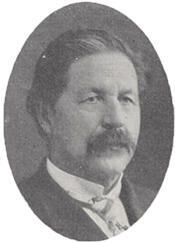
Here you will find contact information for Representative Llewellyn Powers, including email address, phone number, and mailing address.
| Name | Llewellyn Powers |
| Position | Representative |
| State | Maine |
| District | 4 |
| Party | Republican |
| Status | Former Representative |
| Term Start | October 15, 1877 |
| Term End | March 3, 1909 |
| Terms Served | 5 |
| Born | October 14, 1836 |
| Gender | Male |
| Bioguide ID | P000491 |
About Representative Llewellyn Powers
Llewellyn Powers (October 14, 1836 – July 28, 1908) was a U.S. Representative from Maine, a member of the Republican Party, and the 44th governor of Maine. Over the course of his public career he served multiple terms in the Maine House of Representatives and in the United States House of Representatives, and he held several important local and state offices during a significant period in American political history. His service in Congress extended from the late 1870s into the early twentieth century, during which he participated in the legislative process and represented the interests of his Maine constituents.
Powers was born in Pittsfield, Maine, on October 14, 1836. He attended the common schools of Pittsfield and pursued further studies at St. Albans Academy. He then enrolled at the Colburn Classical Institute, from which he graduated, receiving a classical preparatory education that prepared him for advanced study. He subsequently attended Colby University in Waterville, Maine, before deciding to pursue a legal career.
To complete his professional training, Powers entered the law department of Union University in Albany, New York, from which he graduated in 1860. That same year he was admitted to the bar in Albany, New York, and in Somerset County, Maine. In January 1861 he commenced the practice of law in Houlton, Maine, which became his long-term professional and political base. His early legal work in Houlton established his reputation and provided the foundation for his entry into public office.
Powers first held significant public responsibilities as prosecuting attorney for Aroostook County, serving from 1864 to 1871. While in that role he managed criminal prosecutions and helped shape the administration of justice in a largely rural and developing region of the state. He simultaneously broadened his public service by accepting appointment as collector of customs for the district of Aroostook, a position he held from 1868 to 1872, overseeing federal customs duties in the area. His growing prominence led to election to the Maine House of Representatives, where he served multiple nonconsecutive terms in 1873–1876, 1883, 1892, and 1895. During his last term in the state legislature he was chosen speaker of the Maine House. Among his notable legislative initiatives was a bill to abolish capital punishment; considered by the House in 1876, it passed by a vote of 75 to 68, making Maine the third state in the nation to abolish the death penalty.
At the national level, Powers was first elected as a Republican to the Forty-fifth Congress, serving as a Representative from Maine from March 4, 1877, to March 3, 1879. His initial period in the U.S. House of Representatives coincided with the end of Reconstruction and the beginning of the Gilded Age, a time of significant political and economic change. Although he was an unsuccessful candidate for reelection in 1878 to the Forty-sixth Congress, he remained an active figure in Maine politics and law. His congressional service during this era formed the first phase of what would ultimately be five terms in the House of Representatives, during which he contributed to the legislative process and participated in the broader democratic governance of the country.
Powers’s state-level career reached its peak when he was elected governor of Maine, serving as the state’s 44th governor from 1897 to 1901. As governor, he presided over Maine during a period of industrial growth and political realignment at the close of the nineteenth century. His tenure in the executive office built upon his earlier legislative experience and reinforced his standing as one of the leading Republican figures in the state. After leaving the governorship, he returned to national office and resumed his role in Congress.
Powers reentered the U.S. House of Representatives when he was elected as a Republican to the Fifty-seventh Congress to fill the vacancy caused by the resignation of Representative Charles A. Boutelle. He took his seat on April 8, 1901, and was subsequently reelected to the Fifty-eighth, Fifty-ninth, and Sixtieth Congresses. In this second, longer phase of his congressional career, he served continuously from April 8, 1901, until his death on July 28, 1908. During these years he represented Maine through the early Progressive Era, again participating actively in the legislative work of the House and in the representation of his district’s interests at the federal level. His combined service in the House from 1877 to 1879 and from 1901 to 1908 encompassed five terms in office.
In his personal life, Powers married Martha Averill in December 1886. The couple had five children, and Houlton remained the center of his family and professional activities. Public service was a family tradition: his brother, Frederick A. Powers, served as attorney general of Maine and later as a justice on the Maine Supreme Court. Llewellyn Powers died in Houlton, Maine, on July 28, 1908, while still serving in the Sixtieth Congress, placing him among the members of the United States Congress who died in office in the early twentieth century. He was buried in West Pittsfield Cemetery, near his birthplace of Pittsfield, Maine.