Representative Lloyd Meeds
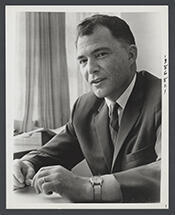
Here you will find contact information for Representative Lloyd Meeds, including email address, phone number, and mailing address.
| Name | Lloyd Meeds |
| Position | Representative |
| State | Washington |
| District | 2 |
| Party | Democratic |
| Status | Former Representative |
| Term Start | January 4, 1965 |
| Term End | January 3, 1979 |
| Terms Served | 7 |
| Born | December 11, 1927 |
| Gender | Male |
| Bioguide ID | M000626 |
About Representative Lloyd Meeds
Edwin Lloyd Meeds (December 11, 1927 – August 17, 2005) was an American politician and attorney who served as a member of the United States House of Representatives from 1965 to 1979, representing Washington’s 2nd Congressional District as a Democrat. Over seven consecutive terms in Congress, he contributed to the legislative process during a significant period in American history, participating in the democratic process and representing the interests of his constituents in northwestern Washington.
Meeds was born in Dillon, Beaverhead County, Montana, on December 11, 1927. In 1944, during his teenage years, he moved with his family to Monroe, Washington, a community northeast of Seattle. He graduated from Monroe High School in 1946 and soon thereafter entered military service. From 1946 to 1947, he served in the United States Navy, an experience that preceded his pursuit of higher education and a legal career. After his discharge, Meeds attended Everett Junior College (now Everett Community College) in Everett, Washington, graduating in 1950.
Following his studies at Everett Junior College, Meeds entered private business and owned and operated a gas station until 1954. Seeking further professional advancement, he returned to school to study law. He enrolled at Gonzaga University School of Law in Spokane, Washington, where he earned his law degree in 1958. After passing the bar examination, Meeds began his legal career in public service as a prosecutor. He served briefly in the Spokane County prosecutor’s office before returning to western Washington, where he became a prosecutor in Snohomish County, gaining experience in criminal law and local government that would inform his later legislative work.
Meeds entered national politics in the mid-1960s. In the 1964 election, he won his first term in the U.S. House of Representatives by defeating incumbent Republican Alfred Westland, thereby capturing Washington’s 2nd District for the Democratic Party. Taking office on January 3, 1965, he served continuously until January 3, 1979. Meeds secured re-election with comfortable margins in 1966, 1968, 1970, 1972, and 1974, reflecting sustained support in his district for much of his congressional career. His service in Congress coincided with a transformative era marked by the civil rights movement, the Vietnam War, and major shifts in federal domestic policy, during which he participated in the legislative deliberations and decisions of the House of Representatives.
During his congressional tenure, Meeds became particularly known for his work on conservation and education issues. He played a key role in the creation of the North Cascades National Park and the Alpine Lakes Wilderness Area in Washington State, helping to secure federal protection for significant portions of the Cascade Range. His efforts in wilderness preservation were later chronicled by conservationist Harvey Manning in the 2007 book “Wilderness Alps: Conservation and Conflict in Washington’s North Cascades,” published by the North Cascades Conservation Council. In recognition of his contributions to the establishment of the Alpine Lakes Wilderness, a memorial to Meeds was erected in 2007 at the Snow Lake trailhead near Snoqualmie Pass; Snow Lake, within the Alpine Lakes Wilderness, is one of the region’s most popular day-hike destinations.
Meeds’s congressional career also intersected with contentious regional issues. In 1974, U.S. District Court Judge George Hugo Boldt issued a landmark ruling affirming that treaties entitled Native American tribes in Washington to half of the fish caught in their usual and customary fishing grounds. Meeds publicly acknowledged that the tribes had the law on their side and urged his constituents to accept the decision and move on. This stance angered many non-Native constituents who opposed the ruling and contributed to a sharp decline in his electoral margin. In the 1976 election, he was re-elected by only 542 votes, a dramatic contrast to his earlier comfortable victories. The political fallout from the Boldt decision and the narrow 1976 result led Meeds to announce in late 1977 that he would not seek re-election in 1978. He retired from the House at the conclusion of his seventh term in early 1979, and his seat was subsequently won by his former aide, Democrat Al Swift.
After his service in Congress ended in 1979, Meeds remained in Washington, D.C., and returned to the practice of law. He became a partner in the law firm Preston Gates Ellis & Rouvelas Meeds, the Washington, D.C., office of the Seattle-based firm Preston Gates & Ellis. In his post-congressional career, he continued to be involved in public policy, particularly in land and resource issues. In contrast to his earlier role in expanding wilderness protections in Washington State, Meeds was central to efforts to limit the scope of federal land preservation in the legislation that became the Alaska National Interest Lands Conservation Act, signed into law by President Jimmy Carter in December 1980. Working as a Washington lobbyist, he collaborated closely with the State of Alaska, Representative Don Young of Alaska, and the group Citizens for the Management of Alaskan Lands to shape the final contours of the bill and to restrict the extent of new federal conservation designations in Alaska.
In his later years, Meeds continued to reside in the Washington, D.C., area while maintaining ties to his home state and to the legal and policy communities in which he had long been active. After suffering from lung cancer, he died at age 77 on August 17, 2005, at his home in Church Creek, Maryland. He was interred at Arlington National Cemetery, reflecting his service to the nation both in the military and in Congress. Meeds was survived by his wife of 38 years, Mary Yang Meeds, and their daughter, as well as two children from a previous marriage.