Representative Loren Fletcher
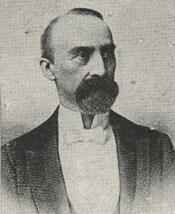
Here you will find contact information for Representative Loren Fletcher, including email address, phone number, and mailing address.
| Name | Loren Fletcher |
| Position | Representative |
| State | Minnesota |
| District | 5 |
| Party | Republican |
| Status | Former Representative |
| Term Start | August 7, 1893 |
| Term End | March 3, 1907 |
| Terms Served | 6 |
| Born | April 10, 1833 |
| Gender | Male |
| Bioguide ID | F000202 |
About Representative Loren Fletcher
Loren Fletcher (April 10, 1833 – April 15, 1919) was a United States Representative from Minnesota who served six consecutive terms in Congress from 1893 to 1907 as a member of the Republican Party. His congressional career spanned a significant period in American history marked by rapid industrialization, economic change, and the emergence of the United States as a growing national power, during which he participated actively in the legislative process and represented the interests of his Minnesota constituents in the House of Representatives.
Born on April 10, 1833, Fletcher came of age in the antebellum era, a time when the nation was expanding westward and grappling with sectional tensions that would culminate in the Civil War. His early life and formative years were shaped by this broader national context of growth and conflict, and he would later align himself with the Republican Party, which emerged in the 1850s as a major political force opposed to the expansion of slavery and supportive of economic development and modernization. These currents in American political life influenced the environment in which Fletcher developed his views and ambitions.
As he entered adulthood, Fletcher’s education and early pursuits prepared him for a career that would eventually lead to public office. Like many men of his generation who rose to political prominence in the late nineteenth century, he benefited from the expanding opportunities of a growing nation, including the development of new communities in the Upper Midwest. His move into public life reflected both personal initiative and the broader trend of civic engagement among business and professional leaders in newly developing states such as Minnesota.
Fletcher’s political career reached its height with his election to the United States House of Representatives from Minnesota. A Republican, he was first elected to Congress in 1892 and took his seat in March 1893. He went on to serve six terms, remaining in office until 1907. During these years, he contributed to the legislative process at the federal level, working within the institutional framework of the House of Representatives as it addressed issues arising from industrial growth, agricultural concerns, and the changing role of the United States in world affairs. His repeated reelection testified to the confidence his constituents placed in his representation.
During his tenure in Congress, Fletcher participated in the democratic process at a time when the federal government was increasingly called upon to respond to economic cycles, labor unrest, and questions of regulation and reform. As a member of the House, he took part in debates and votes that shaped national policy in the closing years of the nineteenth century and the opening years of the twentieth. His service coincided with the presidencies of Grover Cleveland, William McKinley, and Theodore Roosevelt, and he was part of the Republican majority that often set the legislative agenda in this era.
After leaving Congress in 1907, Fletcher remained identified with the public life of Minnesota and with the Republican Party whose principles he had long supported. His later years were spent in a nation that was continuing to evolve rapidly, moving toward the Progressive Era reforms and, eventually, the challenges of World War I. Although no longer in elective office, his earlier service in the House of Representatives remained the central public achievement of his career and a significant part of Minnesota’s congressional history.
Loren Fletcher died on April 15, 1919, closing a life that had spanned from the Jacksonian era through the First World War. Remembered primarily for his six-term service as a U.S. representative from Minnesota between 1893 and 1907, he exemplified the generation of Republican lawmakers who helped guide the United States through a transformative period of economic expansion and political change, and he left a record of sustained participation in the representative institutions of American democracy.