Representative Lou Barletta
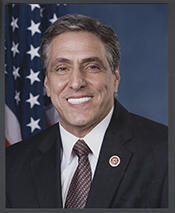
Here you will find contact information for Representative Lou Barletta, including email address, phone number, and mailing address.
| Name | Lou Barletta |
| Position | Representative |
| State | Pennsylvania |
| District | 11 |
| Party | Republican |
| Status | Former Representative |
| Term Start | January 5, 2011 |
| Term End | January 3, 2019 |
| Terms Served | 4 |
| Born | January 28, 1956 |
| Gender | Male |
| Bioguide ID | B001269 |
About Representative Lou Barletta
Louis John Barletta (born January 28, 1956) is an American businessman and Republican politician who represented Pennsylvania’s 11th congressional district in the U.S. House of Representatives from January 3, 2011, to January 3, 2019. A prominent figure in Pennsylvania politics, he previously served as mayor of Hazleton, Pennsylvania, from January 3, 2000, to December 15, 2010, and became nationally known for his advocacy of strict local measures against illegal immigration. Over four terms in Congress, Barletta contributed to the legislative process during a significant period in American history, representing the interests of his constituents in northeastern and central Pennsylvania.
Barletta was born in Hazleton, Pennsylvania, the son of Angeline (née DeAngelo) and Rocco Barletta, both of Italian ancestry. His parents married on September 6, 1943, and were active in local business and civic life; his father helped manage several family enterprises, including Angela Park, an amusement park in nearby Drums that operated until 1988, and served on the executive committee of the Democratic Party of Hazleton. Barletta’s mother died in 1994 and his father in 1999. When Barletta was 18 months old, he was involved in a car crash, suffering a minor bruise to his left ear and the right side of his head, but he recovered without serious injury. Raised in this entrepreneurial and politically aware household, he developed an early familiarity with both small business operations and local public affairs.
After graduating from high school in Hazleton, Barletta attended Luzerne County Community College and then Bloomsburg University of Pennsylvania, where he majored in elementary education. An avid athlete, he made an unsuccessful tryout for the Cincinnati Reds baseball organization, being cut after he was unable to consistently hit a curveball. Following his college studies, he returned to Hazleton and initially worked in his family’s construction and heating oil business. In 1984, he founded Interstate Road Marking Corporation, a pavement marking company that grew steadily under his leadership. By the time he sold the firm in 2000, it had become the largest pavement marking company of its kind in Pennsylvania, giving him a substantial profile in the regional business community.
Barletta’s formal political career began at the local level. A Republican in a traditionally Democratic city, he first ran for a seat on the Hazleton City Council in 1995 and was defeated, but he won election to the council in 1997. In 1999, amid concerns over a growing municipal deficit that had reached approximately $855,000, incumbent Democratic mayor Michael Marsicano was defeated in his party’s primary by Jack Mundie. Barletta ran against Mundie in the general election and overcame a significant Democratic voter registration advantage—estimated at 5,771 Democrats to 3,509 Republicans in 2007—to win the mayoralty. He took office on January 3, 2000. Barletta was reelected mayor in 2003, defeating Democrat Jack Craig and Socialist candidate Tim Mailhot, and in 2007 he received enough write-in votes in the Democratic primary to secure both the Republican and Democratic nominations, effectively ensuring his reelection.
As mayor, Barletta focused on municipal finances and public safety and gained recognition for his management of city affairs. During his first term, Hazleton received the Governor’s Award for Fiscal Accountability and Best Management Practices. In 2004, President George W. Bush appointed him to the United Nations Advisory Committee of Local Authorities, reflecting his growing national profile among local officials. Crime statistics in Hazleton showed a drop in crime every year between 2006 and 2011. During his tenure, the city’s Hispanic population rose sharply, from about 5 percent in 2000 to roughly 30 percent by 2006. In response to this demographic change and concerns about illegal immigration, Barletta championed the Illegal Immigration Relief Act, an ordinance that denied business permits to employers who hired undocumented immigrants, authorized fines of up to $1,000 for landlords who rented to them, and declared English the official language of Hazleton, restricting translation of city documents without authorization. The measure drew national attention and support from Republican figures such as former New York City mayor Rudy Giuliani and conservative commentators including Tucker Carlson and Neil Cavuto, but it also prompted legal challenges from the American Civil Liberties Union and the Puerto Rican Legal Defense and Education Fund. In July 2007, U.S. District Judge James Martin Munley ruled the ordinance unconstitutional on the grounds that it interfered with federal immigration authority and violated due process rights; the U.S. Court of Appeals for the Third Circuit upheld this decision on September 9, 2010, and the Supreme Court declined to hear the case. In 2014, four years after Barletta had left office, Hazleton was ordered to reimburse the ACLU $1.4 million in legal fees, forcing the already indebted city—then carrying about $6 million in tax-anticipation note debt—to take additional loans.
Barletta’s mayoral prominence led him to seek higher office. In 2002, he ran as the Republican candidate for Pennsylvania’s 11th congressional district against nine-term Democratic incumbent Paul Kanjorski. The district, long considered one of the most Democratic in the state outside Philadelphia and Pittsburgh, had rarely seen a strong Republican challenger, but Barletta’s popularity as a Republican mayor in a heavily Democratic city made him a credible contender. He lost that race with 42 percent of the vote, including a 32-point deficit in the district’s share of Lackawanna County, home to Scranton. He challenged Kanjorski again in 2008, publicly denouncing an unsolicited endorsement from former Ku Klux Klan leader David Duke during the campaign. Although Kanjorski had been reelected in 2006 with 72 percent of the vote, polls in 2008 showed a competitive race, and Barletta was considered one of the few Republicans with a realistic chance to unseat a Democratic incumbent that year. He ultimately lost 52 to 48 percent, with his defeat attributed in part to losing Lackawanna County by about 12,800 votes and to the strong Democratic turnout generated by Barack Obama’s presidential campaign. Barletta nonetheless carried much of the territory that had been in the district before the 2000s redistricting by nearly 4,000 votes.
Undeterred, Barletta announced on December 9, 2009, that he would challenge Kanjorski for a third time in the 2010 election. He secured the Republican nomination on May 18, 2010, in a political climate that favored Republican gains nationwide. Kanjorski was widely viewed as one of the most vulnerable Democratic incumbents, and the race was rated a toss-up and a likely Republican pickup by several forecasters. In the general election on November 2, 2010, Barletta defeated Kanjorski by a margin of 55 percent to 45 percent. Following his election to Congress, Hazleton City Council President Joe Yannuzzi succeeded him as mayor on December 15, 2010. Barletta took his seat in the U.S. House on January 3, 2011, beginning the first of four consecutive terms.
During his congressional service, Barletta represented Pennsylvania’s 11th district through a period of significant political change, including redistricting following the 2010 census. In the 2008 presidential election, before his tenure, Barack Obama had carried the district with 57 percent of the vote. After a Republican-led legislature redrew the district’s boundaries, it became more favorable to Republicans; under the new lines, Obama would have received only 47 percent of the vote. Barletta was reelected in this redrawn district with 58 percent of the vote, and he subsequently won reelection with 66 percent in another cycle. In a later race, he again prevailed by a 63 to 36 percent margin over Michael Marsicano, a fellow former Hazleton mayor and Democratic challenger. Over his four terms, Barletta served on the Committee on Homeland Security, including the Subcommittee on Border and Maritime Security and the Subcommittee on Transportation Security; the Committee on Transportation and Infrastructure, where he chaired the Subcommittee on Economic Development, Public Buildings, and Emergency Management and also sat on the Subcommittees on Highways and Transit and on Railroads, Pipelines, and Hazardous Materials; and the Committee on Education and the Workforce, serving on the Subcommittees on Higher Education and Workforce Training and on Health, Employment, Labor, and Pensions. He was also a member of the Afterschool Caucuses.
Barletta’s legislative work reflected his interests in immigration policy, disaster recovery, and regulatory issues affecting local governments and employers. Over the course of his House tenure, he proposed five bills that ultimately became law. Early in his service, he introduced the Mobilizing Against Sanctuary Cities Act of 2011, which sought to deny certain federal funds to jurisdictions that limited cooperation with federal immigration enforcement; the measure was referred to committees and subcommittees but did not receive a floor vote. He later introduced the 1986 Amnesty Transparency Act and the Visa Overstay Enforcement Act of 2013, aimed respectively at reexamining aspects of the Immigration Reform and Control Act of 1986 and at curbing visa fraud by increasing penalties, including longer prison terms and higher fines. In 2014, he sponsored legislation to repeal an Affordable Care Act provision that required volunteer emergency responders to be offered employer-sponsored health insurance, arguing that the mandate would impose unsustainable costs on volunteer fire companies and similar organizations. In 2016, he joined 18 other Republicans in co-sponsoring legislation to bar recipients of Deferred Action for Childhood Arrivals (DACA) from enlisting in the U.S. military. One of his most consequential initiatives was the Disaster Recovery Reform Act, introduced in 2017 to amend the Stafford Disaster Relief and Emergency Assistance Act of 1988 by expanding federal authority to provide both temporary and permanent housing to disaster victims, increasing assistance for individuals with disabilities, and incentivizing pre-disaster mitigation and preparedness. The measure was incorporated into the FAA Reauthorization Act of 2018, which passed the House by a vote of 398 to 23 and the Senate by 90 to 7, and was signed into law by President Donald Trump on October 5, 2018.
While still serving in the House, Barletta sought higher statewide office. In 2018, he became the Republican nominee for the U.S. Senate from Pennsylvania, challenging two-term Democratic incumbent Bob Casey Jr. in the general election. Running on a platform closely aligned with President Trump, he was unable to overcome the state’s partisan balance and Casey’s incumbency advantage, losing by a margin of approximately 13 percentage points. Barletta left Congress at the conclusion of his fourth term on January 3, 2019. Remaining active in Republican politics, he entered the 2022 Republican primary for governor of Pennsylvania. Despite his prior statewide campaign experience and name recognition, he was defeated in the primary by State Senator Doug Mastriano.