Representative Louis Adams Frothingham
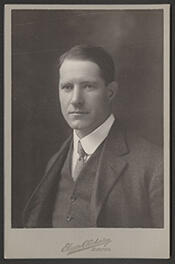
Here you will find contact information for Representative Louis Adams Frothingham, including email address, phone number, and mailing address.
| Name | Louis Adams Frothingham |
| Position | Representative |
| State | Massachusetts |
| District | 14 |
| Party | Republican |
| Status | Former Representative |
| Term Start | April 11, 1921 |
| Term End | March 3, 1929 |
| Terms Served | 4 |
| Born | July 13, 1871 |
| Gender | Male |
| Bioguide ID | F000395 |
About Representative Louis Adams Frothingham
Louis Adams Frothingham (July 13, 1871 – August 23, 1928) was a Republican politician, lawyer, and military officer who served four terms as a United States Representative from Massachusetts between 1921 and 1928. Over the course of a varied public career, he held leadership roles in the Massachusetts House of Representatives, served as lieutenant governor of Massachusetts, and participated in both the Spanish–American War and World War I before his election to Congress.
Frothingham was born in Jamaica Plain, then a part of West Roxbury, Massachusetts, on July 13, 1871. He attended the public schools and later Adams Academy in Quincy, Massachusetts, receiving a preparatory education that led to his admission to Harvard University. At Harvard he was a member of the Porcellian Club, one of the university’s most exclusive social clubs, and he graduated in 1893. He continued his studies at Harvard Law School, from which he graduated in 1896. That same year he was admitted to the bar and commenced the practice of law in Boston, beginning a legal career that would underpin his later work in public office.
At the outbreak of the Spanish–American War in 1898, Frothingham entered military service, receiving a commission as a second lieutenant in the United States Marine Corps. His service in that conflict marked the beginning of a long association with military and veterans’ affairs. After the war he returned to Massachusetts and resumed his legal practice in Boston, while increasingly involving himself in Republican Party politics and state public life.
Frothingham was elected to the Massachusetts House of Representatives in the early years of the twentieth century and rose quickly within that body. He served as Speaker of the Massachusetts House of Representatives during the 125th and 126th Massachusetts General Courts in 1904 and 1905, respectively. In 1905 he became the Republican nominee for mayor of Boston after narrowly defeating former Judge Henry S. Dewey for the nomination, but he lost the general election to Democrat John F. “Honey Fitz” Fitzgerald by a margin of 48 percent to 39 percent. Despite this setback, his prominence in state politics continued to grow. He was elected the 41st lieutenant governor of Massachusetts and served from 1909 to 1911. In 1911 he was the Republican candidate for governor of Massachusetts but was unsuccessful in that bid. During this period he also served as a lecturer at Harvard University, maintaining close ties to his alma mater.
Following his statewide service, Frothingham moved to North Easton, Massachusetts, where he continued the practice of law. On May 9, 1916, he married Mary Shreve Ames in North Easton. She was a member of the wealthy and prominent Ames family of Easton, the daughter of industrialist Frederick Lothrop Ames, the great-niece of Congressman Oakes Ames, and the first cousin once removed of Oliver Ames, who had served as both lieutenant governor and governor of Massachusetts. That same year Frothingham was a delegate to the Republican National Convention, reflecting his continuing influence within the party. He also served as an overseer of Harvard University for eighteen years, contributing to the governance of the institution over a substantial period.
During World War I, Frothingham again entered military service, this time as a major in the United States Army. He was appointed a member of a commission to visit soldiers and sailors from Massachusetts serving in France, a role that connected his military experience with his concern for the welfare of servicemen from his home state. In 1919 he became the first vice commander of the Massachusetts branch of the American Legion, underscoring his leadership in veterans’ organizations and his ongoing engagement with issues affecting former service members.
Frothingham was elected as a Republican to the Sixty-seventh Congress and to the three succeeding Congresses, serving as a United States Representative from Massachusetts from March 4, 1921, until his death in 1928. His tenure in the House of Representatives thus spanned four consecutive terms, during which he participated in the legislative process and represented the interests of his Massachusetts constituents during a significant period in American history that included the early years of Prohibition and the post–World War I adjustment. As a member of the House, he contributed to the democratic process and to the work of the Republican majority during much of the 1920s.
Louis Adams Frothingham died in office on August 23, 1928, while aboard the yacht Winsome in North Haven, Maine. His death placed him among the members of the United States Congress who died in office in the first half of the twentieth century. He was interred in Village Cemetery in North Easton, Massachusetts, a community that had been central to his later life and family connections.