Representative Louis Edward Graham
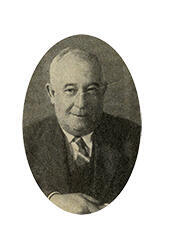
Here you will find contact information for Representative Louis Edward Graham, including email address, phone number, and mailing address.
| Name | Louis Edward Graham |
| Position | Representative |
| State | Pennsylvania |
| District | 25 |
| Party | Republican |
| Status | Former Representative |
| Term Start | January 3, 1939 |
| Term End | January 3, 1955 |
| Terms Served | 8 |
| Born | August 4, 1880 |
| Gender | Male |
| Bioguide ID | G000360 |
About Representative Louis Edward Graham
Louis Edward Graham (August 4, 1880 – November 9, 1965) was an American politician and lawyer who served as a Republican member of the United States House of Representatives from Pennsylvania from 1939 to 1955. Over eight consecutive terms in Congress, he represented his constituents during a period marked by the Great Depression’s aftermath, the Second World War, and the early Cold War, contributing to the legislative process as a member of the Republican Party.
Graham was born in New Castle, Pennsylvania, on August 4, 1880. In 1893 he moved with his parents to Beaver, Pennsylvania, where he spent much of his youth. He pursued higher education at Washington and Jefferson College in Washington, Pennsylvania, graduating in 1901. Following his graduation, he studied law, was admitted to the bar, and began practicing in Beaver, building the legal foundation that would underpin his later public service career.
Early in his professional life, Graham held a series of local and state law enforcement and legal positions. He served as deputy sheriff of Beaver County, Pennsylvania, from 1903 to 1906, gaining experience in local law enforcement and county administration. He went on to serve as district attorney of Beaver County from 1912 to 1924, a twelve-year tenure during which he was responsible for prosecuting criminal cases and advising county officials. From 1924 to 1927 he served as deputy attorney general of Pennsylvania, extending his responsibilities to statewide legal matters and further establishing his reputation as a capable public lawyer.
Graham’s career advanced to the federal level in the late 1920s. From 1927 to 1929 he was chief legal adviser of the former sixth Federal prohibition district, a position that placed him at the center of federal enforcement efforts during the Prohibition era. He was appointed United States Attorney for the Western District of Pennsylvania on November 7, 1929, and served in that capacity until September 1, 1933. In this role he directed federal prosecutions and represented the United States in civil and criminal matters in the region. After leaving that post, he continued his association with the Department of Justice as a special assistant to the United States Attorney General in the Pittsburgh vote-fraud cases from 1934 to 1936, participating in high-profile efforts to address electoral corruption.
Graham entered national elective office in 1938, when he was elected as a Republican to the Seventy-sixth Congress. He took his seat in the U.S. House of Representatives in January 1939 and was subsequently reelected to the seven succeeding Congresses, serving continuously until January 3, 1955. During his eight terms in office, he participated in the democratic process and represented the interests of his Pennsylvania constituents through years of major domestic and international change, including World War II and the early years of the Cold War. In the Eighty-third Congress he served as Chairman of the United States Joint Committee on Immigration and Nationality Policy, a position that placed him at the forefront of legislative review and development in the areas of immigration and citizenship law at a time when the United States was reassessing its immigration and nationality policies in the postwar era.
A loyal member of the Republican Party throughout his congressional career, Graham sought reelection in 1954 but was unsuccessful, losing to Democrat Frank M. Clark. His defeat ended sixteen years of continuous service in the House of Representatives. After leaving Congress in January 1955, he returned to private life, concluding a long career that had spanned local law enforcement, county and state legal offices, federal prosecutorial work, and national legislative service.
Louis Edward Graham died on November 9, 1965. His public career, extending from the early twentieth century through the mid-1950s, reflected a steady progression from local and state legal responsibilities to influential roles in federal law enforcement and ultimately to sustained service in the United States Congress.