Representative Louis Benjamin Hanna
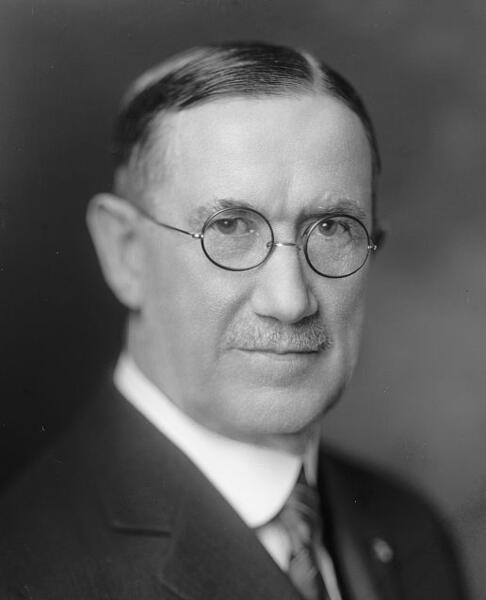
Here you will find contact information for Representative Louis Benjamin Hanna, including email address, phone number, and mailing address.
| Name | Louis Benjamin Hanna |
| Position | Representative |
| State | North Dakota |
| District | -1 |
| Party | Republican |
| Status | Former Representative |
| Term Start | March 15, 1909 |
| Term End | March 3, 1913 |
| Terms Served | 2 |
| Born | August 9, 1861 |
| Gender | Male |
| Bioguide ID | H000162 |
About Representative Louis Benjamin Hanna
Louis Benjamin Hanna (August 9, 1861 – April 23, 1948) was an American businessman, banker, and Republican politician from North Dakota who served as a United States Representative, a member of the North Dakota House of Representatives, and as the 11th governor of North Dakota. His public career spanned the formative decades of North Dakota’s statehood and the early twentieth century, and he played a prominent role in both state and national affairs.
Hanna was born on August 9, 1861, in New Brighton, Beaver County, Pennsylvania. He spent his early years in the post–Civil War era, a period marked by rapid industrialization and westward expansion in the United States. As a young man, he moved west, eventually settling in the Dakota Territory, where opportunities in commerce and finance were expanding alongside the growth of new communities. His relocation to this developing region laid the foundation for his later prominence in business and politics.
Hanna’s education was characteristic of many men of his generation who combined formal schooling with practical experience. After receiving a basic education in the East, he gained further training and experience in business, which prepared him for a career in banking and commercial enterprises in the Dakotas. His understanding of finance and local economic conditions would later inform his legislative priorities and executive decisions as a public official.
Before entering national office, Hanna established himself as a businessman and banker in North Dakota. He became involved in local financial institutions and commercial ventures that supported the growth of the state’s agricultural and urban economies. His success in business and his standing in the community led to his election to the North Dakota House of Representatives, where he served as a Republican and participated in shaping legislation for the young state. His work in the state legislature helped build his reputation as a capable and reliable party leader.
Hanna advanced to national office as a member of the United States House of Representatives from North Dakota. A member of the Republican Party, he served as a Representative in Congress from 1909 to 1913, completing two terms. His service in Congress occurred during a significant period in American history, encompassing the Progressive Era and major debates over economic regulation, conservation, and political reform. As a member of the House of Representatives, Louis Benjamin Hanna contributed to the legislative process, participated in the democratic governance of the nation, and represented the interests of his North Dakota constituents in Washington, D.C.
After leaving Congress, Hanna continued his political ascent and was elected the 11th governor of North Dakota. As governor, he drew on his background in business and banking to address issues of fiscal management, economic development, and public administration in the state. His administration coincided with the years immediately preceding and including the early period of World War I, a time when questions of patriotism, preparedness, and international relations were increasingly prominent in public life. During Hanna’s term as governor, he, his family, and an official committee traveled to Norway. On July 4, 1914, at Christiania (now Oslo), they presented the people of Norway with a statue of Abraham Lincoln. The statue, created by North Dakota sculptor Paul Fjelde and located in Frogner Park in Oslo, symbolized the ties between North Dakota’s large Norwegian-American population and the people of Norway, as well as the state’s commitment to democratic ideals embodied by Lincoln.
In his later years, Hanna remained a respected figure in North Dakota’s civic and political circles, recognized for his long record of service as a businessman, legislator, congressman, and governor. He lived to see the transformations brought by two world wars and the Great Depression, events that reshaped the nation he had served in both state and federal office. Louis Benjamin Hanna died on April 23, 1948, leaving a legacy closely associated with the early development of North Dakota and its integration into the broader political and economic life of the United States.